
Slay the Spire Review
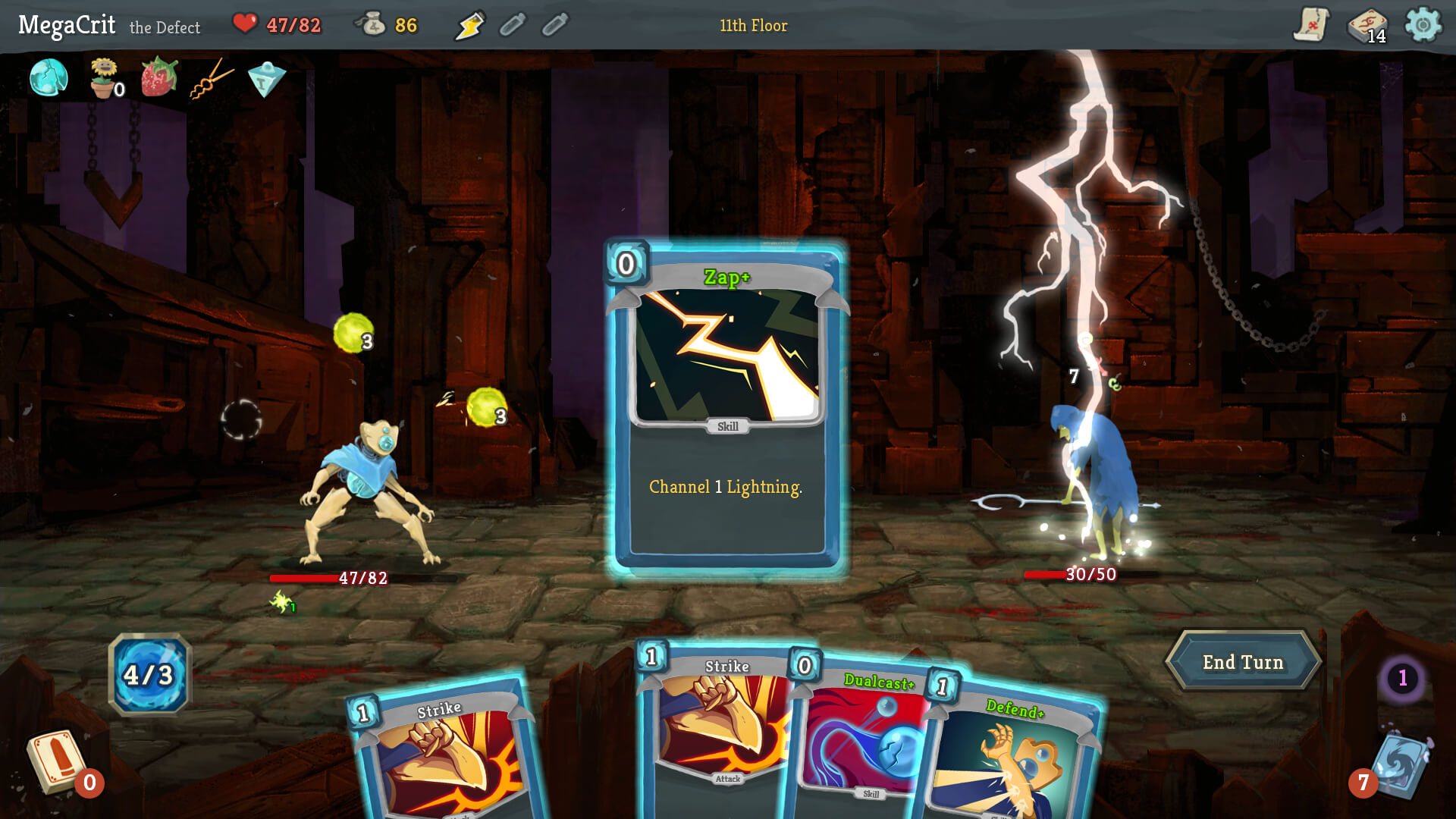
After 18 hours with Slay the Spire, here's where MegaCrit's latest lands on the Roguelike Deck-builder ladder.
Slay the Spire launched into Steam Early Access in November 2017, hit version 1.0 in January 2019, and has spent the years since quietly colonising the brains of anyone who picked it up for what they assumed would be a quick session. MegaCrit's card-crawler is not new. Reviewing it in 2024 requires acknowledging that upfront. What is worth revisiting — after 18 hours spread across all four characters — is whether it still holds up as the standard against which every deck-builder that followed it gets measured, because a remarkable number of them still fall short.
The short answer is yes, sometimes frustratingly so. Slay the Spire is tighter, meaner, and more legible than most of its imitators. It also has real problems that its reputation tends to smooth over. Both things are true, and both are worth your time.
What MegaCrit Actually Built
Strip away the fanbase mythology and Slay the Spire is a turn-based combat game on a procedurally generated map. You pick a path through three acts, fight enemies using a hand of cards drawn from a deck you construct on the fly, collect relics that modify your rules, and try to reach the Act 3 boss without running out of HP. Each run takes between 45 minutes and two hours depending on character and competence. The map branches constantly, and every node — combat, elite fight, merchant, rest site, event — is a resource decision. That is the whole game.
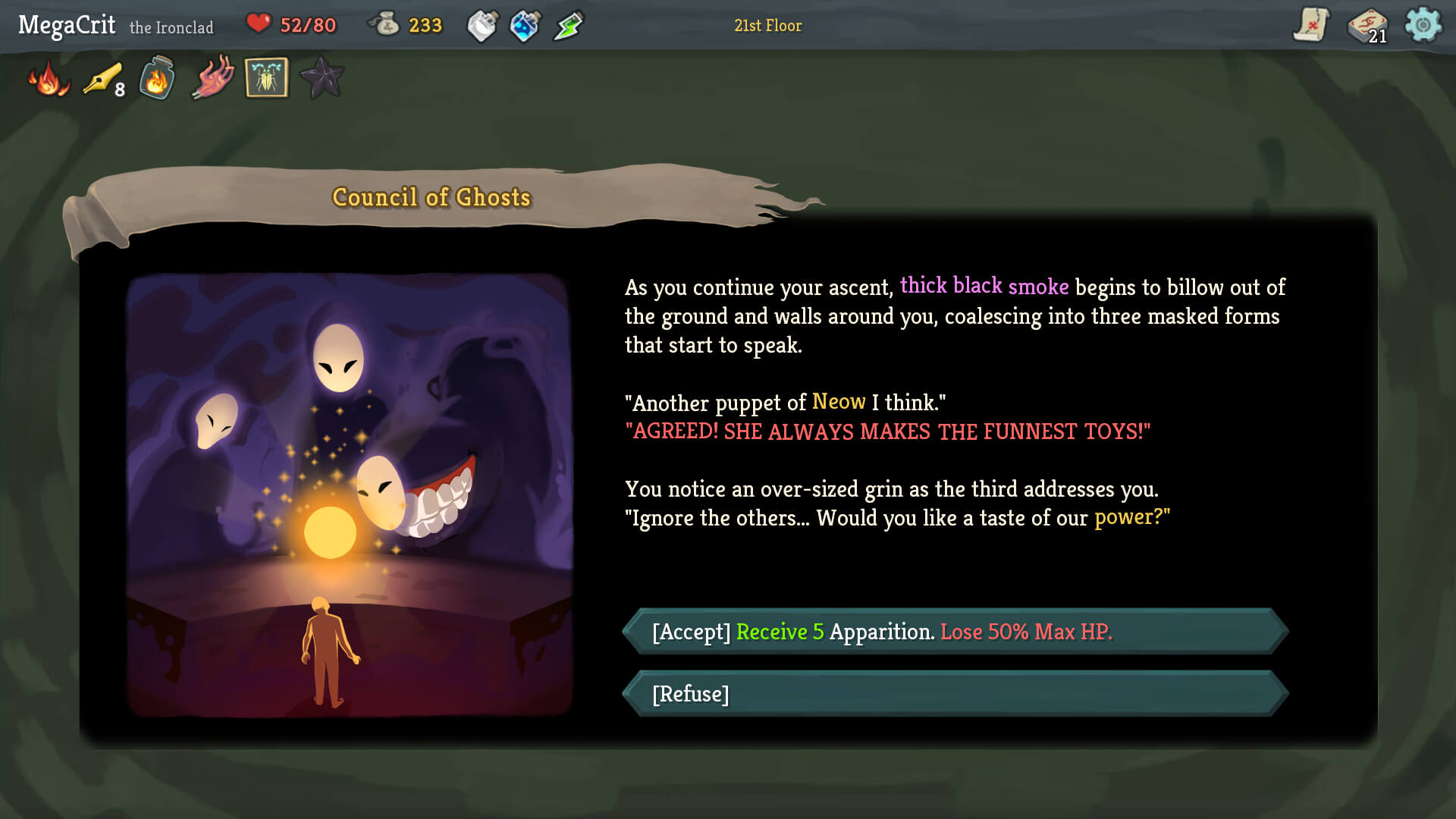
What makes it work is that MegaCrit designed each of the four characters around a genuinely distinct mechanical identity rather than just swapping card art. The Ironclad uses Strength scaling and block generation through Exhaust mechanics. The Silent builds Poison and Shiv synergies. The Defect runs on Orbs — Lightning, Frost, Dark, Plasma — that passively trigger at end of turn. The Watcher, added later, plays around Stance switching between Calm and Wrath, which doubles damage dealt and received respectively. These are not cosmetic differences. They change how you read a map, how aggressively you take damage in elites, which relics are worth paying for.
The card pool for each character runs to roughly 75 cards before upgrades, and the game drip-feeds them across runs so that experienced players are constantly making contextual decisions rather than defaulting to a known-good build. Seeing Inflame offered on floor 3 hits differently when your relic loadout already includes Akabeko and you have two Strikes still clogging your deck.
The Map Is the Game
A criticism frequently levelled at deck-builders — including successors like Monster Train and Inscryption's card portions — is that the space between fights is thin connective tissue. Slay the Spire takes the opposite position. Path selection across its branching map is where a significant portion of the strategic depth lives. Do you route through three elites in Act 1 to stack relics early, accepting the HP cost? Do you hit the merchant before a boss fight or save gold for the Act 2 shop? Rest sites offer healing or card upgrades, and the correct choice changes depending on your current HP total, the upcoming boss, and whether your deck needs the upgrade more than your body needs the HP.
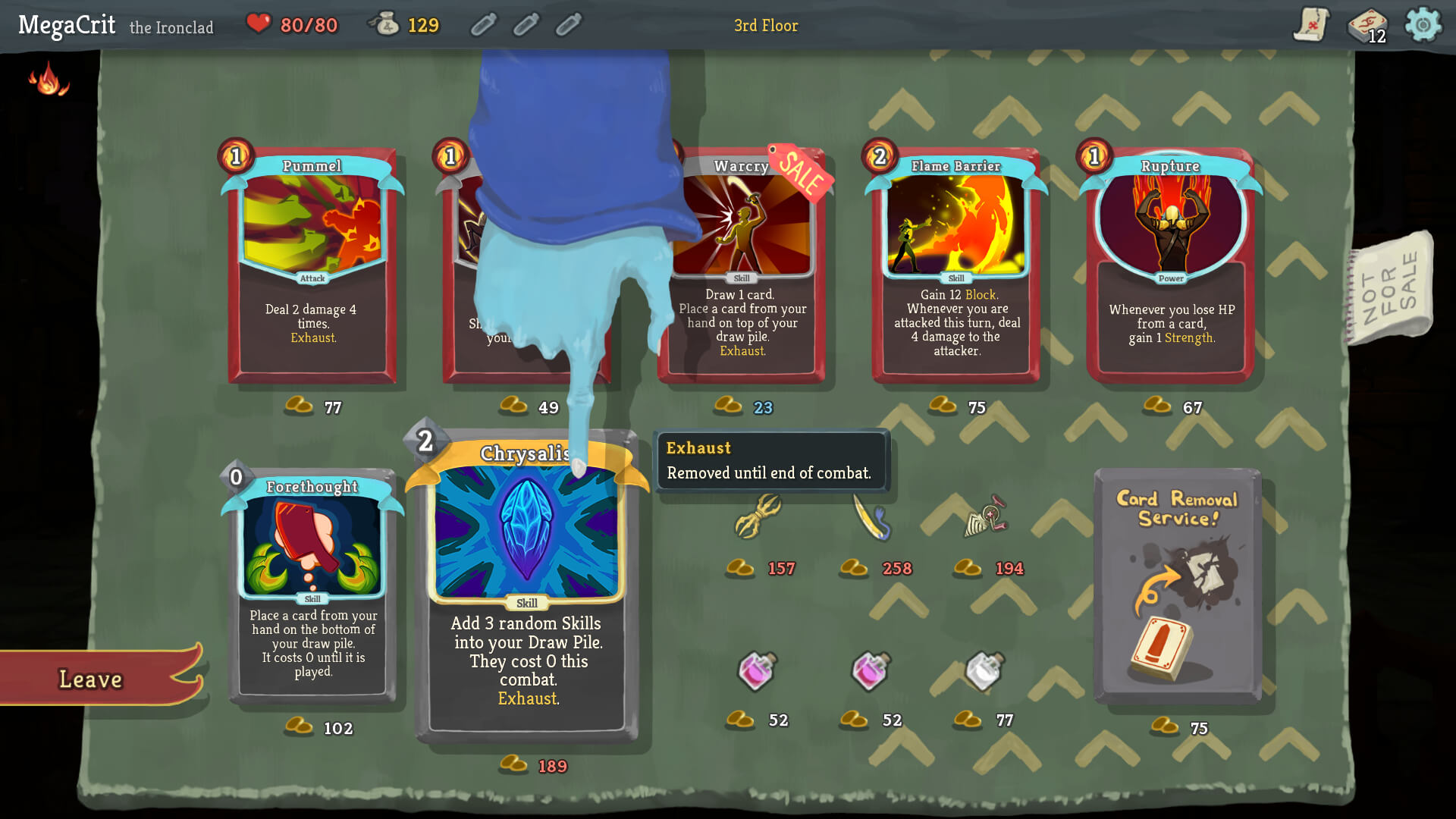
Events complicate this further. The game has over 50 event encounters — text-choice scenarios that can hand you relics, curse your deck, drain your gold, or spawn bonus fights. Some are straightforwardly good. The Duplicator copies a card. The Golden Shrine offers gold for HP. Others are gambles on incomplete information, which is precisely the point. Knowing which events to engage with and which to absorb the bad outcome from is knowledge that accrues over tens of runs, and that accumulation feels earned rather than arbitrary.
Where It Stumbles
The variance problem is real and it is not adequately addressed by the game's design. Relic distribution is the main culprit. Sozu, which blocks potion drops, can appear early and neuter an entire line of defensive strategy. Ectoplasm prevents gold gain for the rest of a run. These are not catastrophic on their own, but combined with a weak card offering across the first act's choice screens, a run can feel effectively decided before the Act 1 boss. MegaCrit built the Ascension difficulty system — 20 escalating challenge modifiers unlocked per character — to extend replayability, but Ascension levels do not address variance so much as compress the margin for error, which means bad early draws feel worse, not better.
The Watcher remains a balance concern that MegaCrit never fully resolved before shifting focus. Her Divinity stance, which triples damage and can be accessed via specific card chains, enables kills on floor 1 enemies that should not be ending that quickly. She trivialises content that the other three characters interact with honestly. Playing the Watcher through an Ascension 15 run still feels less like overcoming the game's challenge and more like using a different version of it.
The tutorial is also genuinely inadequate. Orb mechanics for the Defect are explained once in a tooltip that disappears immediately. New players spending their first five hours dying to confusion about Channel versus Evoke, or failing to understand that Frost Orbs generate block passively without being Evoked, is not a designed friction — it is just a gap.
How It Compares to What Came After
Monster Train from Shiny Shoe added a vertical lane structure and simultaneous multi-floor combat, which is a genuine mechanical contribution that Slay the Spire does not match. Inscryption's Leshy chapter, developed by Daniel Mullins Games, wraps card play in environmental storytelling that MegaCrit was never attempting. Cobalt Core, from Rocket Rat Games, translates the Defect's orb logic into a spaceship framing with enough freshness to stand alone. These are all valid descendants, and in specific ways they improve on their source material.
But none of them have matched Slay the Spire's economy of feedback. Every combat here resolves in under three minutes at competent play. Intent icons above enemies show exactly what each enemy will do next turn — attack for 12, apply 2 Vulnerable, gain 8 block — which means every decision is made with complete information about immediate consequences. That transparency is a design philosophy, not an oversight. Games like Roguebook or Banners of Ruin hedged toward spectacle and obscured their feedback loops in the process. Slay the Spire reads fast because MegaCrit prioritised readability over visual noise.
Eighteen Hours In, Practically Speaking
Eighteen hours covers the four base characters at low Ascension levels, a handful of Ascension 10-plus runs on the Ironclad, and enough Daily Climb attempts to appreciate how modifier stacking reframes familiar decisions. It does not cover the full endgame. The Heart — the true final boss unlocked after collecting all three Keys across successive runs — requires a specific routing discipline and deckbuilding constraint that changes the calculus of every floor. Players who stop before reaching the Heart are playing a materially different game than those who have cleared it at Ascension 20.
At current pricing — £17.49 on Steam, with frequent sales bringing it to under a tenner — the run count per pound is not really the argument. The argument is that Slay the Spire is structurally honest in a way that many of its successors are not. It shows you its rules, applies them consistently, and then challenges you to internalise them under pressure. Whether 18 hours is the beginning of that process or a reasonable stopping point depends entirely on how much the feedback loop has hooked you. For most players who engage seriously with it, 18 hours is somewhere around the end of the tutorial.
The Verdict
Slay the Spire is not a perfect game. The Watcher is imbalanced, variance spikes are occasionally punishing in ways that feel arbitrary rather than instructive, and the onboarding for the Defect in particular is undercooked. These are real criticisms. They are also criticisms of a game that, six years after full release, still defines the genre it founded more completely than anything else in it. MegaCrit built something with sufficient depth that the community is still discovering optimal Ascension 20 pathing strategies and relic synergies that casual play never surfaces. That is not a small achievement. If you have been circling it, stop circling.
Verdict
| Category | Score |
|---|---|
| Gameplay | 7/10 |
| Story | 7/10 |
| Visuals | 8/10 |
| Replayability | 9/10 |

Ed Flynn
Ed reviews peripherals — controllers, racing wheels, fight sticks. Calibration nerd.
Frequently Asked Questions
How long does it take to finish Slay the Spire?
Main story runs around 18-25 hours depending on how thoroughly you explore. Completionists can spend 2-3× that.
Is Slay the Spire good for newcomers to Roguelike Deck-builder?
It depends. The systems are deep but the tutorial does a fair job. Veterans of Roguelike Deck-builder will feel at home faster.
Which platform should I play Slay the Spire on?
PC version offers the highest fidelity if your rig can handle it. Console versions are polished out of the box.
Was Slay the Spire worth the launch-day price?
Released in 2019, and as of writing it holds up. Wait for a sale if you're price-sensitive — major discounts arrive within 6 months.
Are there DLCs or expansions worth picking up?
Wait for the Game of the Year edition — it bundles everything at a fair discount.
What did MegaCrit get right (and what could be better)?
MegaCrit nailed the moment-to-moment loop and the world-building. Pacing in the mid-game and inventory UX have room for improvement.

Comments (5)
The economy is broken in the late game, surprised this wasn't mentioned.
Solid analysis. Did you try the mod community after the 1.2 patch?
Multiplayer mode adds 30+ hours of replay value. Underrated section.
Fair scoring. The combat polish carries a lot of the playtime here.
Played on Steam Deck — runs great after the proton-experimental fix.