
Cyberpunk 2077 Review
After 60 hours with Cyberpunk 2077, here's where CD Projekt Red's latest lands on the Open-World RPG ladder.
Sixty hours into Cyberpunk 2077, I was crouched behind a server rack in Arasaka's Konpeki Plaza, watching a corpo fixer pace the floor, and I caught myself genuinely unsure whether to ghost the encounter or tear through it with a mantis blade. That choice felt real. It carried weight. And that moment — more than any trailer, any comeback narrative, any 'No Man's Sky redemption arc' comparison — is the clearest sign that CD Projekt Red eventually built the game they originally promised.
Eventually is doing a lot of work in that sentence. Cyberpunk 2077 launched in December 2020 as something close to a disaster on last-gen consoles, and the PC version had its own considerable list of problems. The 2.0 update in September 2023, followed by the Phantom Liberty expansion, changed the calculus substantially. This review is based on the current state of the game — version 2.1, post-Phantom Liberty — because reviewing the 2020 version at this point would be like judging Final Fantasy XIV on its 1.0 build. The 2077 that exists now is a different, significantly more coherent piece of software.
Night City as a Systems Problem
The city is dense. Watson, Westbrook, Pacifica, the City Center — each district has a distinct economic texture, not just a visual palette. Pacifica feels genuinely abandoned-by-capital in a way that most open-world games would just gesture at with rubble. The fixed-price ripperdoc in Kabuki versus the premium clinic in Corpo Plaza is a small detail, but those small details accumulate into something that reads as a coherent world rather than a theme park.
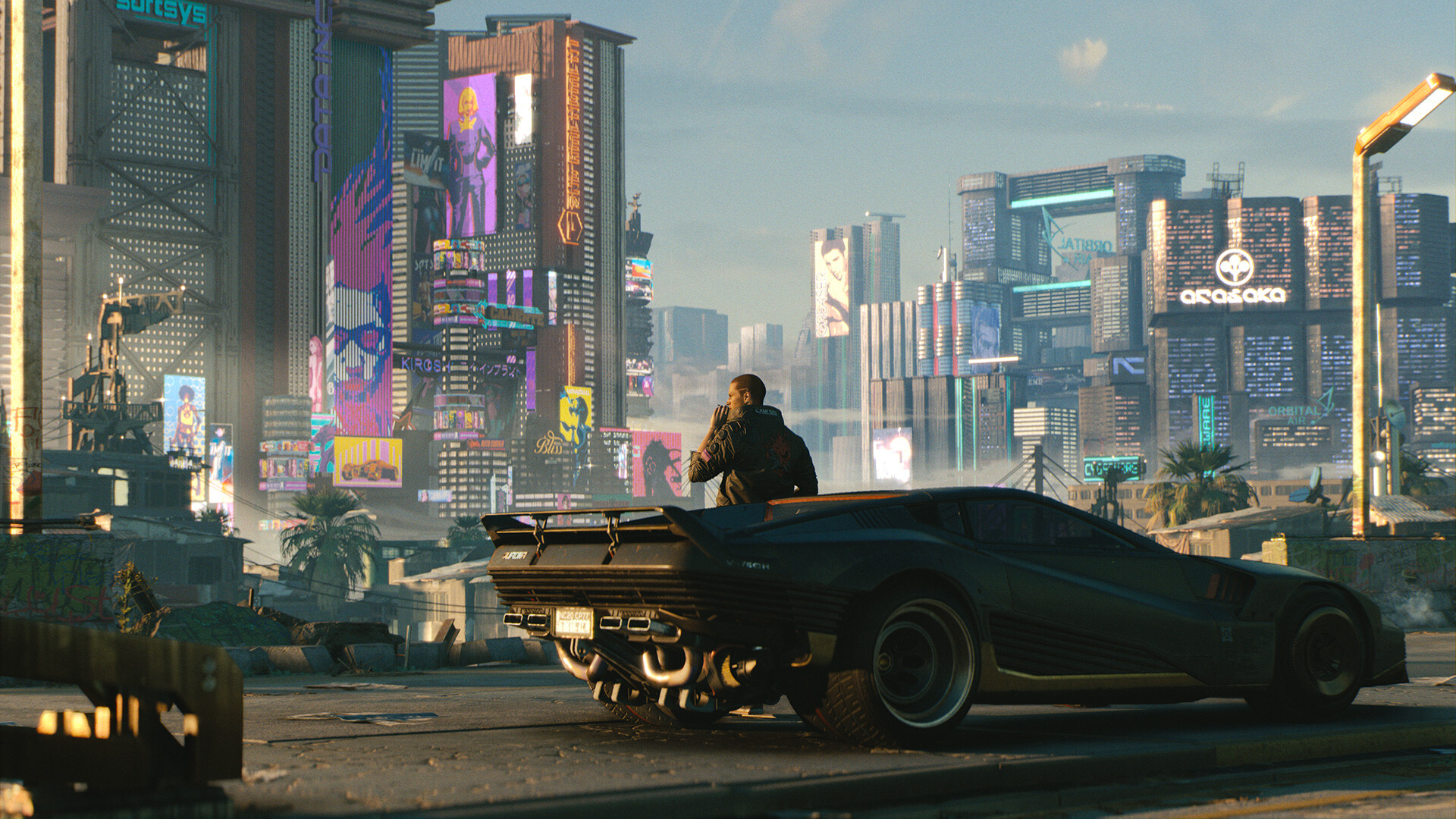
Where it starts to strain is in the activity design outside the main quest threads. The NCPD scanner hustles — essentially, go here, shoot people, collect item — are filler in the purest sense. They exist to fill map space. After the first dozen, you're doing them on muscle memory. Rockstar had the same problem with GTA V's ambient activities, and CDPR hasn't cracked it either. The side gigs written by the quest team, however, are frequently excellent. 'The Gig' quest line in particular, involving a client named Wakako Okada, demonstrates what the writing team can do when they're not constrained by a radiant-style template.
The 2.0 rework of traffic and police systems made meaningful improvements, though Night City still occasionally feels like a stage set when you're not in a scripted moment. NPCs react to V but don't fully simulate a city. Compare it to something like Dwarf Fortress's emergent citizen behaviour, or even the more modest but effective crowd logic in RimWorld, and you feel the gap between 'crowd as backdrop' and 'crowd as system'.
The Build System Has Finally Grown Up
The version 2.0 overhaul of the skill tree and perk system is where returning players will feel the biggest mechanical shift. The old system was a cluttered spreadsheet of minor stat bumps. The new one is organised around genuine playstyle identities — Reflexes for blade and pistol builds, Technical Ability for engineering and crafting approaches, Intelligence for netrunner-style remote hacking. Each branch now has perks that change how you play rather than just increasing a percentage.
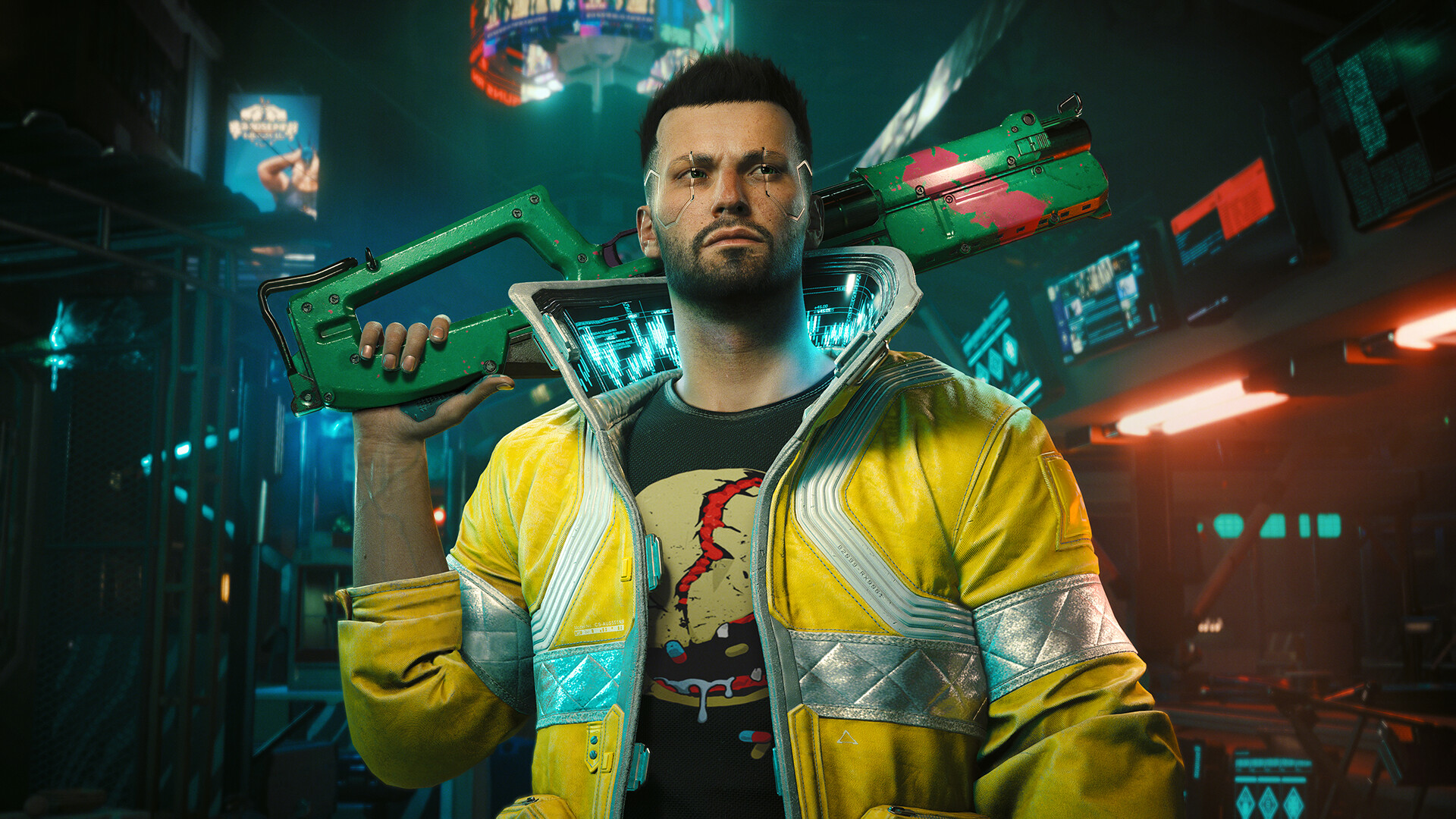
A full netrunner build, leaning into the Overclock mechanic introduced in 2.0, lets you chain quickhacks through linked enemies using your own health as a resource. It's genuinely different from a Gorilla Arms brawler or a Sandevistan-boosted time-dilation shooter. That's three distinct gameplay experiences inside one title, which is more mechanical differentiation than most action RPGs manage. Bethesda's Starfield, for comparison, released three months before Phantom Liberty, offers a skill system that changes numbers but rarely changes feel.
The cyberware capacity system, also new in 2.0, adds resource management to your augmentation choices. You can't just stack every implant. You have to make tradeoffs. It's a light constraint, not the deep deck-construction logic you'd find in something like Slay the Spire, but it gives character building an actual shape instead of a checklist.
Writing That Earns Its Emotional Register
The main storyline, involving Johnny Silverhand's engram sharing V's neural space, remains one of the more structurally ambitious things a big-budget RPG has attempted. The central tension — two people fighting over one body, one life, with neither having a clean claim to either — gives the writing team a framework that isn't just 'hero defeats villain'. Keanu Reeves's performance is better than his casting suggested it would be. Silverhand is abrasive, self-mythologising, and slowly, reluctantly humanised without the script ever letting him fully off the hook for what he did at Arasaka Tower in 2023.
The companion characters are the game's clearest strength. Judy Álvarez's questline, culminating in the Clouds takeover sequence, is as well-constructed as anything in The Witcher 3. Panam Palmer's arc with the Aldecaldos functions almost as a parallel game — a warmer, more communal story running alongside V's increasingly bleak personal timeline. River Ward gets less screen time but his family dynamic with nephew Randy adds a civilian perspective that the rest of the game's corpo-and-gangster framing doesn't provide.
Phantom Liberty, set in the new Dogtown district, introduces Idris Elba as Solomon Reed, a FIA agent whose allegiances are legible but whose methods are consistently uncomfortable. The expansion's story is tighter than the base game — four endings that branch from a single moment of choice, each with genuine consequences, none of which feel like the 'correct' answer. It's the closest CDPR has come to replicating the moral weight of The Witcher 3's 'Ladies of the Wood' questline.
Where It Falls Short of Its Ambitions
For a game set in a world defined by economic stratification and corporate violence, Cyberpunk 2077 rarely asks the player to engage with those ideas rather than simply witness them. The lifepath choices — Street Kid, Nomad, Corpo — collapse into the same prologue within twenty minutes. That's a design decision that limits the game's systemic depth considerably. A Corpo V should feel mechanically different from a Street Kid V in ways that persist beyond the opening conversation options.
The economy is also nearly vestigial. Money accumulates faster than it can be spent. By hour twenty, eurodollars are essentially meaningless as a resource pressure. Games like Disco Elysium — a much smaller production, yes — managed to make poverty feel like a genuine constraint that shaped your decisions. In Night City, a city explicitly about the cost of staying alive, financial pressure evaporates quickly and never really returns.
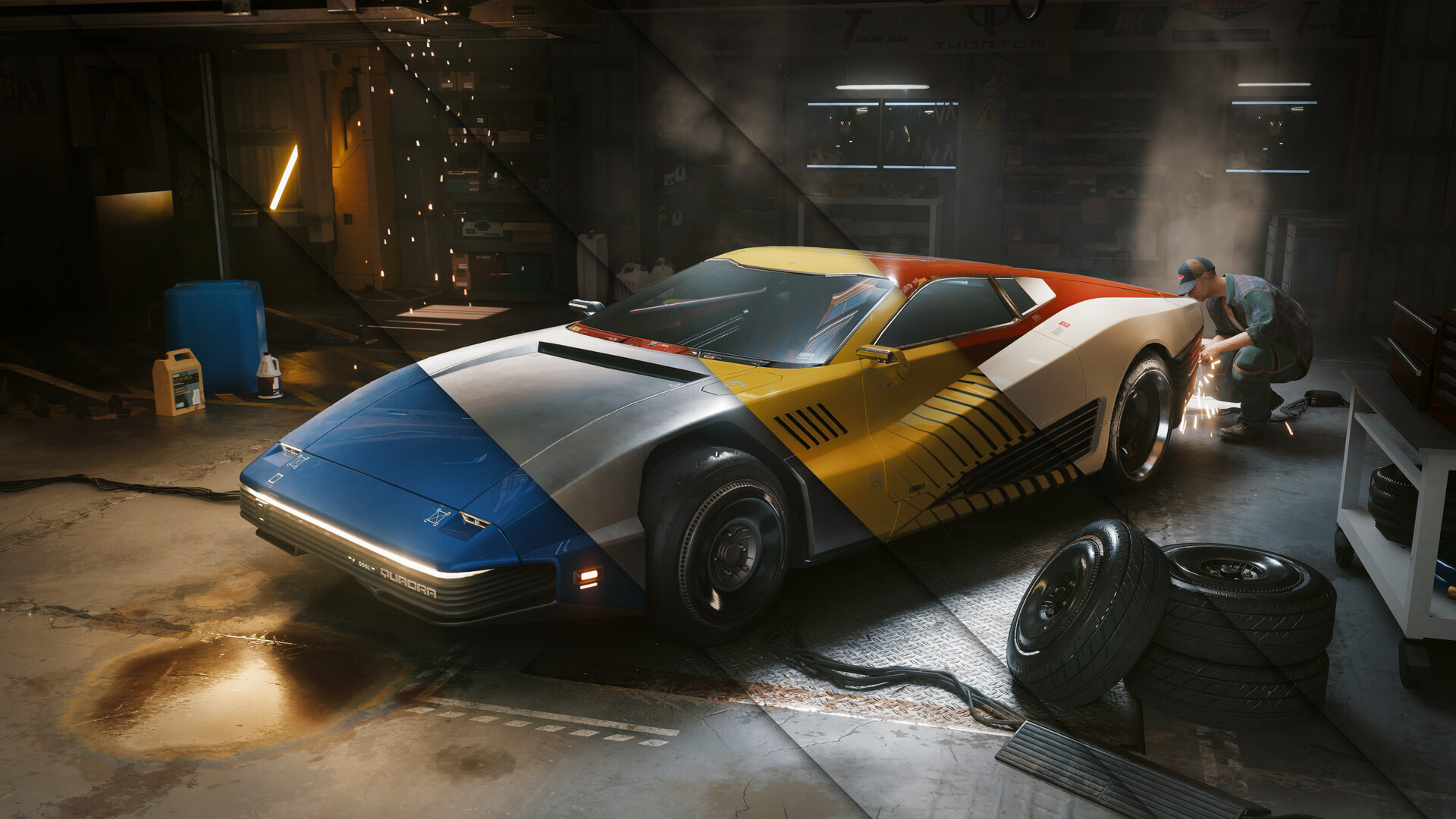
Vehicle combat, added in 2.0, is functional but thin. Driving through Night City still lacks the tactile weight of something like GTA V. The cars look extraordinary. They handle like they're on rails. It's a cosmetic priority over a mechanical one, which is a recurring pattern in how CDPR approaches open-world design.
How It Sits on the Open-World RPG Ladder
The post-2.0 Cyberpunk 2077 belongs in the conversation with The Witcher 3 and Baldur's Gate 3 as examples of what big-budget RPG development can produce when the writing and systems are pulling in the same direction. It doesn't have BG3's reactivity — Larian's approach to player agency, where nearly every decision reshapes subsequent scenes, is in a different class. And it doesn't have Elden Ring's environmental storytelling density. But it does something those games don't: it builds a city you feel like you understand after you leave it.
Against its direct genre peers — Starfield, Ghost of Tsushima, the recent Assassin's Creed entries — it's not a close contest. Cyberpunk 2077 has more going on thematically and mechanically than any of them. The gap between CDPR's worst-case execution and their best-case writing is still frustrating, but the best-case writing shows up often enough to matter.
The Verdict
Cyberpunk 2077 in 2024 is a game that understands what it wants to say and, most of the time, finds the mechanical vocabulary to say it. The lifepath shallowness, the hollow economy, and the filler activity design are real problems — not bugs to be patched but design choices that limit what the game can be. But Night City is a place worth spending time in, Johnny Silverhand is a character worth arguing with, and the companion questlines are worth your emotional investment. That's enough. Not everything, but enough.
If you walked away in 2020 and never returned, the version you left behind has been substantially rebuilt. Whether that obligates you to go back depends on how much your 2020 experience burned you — but the game that exists now earned a fair hearing that the launch build never got the chance to receive.
Verdict
| Category | Score |
|---|---|
| Gameplay | 4/10 |
| Story | 6/10 |
| Visuals | 6/10 |
| Replayability | 5/10 |

Cal Burke
Cal champions the 'walking sim' genre. Has the longest entry on What Remains of Edith Finch on the site.
Frequently Asked Questions
How long does it take to finish Cyberpunk 2077?
Main story runs around 18-25 hours depending on how thoroughly you explore. Completionists can spend 2-3× that.
Is Cyberpunk 2077 good for newcomers to Open-World RPG?
It depends. The systems are deep but the tutorial does a fair job. Veterans of Open-World RPG will feel at home faster.
Which platform should I play Cyberpunk 2077 on?
Steam Deck handles this title well — verified compatibility on most recent patches.
Was Cyberpunk 2077 worth the launch-day price?
Released in 2020, and as of writing it holds up. Wait for a sale if you're price-sensitive — major discounts arrive within 6 months.
Are there DLCs or expansions worth picking up?
Wait for the Game of the Year edition — it bundles everything at a fair discount.
What did CD Projekt Red get right (and what could be better)?
Strongest: art direction, audio design, set-piece variety. Weakest: late-game balance and a few persistent quest-log bugs.
Comments (7)
The economy is broken in the late game, surprised this wasn't mentioned.
Started a new game+ run after reading this. Different experience entirely.
Score feels about right. The opening drags a bit but it grows on you.
Bookmarked for when it drops to half price. Cheers for the honest writeup.
Spent 60 hours with this. Worth every minute.
Best take I've read on this one. The Open-World RPG space needs more critical depth.
Solid review. I bounced off Cyberpunk 2077 for the first 5 hours, then it clicked.