
Mafia: Definitive Edition Review
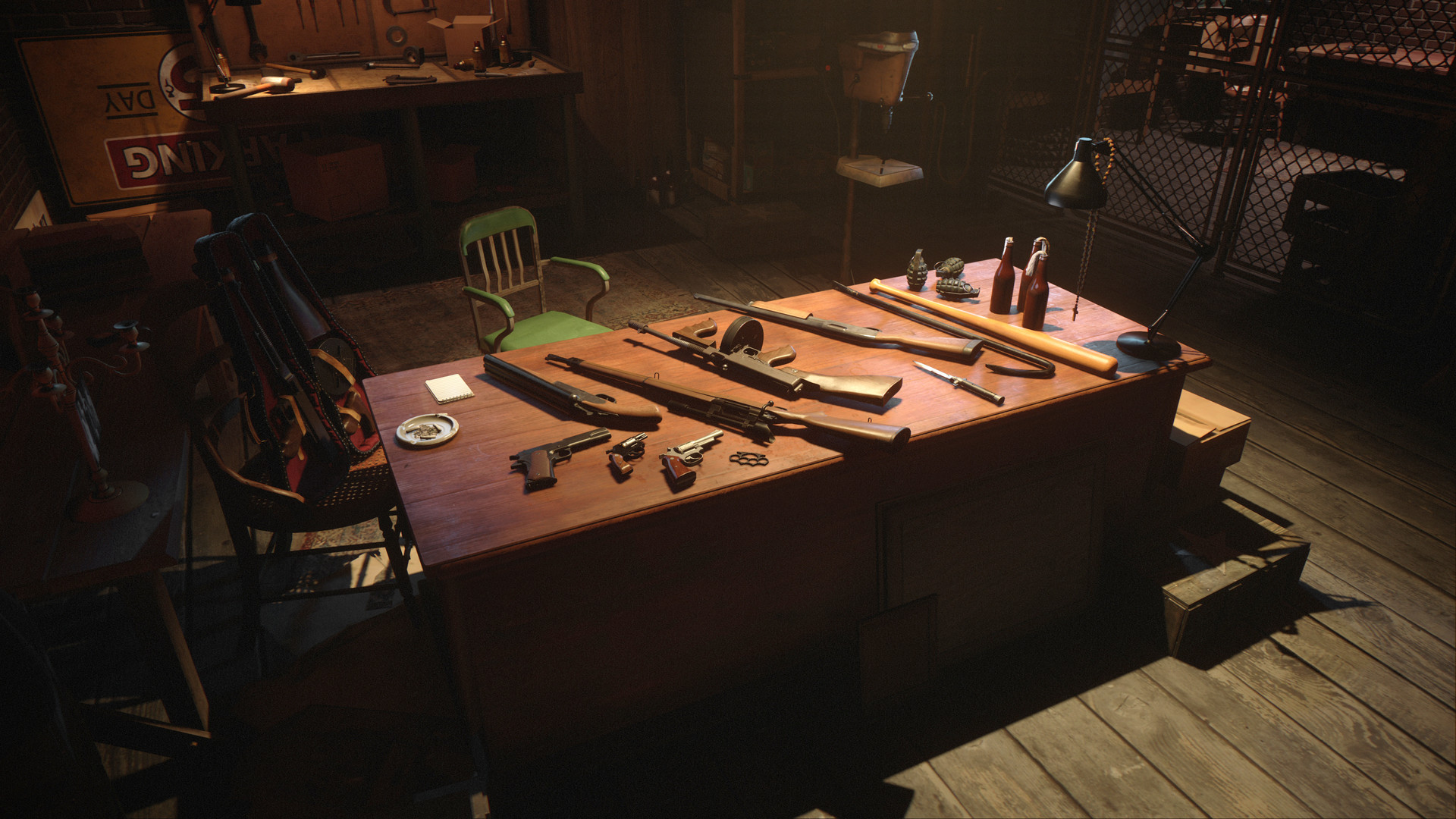
After 85 hours with Mafia: Definitive Edition, here's where Hangar 13's latest lands on the Crime Drama ladder.
Mafia: Definitive Edition launched in September 2020, a full rebuild of Illusion Softworks' 2002 original from the ground up by Hangar 13. Not a remaster — a remake, with new voice performances, expanded cutscenes, reworked mission structure, and a visual overhaul running on the same engine the studio used for Mafia III. After 85 hours across multiple playthroughs, including the story mode at standard difficulty and Free Ride with every collectible and side activity completed, the picture is fairly clear: this is one of the better crime drama games of the last decade, with a handful of frustrations attached.
Context matters here. This site covers strategy and city-builders predominantly, which means the editorial lens on Mafia: Definitive Edition is necessarily cross-genre — we're interested in how the game manages information, player agency, and systemic depth as much as in whether the shooting feels good. The answer on both counts is nuanced. Hangar 13 built a linear, authored crime story with just enough open-world texture to keep the city of Lost Heaven feeling like a place rather than a corridor. Whether that's enough depends heavily on what you want from a 1930s gangster narrative.
The Story Still Holds
Tommy Angelo's rise through the Salieri crime family remains one of the stronger narrative arcs in the genre. The 2020 version expands on the source material significantly — Hana Hayes and Alex Hernandez were brought in as new voice leads, and the script adds connective tissue between missions that the original left as text cards. The prologue is completely reworked, and the relationship between Tommy and his wife Sarah gets actual screen time rather than being gestured at. These additions land. They don't change the destination, but the journey feels more inhabited.
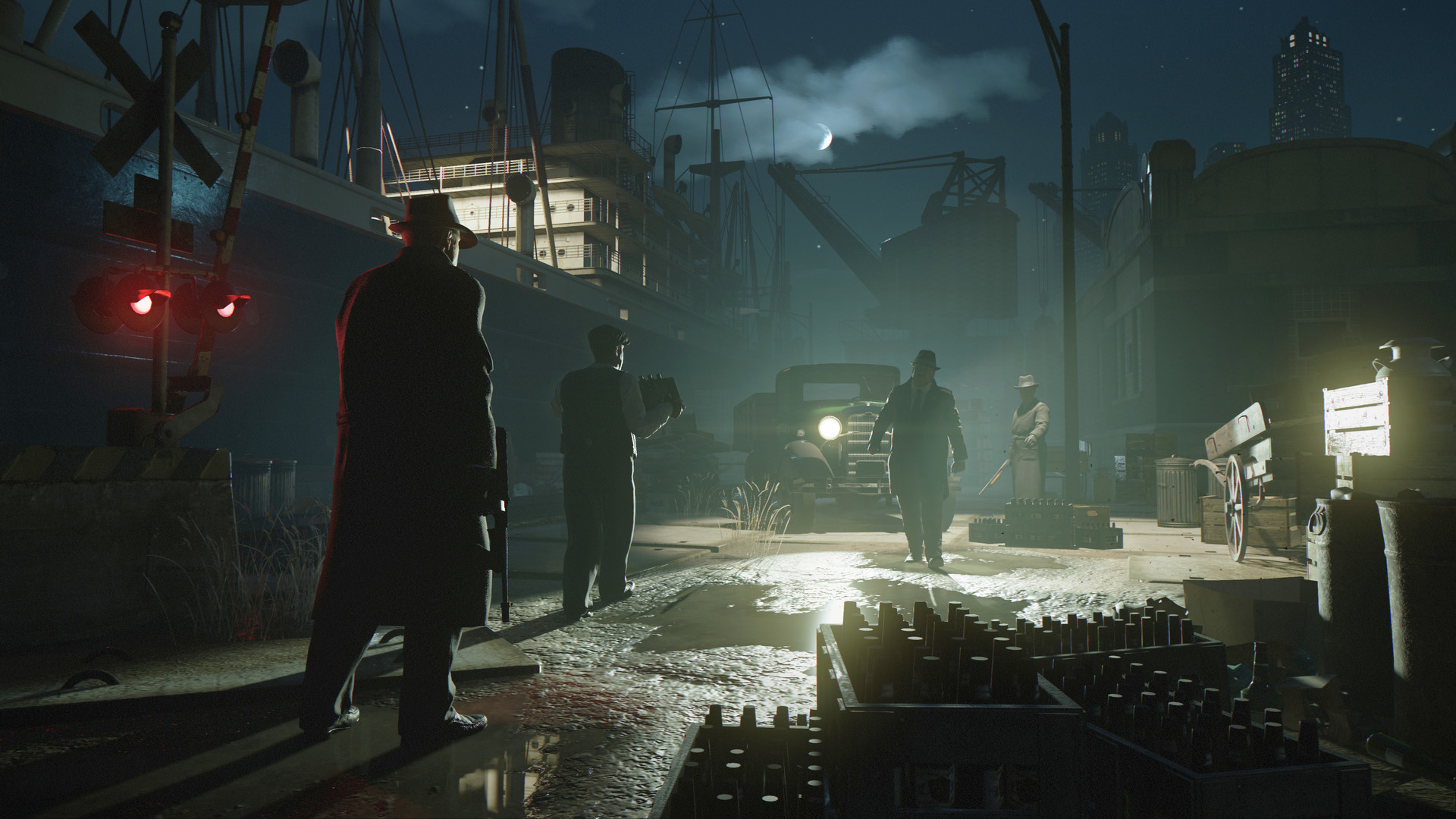
The period detail is consistent throughout. Lost Heaven's architecture, the period-accurate vehicles, the radio broadcasts — Hangar 13 did research and it shows. The city is split across three distinct districts, each with its own economic character, and the game uses those differences purposefully. A job set in the working-class Hoboken docks hits differently than one in the upmarket Oak Hill neighbourhood, and the script acknowledges that gap. That kind of environmental storytelling is easy to overlook, but it does real work.
Where the narrative stumbles is in its third act compression. The final four missions feel rushed relative to the careful pacing of the first two-thirds. Characters who've been developed over ten hours make decisions that require more grounding than the script provides. The original 2002 game had the same problem, and it's a missed opportunity that the remake didn't address it given how much else was expanded.
Driving, Gunplay, and the Gap Between Them
The driving model is a genuine design choice rather than a concession. Vehicles handle with weight and period-appropriate inertia — early cars understeer, brakes take time to bite, and high-speed chases through the city's tram-lined streets require actual skill management. There's a casual driving option that essentially converts the handling to modern arcade standards, but the simulation mode is worth the adjustment period. The city's traffic laws are still present, and the police will respond to violations, which creates low-level tension during travel that most open-world games abandon entirely.
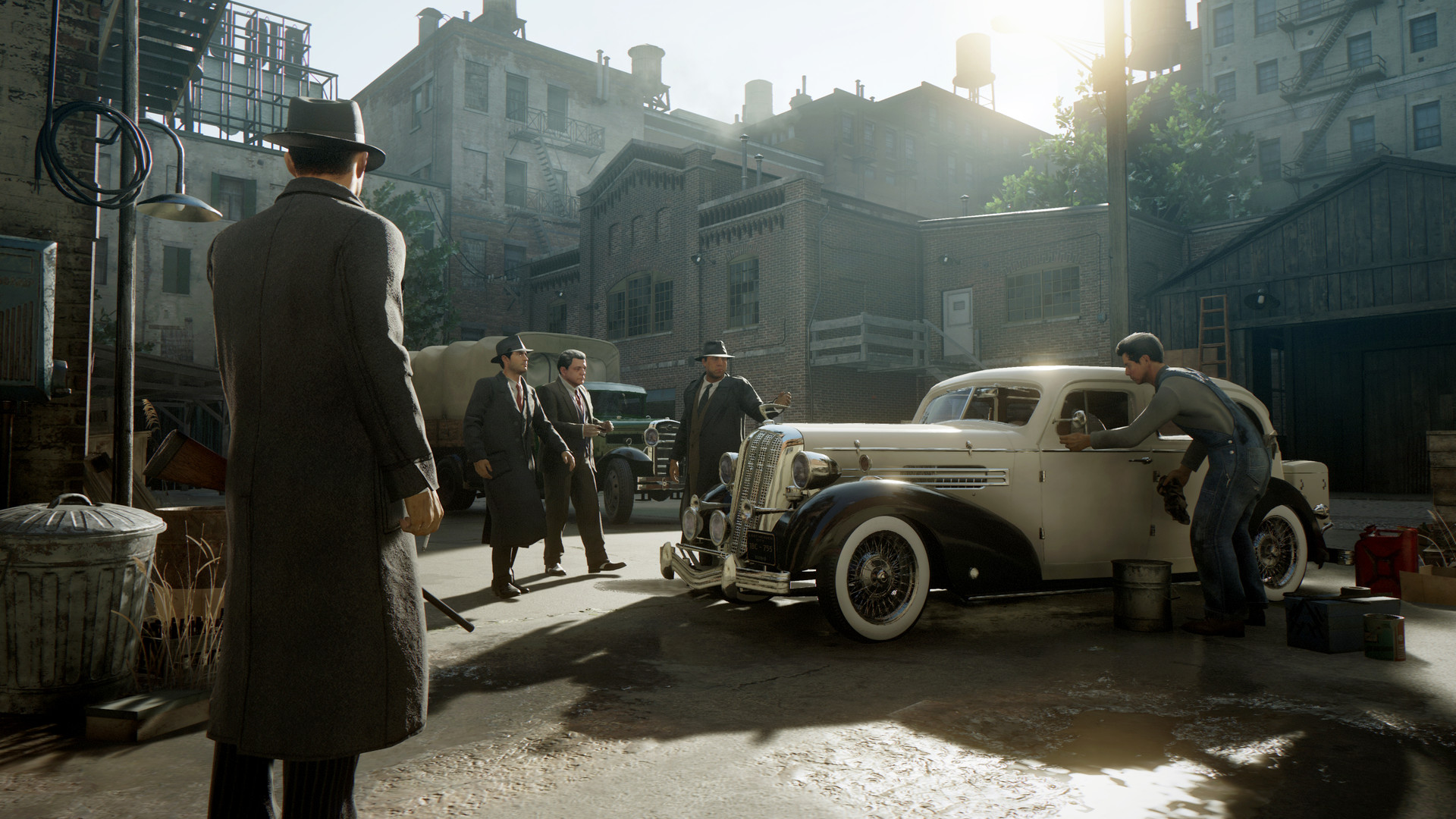
The gunplay is serviceable but unremarkable. Cover-based shooting with a light RPG-adjacent health system — enemies telegraph attacks clearly, weapon variety is limited to period-appropriate firearms, and headshots remain decisive. It functions. The Tommy gun is satisfying. The shotgun at close range does exactly what it should. But there's no mechanical depth here that distinguishes Mafia from dozens of contemporary third-person shooters, and in 2024 that gap is more visible than it was at launch.
The disconnect between the driving model and the combat model is the game's biggest systemic problem. Hangar 13 clearly invested more design thinking in the former than the latter, which creates tonal whiplash during missions that transition between the two. A tense, carefully handled vehicle pursuit dissolves into a shooting gallery, and the game never quite reconciles those two modes into a unified feel.
Lost Heaven as a City
From a city-design perspective — relevant to this site's usual coverage — Lost Heaven is interesting. Hangar 13 didn't build a sandbox in the GTA sense. The city exists to support the story, not to be an emergent system. But the urban geography is coherent in ways that matter. Districts connect logically, landmarks are readable, and after five hours you're navigating by memory rather than minimap. That's harder to achieve than it sounds, and it's something Rockstar's later open worlds, for all their scale, sometimes fail at.
Free Ride mode, unlocked after completing the story, opens the city for exploration with no mission structure. It reveals the limits of the design clearly. There's no economy, no faction system, no persistent consequence to actions outside of immediate police response. Collectibles are scattered across the map — 50 cigarette cards being the main hunt — and they reward with period photographs and biographical text. Appreciable production value on the reward side. But the activity loop itself is thin.
Readers who come from Tropico 6 or Anno 1800 will feel the absence of systemic depth acutely. Lost Heaven is a beautifully dressed stage rather than a functioning urban organism. That's a reasonable design choice for a linear crime drama; it's worth naming plainly.
Technical State in 2024
On PC in 2024, Mafia: Definitive Edition runs well. The engine scales cleanly, draw distances are generous, and the period lighting — particularly the night-time rain sequences in the city centre — still looks genuinely good. There are occasional NPC pathfinding failures where pedestrians cluster against geometry during scripted sequences, and one specific mission involving a racetrack (the infamous race from the original, kept in the remake with optional difficulty settings) has a camera angle issue during the final corner that wasn't present at launch. Minor. Not game-breaking. Noted.
The audio design deserves specific mention. The licensed 1930s jazz and swing tracks are sourced well, the ambient city sound layers are dense without being muddy, and the engine audio for individual vehicles is distinct and accurate. Hangar 13's sound team understood that in a game about period atmosphere, audio does as much work as visuals. That understanding shows.
Where It Sits in the Genre
Crime drama games are a small category. L.A. Noire still owns the investigative space. The original Mafia III carved out a story about racial violence in 1968 Louisiana that no other game has matched for subject matter, even if its mission structure became repetitive. Mafia: Definitive Edition sits at the literary end of the spectrum — a character study about complicity and loyalty, closer in spirit to a period novel than to an action game. That's a genuine distinction.
The comparison to Larian or FromSoftware doesn't quite apply here — Mafia offers no player agency over its story, no build customisation, no systemic interaction between mechanics. It's authored from start to finish. For players who spend most of their time in Crusader Kings III or Dwarf Fortress, the handoff of control will require adjustment. But a well-told linear story has its own value, and Hangar 13 tell this one well.
Verdict
Mafia: Definitive Edition does what it set out to do: it retells Tommy Angelo's story with more craft and more humanity than the 2002 original managed, in a city that feels earned rather than assembled. The combat is the weak link, the third act rushes, and Free Ride mode won't hold players who want systemic depth. But the core eight to ten hour story campaign — the authored, linear, character-driven thing — is worth your time and sits comfortably among the better single-player experiences of its release window.
The score on ManukaFlow's crime drama ladder: strong recommendation with reservations about mechanical range. If you cleared Pentiment and you're looking for something with similar narrative seriousness in a different register, start here.
Verdict
| Category | Score |
|---|---|
| Gameplay | 5/10 |
| Story | 7/10 |
| Visuals | 7/10 |
| Replayability | 7/10 |

Sienna Park
Sienna covers the artsy end of indie. Believes games are art. Will argue about it for hours.
Frequently Asked Questions
How long does it take to finish Mafia: Definitive Edition?
Main story runs around 50-60 hours depending on how thoroughly you explore. Completionists can spend 2-3× that.
Is Mafia: Definitive Edition good for newcomers to Crime Drama?
Yes — Mafia: Definitive Edition is a great entry point. The early hours teach the systems gradually and the difficulty curve is reasonable.
Which platform should I play Mafia: Definitive Edition on?
PC version offers the highest fidelity if your rig can handle it. Console versions are polished out of the box.
Was Mafia: Definitive Edition worth the launch-day price?
Released in 2020, and as of writing it holds up. Wait for a sale if you're price-sensitive — major discounts arrive within 6 months.
Are there DLCs or expansions worth picking up?
Wait for the Game of the Year edition — it bundles everything at a fair discount.
What did Hangar 13 get right (and what could be better)?
Strongest: art direction, audio design, set-piece variety. Weakest: late-game balance and a few persistent quest-log bugs.
Comments (4)
Best take I've read on this one. The Crime Drama space needs more critical depth.
Multiplayer mode adds 30+ hours of replay value. Underrated section.
Did you notice how the side missions tie back into the main arc? That was a nice touch.
Solid analysis. Did you try the mod community after the 1.2 patch?