
Mafia III: Definitive Edition Review
After 24 hours with Mafia III: Definitive Edition, here's where Hangar 13's latest lands on the Open-World Crime ladder.
Mafia III launched in 2016 to a reception that could generously be described as divided. Hangar 13's open-world crime drama set in a fictionalised New Orleans circa 1968 sold over five million copies in its first week, then watched its player count crater as word spread about the repetitive mission structure and technical rough edges. The Definitive Edition, bundled with all three story DLC packs — Faster, Baby!, Stones Unturned, and Sign of the Times — arrived in 2020 as part of the Mafia: Trilogy collection. Four years on from that re-release, with a fresh 24-hour playthrough complete, the question is whether time and a bit of polish have recontextualised what Hangar 13 was actually trying to do, or whether the cracks are simply more visible now.
The short answer: both. Mafia III remains one of the most narratively ambitious open-world games of its generation, and one of the most mechanically monotonous. Those two facts sit next to each other without resolving, which makes writing about it genuinely difficult. This is not a game that is easy to dismiss, and it is not a game that is easy to fully recommend. What it is, is interesting — and in 2024, when the open-world genre has calcified into Ubisoft-shaped towers on minimaps, interesting counts for something.
New Bordeaux Is Still the Best Thing Here
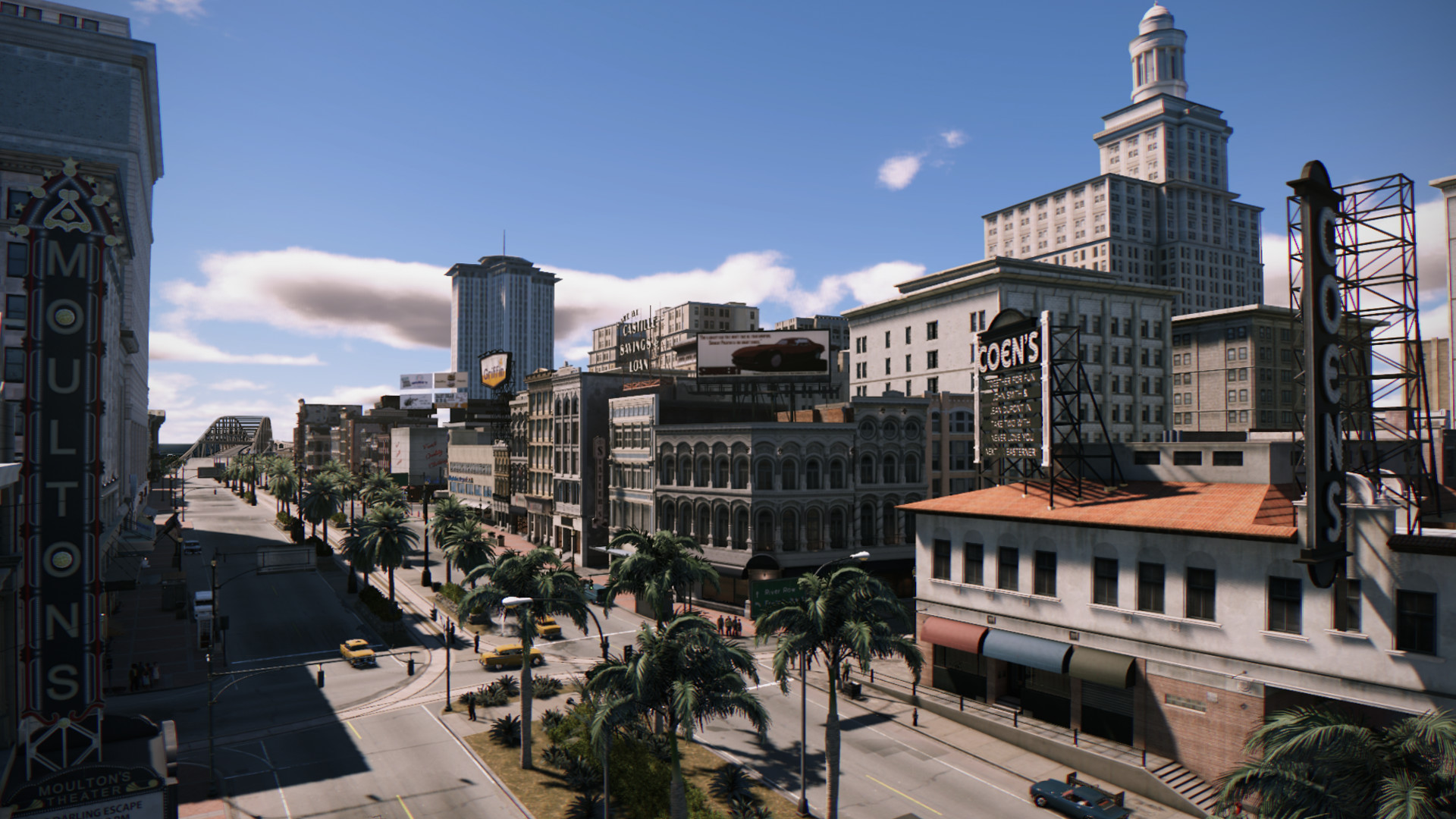
The city — named New Bordeaux, a barely-disguised stand-in for New Orleans — is genuinely, quietly extraordinary. Hangar 13 built a place that feels like 1968 rather than simply looking like it. The racial segregation is not background dressing; it is a mechanical and spatial reality. Lincoln Clay, a Black Vietnam veteran, is denied entry to certain districts, followed by police at lower wanted thresholds than white NPCs in the same situations, and spoken to with casual viciousness that the game never softens. That discomfort is load-bearing. It is why the revenge plot, which is structurally simple, carries actual weight.
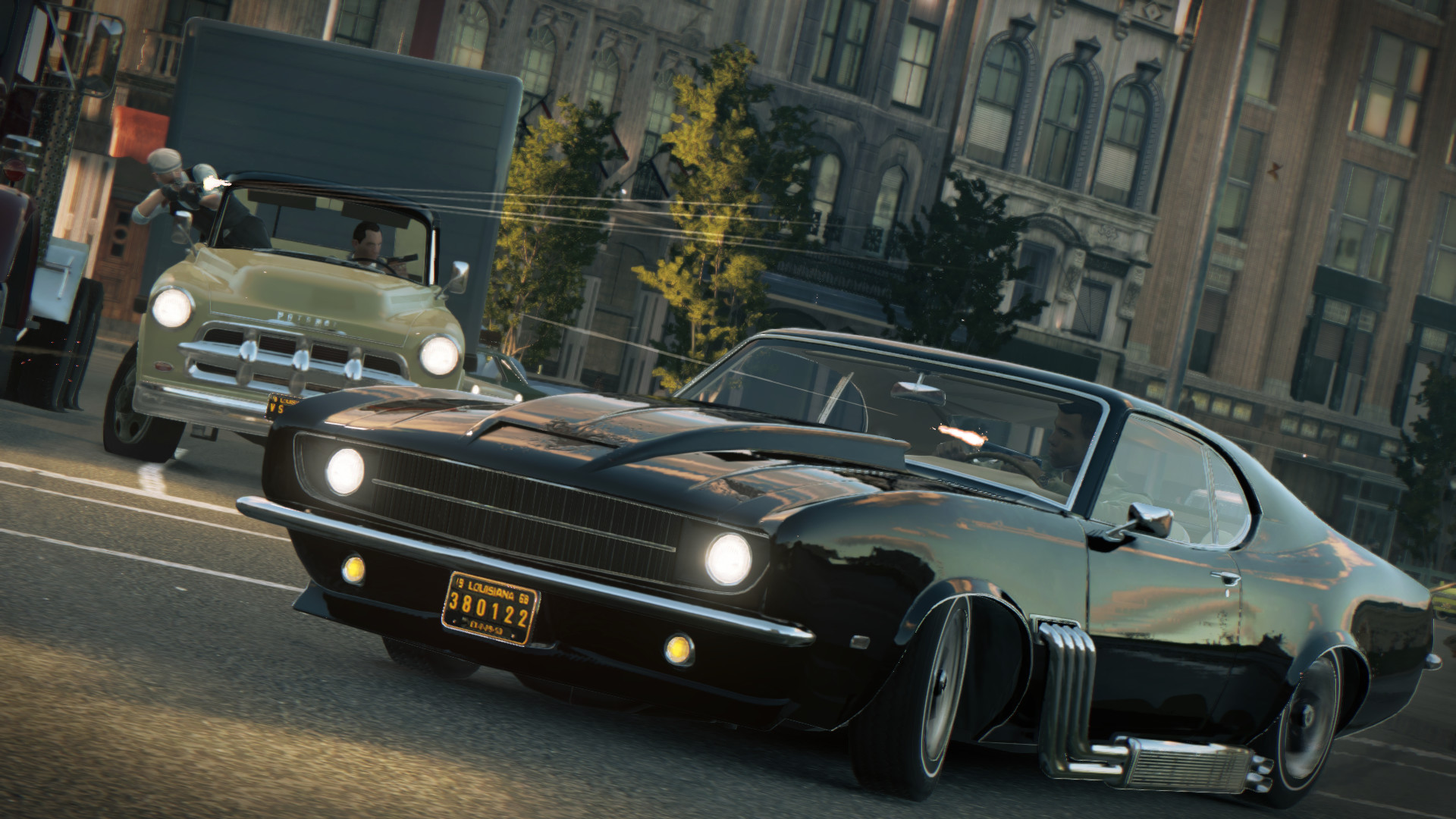
The environmental storytelling holds up well. Radio stations cycle through period-accurate tracks — The Animals, Creedence Clearwater Revival, Bobby Womack — and the transitions between districts shift the sonic texture in ways that feel considered rather than arbitrary. Sitting in a stolen car outside a Dixie Mafia-controlled bar at 11 PM in-game while Aretha Franklin plays is, genuinely, a specific kind of atmosphere that very few open-world games manage. Rockstar gets most of the credit in this space, but New Bordeaux deserves to be named alongside Liberty City and Los Santos in the conversation about cities that feel inhabited.
The Definitive Edition adds no new environmental content, but the visual upgrade — cleaner textures, more stable frame rate on current hardware — does the city legitimate favours. Bayou Fantom in particular, the swampy outskirts district, looks substantially better than it did at launch. The atmospheric fog rendering was broken on many systems in 2016; here it works as intended, and the effect is properly eerie.
The Mission Loop Problem Has Not Been Fixed
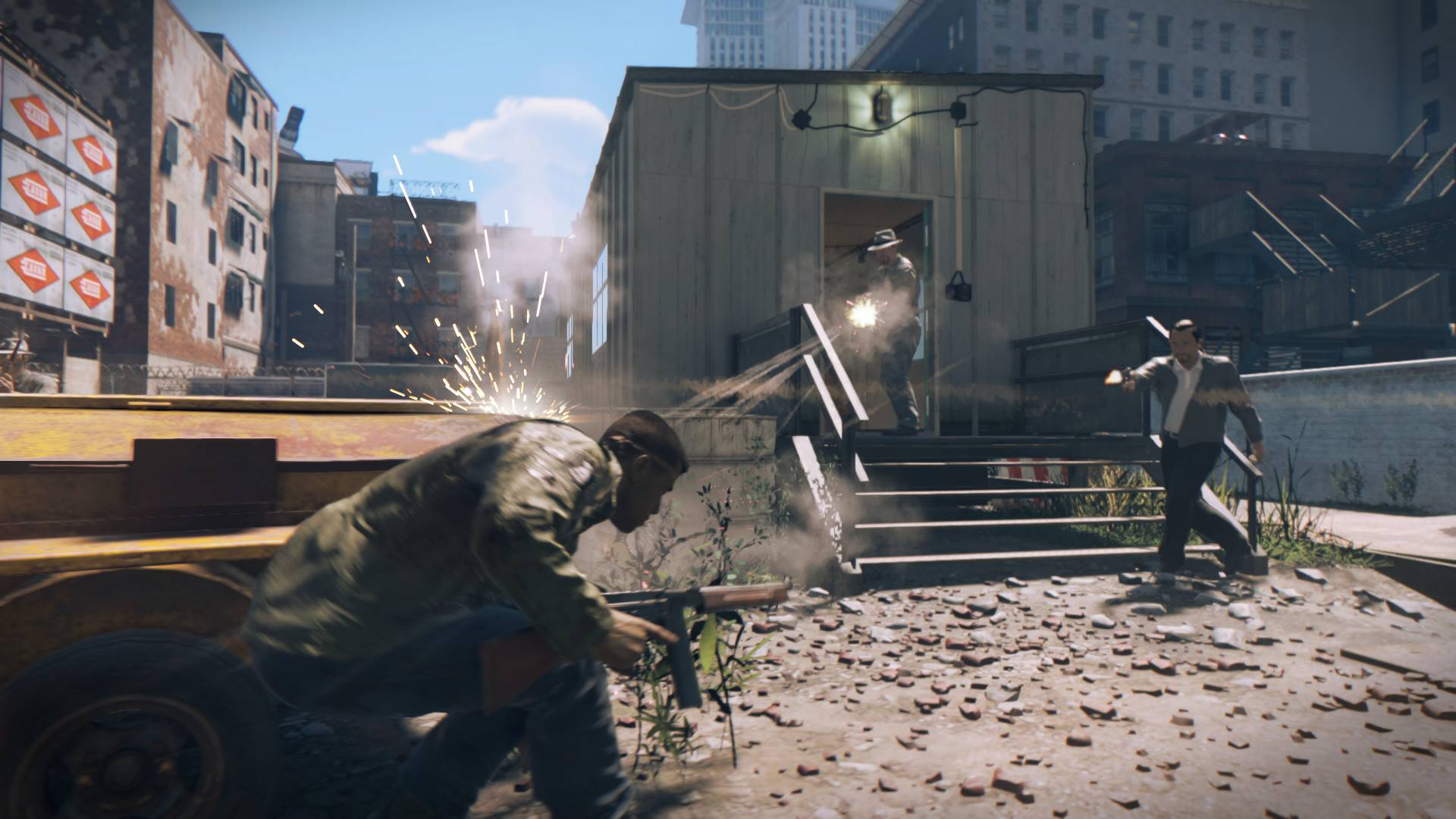
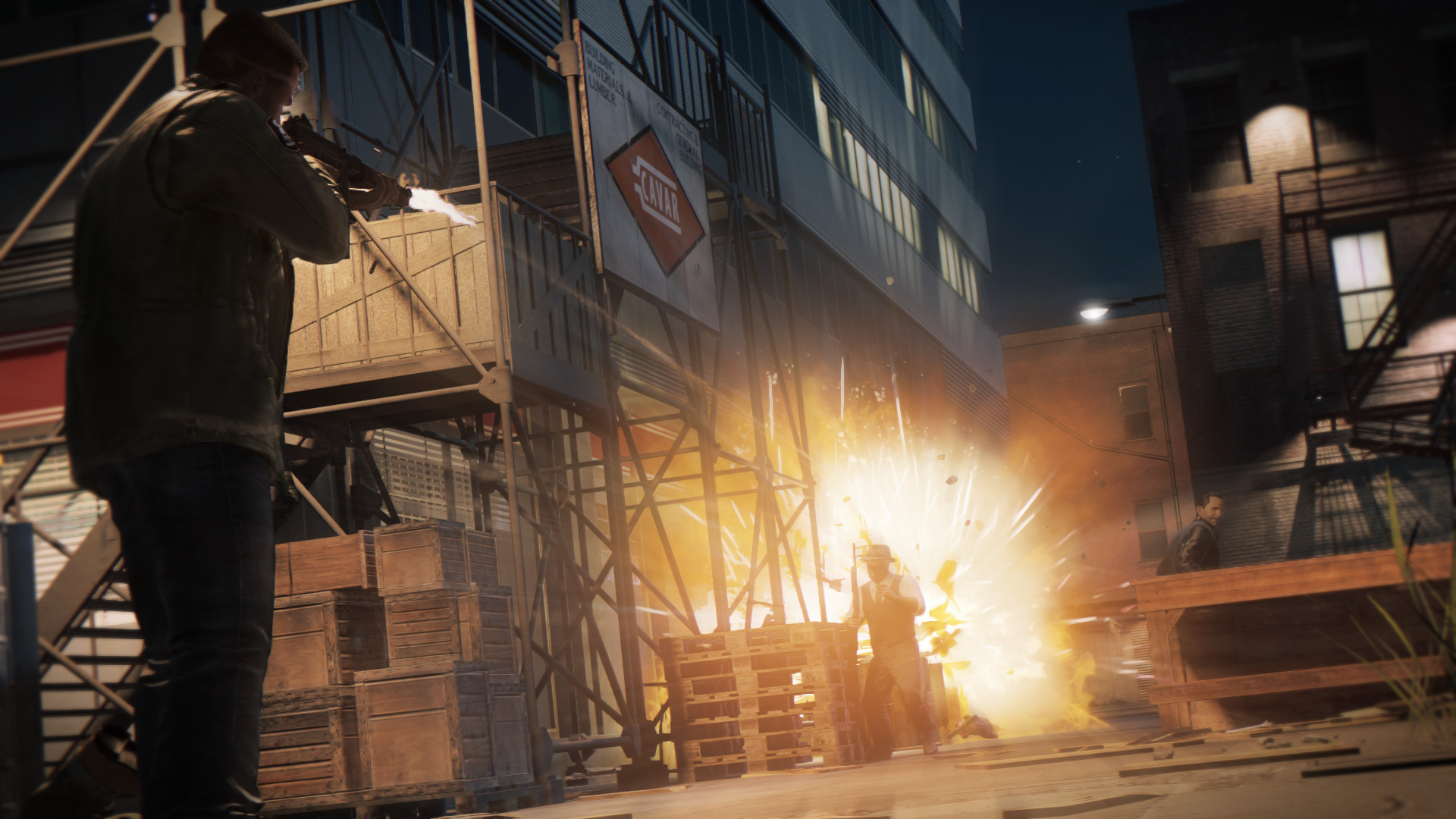
Here is where the review has to be honest. Mafia III's core gameplay loop — identify a racket, disrupt its operations by killing couriers or destroying assets, kill the lieutenant, claim the territory — is repeated approximately forty times across the game's runtime. Not forty variations. Forty repetitions. The enemy AI has not been meaningfully improved in the Definitive Edition, so the cover-shooter combat that fills these missions remains functional but thin. Lincoln has a solid grab-and-snap melee system and the weapon feel is decent, but the enemies stand in predictable positions, flank rarely, and die to headshots with uniform efficiency.
The distributor management system, where Lincoln must assign racket income to one of three underbosses — Cassandra, Vito Scaletta, or Thomas Burke — adds a thin layer of strategic resource allocation that genuinely is interesting for the first half of the game. Neglect a lieutenant for too long and they turn on you. Balance them too evenly and nobody gets powerful enough to be useful. It is a mechanic that gestures toward the kind of faction management you see in a grand strategy context, but it never develops beyond the gesture. By the game's final third, the system is solved and coasting.
The Definitive Edition added a new difficulty mode and some quality-of-life options, including a faster travel system that reduces the time spent driving between objectives. That last change is meaningful. Driving across New Bordeaux was scenic the first time and a chore by hour twelve. The fast travel option does not break anything, and anyone who found the original version exhausting should turn it on without guilt.
Lincoln Clay Deserves Better Writing Than He Gets
Alex Hernandez's performance as Lincoln is one of the underrated voice acting turns of the PS4/Xbox One generation. The character is composed — quiet, purposeful, furious in a way that barely surfaces — and Hernandez finds textures in the dialogue that a lesser performance would flatten. The cutscene cinematography, structured as a retrospective documentary with real actors delivering interview-style testimony, is a formal choice that mostly works and occasionally is brilliant.
The problem is that Lincoln's psychology is underdeveloped during actual gameplay. The story communicated in cutscenes — trauma, code-switching, the impossible position of a Black veteran in 1968 America — does not manifest in the systems you interact with. Lincoln between missions is a container for objectives. The few ambient dialogue moments the game provides, Lincoln talking to himself while driving, are too sparse to bridge the gap. Compare this to how Naughty Dog embedded Ellie's emotional state into traversal and environmental observation in The Last of Us, and you understand what Mafia III was reaching for and why it falls short.
The three DLC packs, all included in the Definitive Edition, are uneven. Faster, Baby! is the strongest — a self-contained story in a new map area with a sharper pace and a genuinely memorable supporting character in Roxy Laveau. Stones Unturned pairs Lincoln with John Donovan for what amounts to a competent action romp. Sign of the Times is the weakest, a cultist storyline that feels grafted on from a different game entirely.
Where It Sits on the Genre Ladder
Open-world crime as a genre has three tiers in 2024. At the top: Red Dead Redemption 2 and GTA V, which set the production standard so high that most studios have stopped trying to compete directly. In the middle: games like Sleeping Dogs and the original Mafia II, titles with genuine mechanical or narrative ideas that land despite technical limitations. Mafia III belongs in that middle tier, though it sits at an awkward angle — its narrative ambition is top-tier, its mechanical execution is not.
The original Mafia: Definitive Edition, which Hangar 13 also produced for the Trilogy collection, demonstrated that the studio could execute a tight, linear crime story with real precision. That game got a full remake. Mafia III got a remaster. The difference in investment shows, and it creates an odd situation where the weakest of the three original games received the most attention in the Trilogy collection, while the most technically troubled entry — which was also the most thematically interesting — received the least.
Technical State in 2024
On PC via Steam, the Definitive Edition runs cleanly on mid-range hardware. A system with a RTX 3060 and Ryzen 5 5600X held a stable 60fps at 1440p with settings maxed across the 24-hour playthrough, with two crashes to desktop — both during loading screens rather than active gameplay. The original 2016 release was genuinely unstable on equivalent hardware of its time, so this is a real improvement, even if two crashes in 24 hours is not a clean bill of health.
Some legacy bugs remain. NPCs occasionally spawn in geometrically impossible positions. One mission-critical phone call triggered without audio, requiring a checkpoint reload. The minimap still has trouble distinguishing elevation changes in multi-floor buildings, which causes navigation confusion in a handful of interior missions. None of these are dealbreakers. All of them are the kind of thing that should have been caught.
Who Actually Needs to Play This
If you care about how games handle American history, specifically the Civil Rights era and the Vietnam War's domestic aftermath, Mafia III is required playing. There are maybe five games in existence that engage with systemic racism as a spatial and mechanical reality rather than a cutscene acknowledgement. This is one of them. That alone justifies the time investment for the right audience.
If what you want is a mechanically satisfying open-world game with varied mission design and a responsive, developing combat system, look elsewhere. Saints Row IV, Yakuza 0, even the underrated Sleeping Dogs — all of them will serve that appetite better. Mafia III is a game you play for what it's saying, not for how it feels to play it minute-to-minute.
The Definitive Edition does not fix Mafia III. It makes it more accessible, runs it more stably, and packages it with three DLC expansions that collectively add another eight hours of content, one of which — Faster, Baby! — is genuinely worth your attention. What you are getting is Hangar 13's flawed, sincere, sometimes remarkable 1968 at a price point that, on sale, is difficult to argue with. The game it could have been remains visible through the game it is. That gap is the most honest thing about it.
Verdict
| Category | Score |
|---|---|
| Gameplay | 8/10 |
| Story | 9/10 |
| Visuals | 6/10 |
| Replayability | 6/10 |

Cal Burke
Cal champions the 'walking sim' genre. Has the longest entry on What Remains of Edith Finch on the site.
Frequently Asked Questions
How long does it take to finish Mafia III: Definitive Edition?
Main story runs around 80-100 hours depending on how thoroughly you explore. Completionists can spend 2-3× that.
Is Mafia III: Definitive Edition good for newcomers to Open-World Crime?
Yes — Mafia III: Definitive Edition is a great entry point. The early hours teach the systems gradually and the difficulty curve is reasonable.
Which platform should I play Mafia III: Definitive Edition on?
Steam Deck handles this title well — verified compatibility on most recent patches.
Was Mafia III: Definitive Edition worth the launch-day price?
If you're a fan of Hangar 13, yes. If you're new to the studio, a sale price is more comfortable.
Are there DLCs or expansions worth picking up?
Skip the cosmetic DLC. The story expansion is the only one we'd recommend at full price.
What did Hangar 13 get right (and what could be better)?
Strongest: art direction, audio design, set-piece variety. Weakest: late-game balance and a few persistent quest-log bugs.
Comments (7)
Bookmarked for when it drops to half price. Cheers for the honest writeup.
Played on Steam Deck — runs great after the proton-experimental fix.
Spoiler-free reviews like this are rare. Appreciated.
Spent 60 hours with this. Worth every minute.
Music is criminally underrated in this one — wish more reviews mentioned the score.
Did you notice how the side missions tie back into the main arc? That was a nice touch.
Best take I've read on this one. The Open-World Crime space needs more critical depth.