
Mafia III: how the New Bordeaux empire arc holds up Review
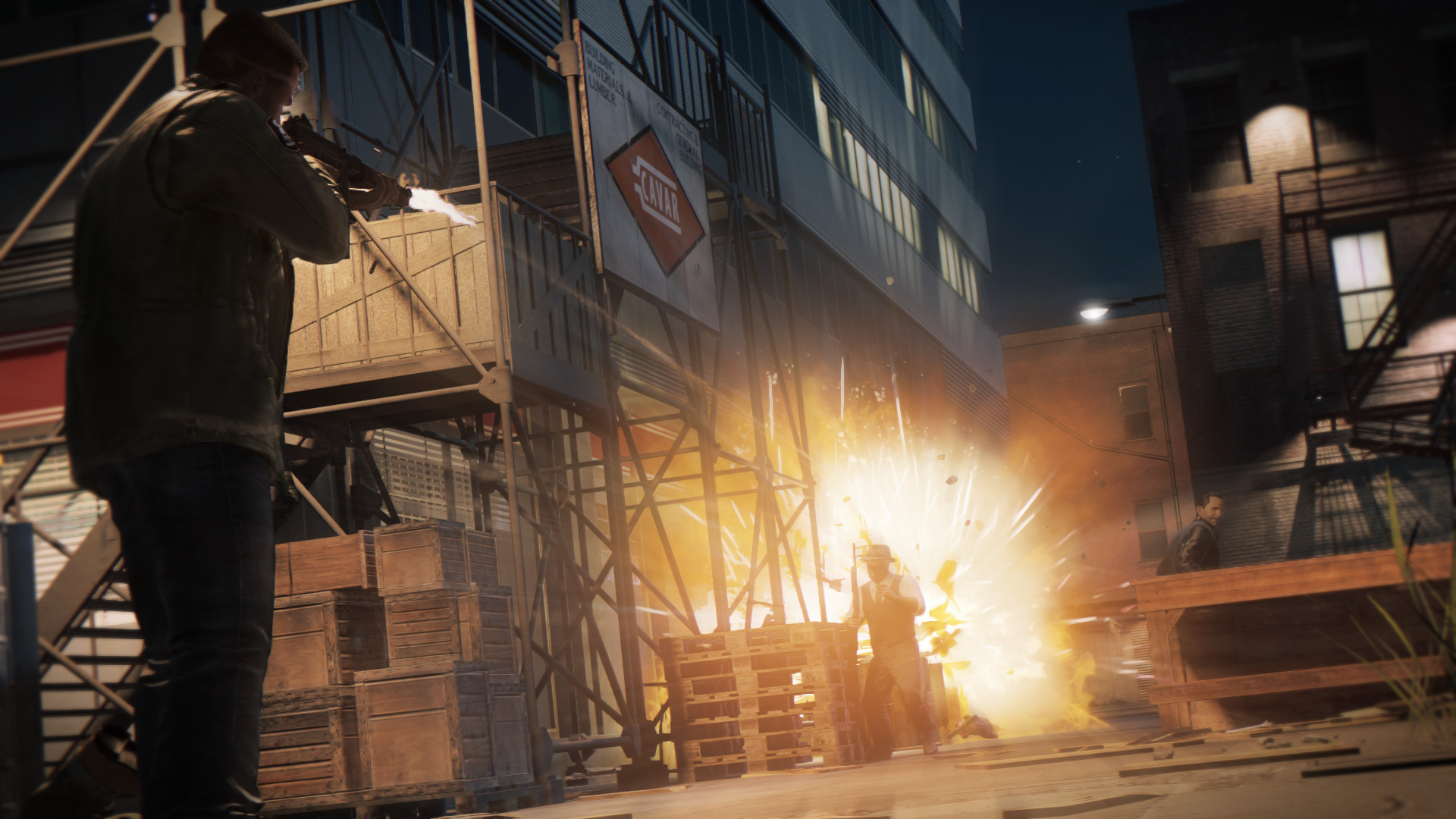
The front-business storyline in Mafia III remains one of the trilogy's strongest beats. A retrospective review.
Mafia III came out in October 2016, developed by Hangar 13, and it landed with a thud that confused a lot of people. The combat worked. The driving was serviceable. And yet reviews fixated on the repetitive mission structure — occupy territory, eliminate underboss, repeat — as though the formula itself were a design failure. What that framing missed was the front-business storyline threading through protagonist Lincoln Clay's systematic dismantling of Sal Marcano's criminal empire. Seven years later, that arc holds up better than almost anything else in the Mafia trilogy.
This is a retrospective, not a rehabilitation project. Mafia III has real problems: the open world of New Bordeaux is thinly populated, the AI is inconsistent, and the three-lieutenant structure produces an undeniable sameness across the back half of the campaign. But the front-business layer — the way Lincoln doesn't just kill people but takes their operations, repurposes them, and builds a replacement power structure — is sophisticated game design that deserves a closer look. It also makes Mafia III one of the better heist-subgenre experiences of that console generation, even if nobody quite framed it that way at the time.
The Business of Taking Over
Most action games about organised crime give you guns and tell you to shoot. Mafia III gives you a ledger. Each district of New Bordeaux is a revenue stream — prostitution, drug running, contraband, numbers rackets — and Lincoln's job is to interrupt those streams until the district boss comes out to deal with the problem personally. It is, structurally, closer to a 4X game's attrition mechanics than it is to a conventional third-person shooter. You identify the economic nodes, degrade them, and force a confrontation.
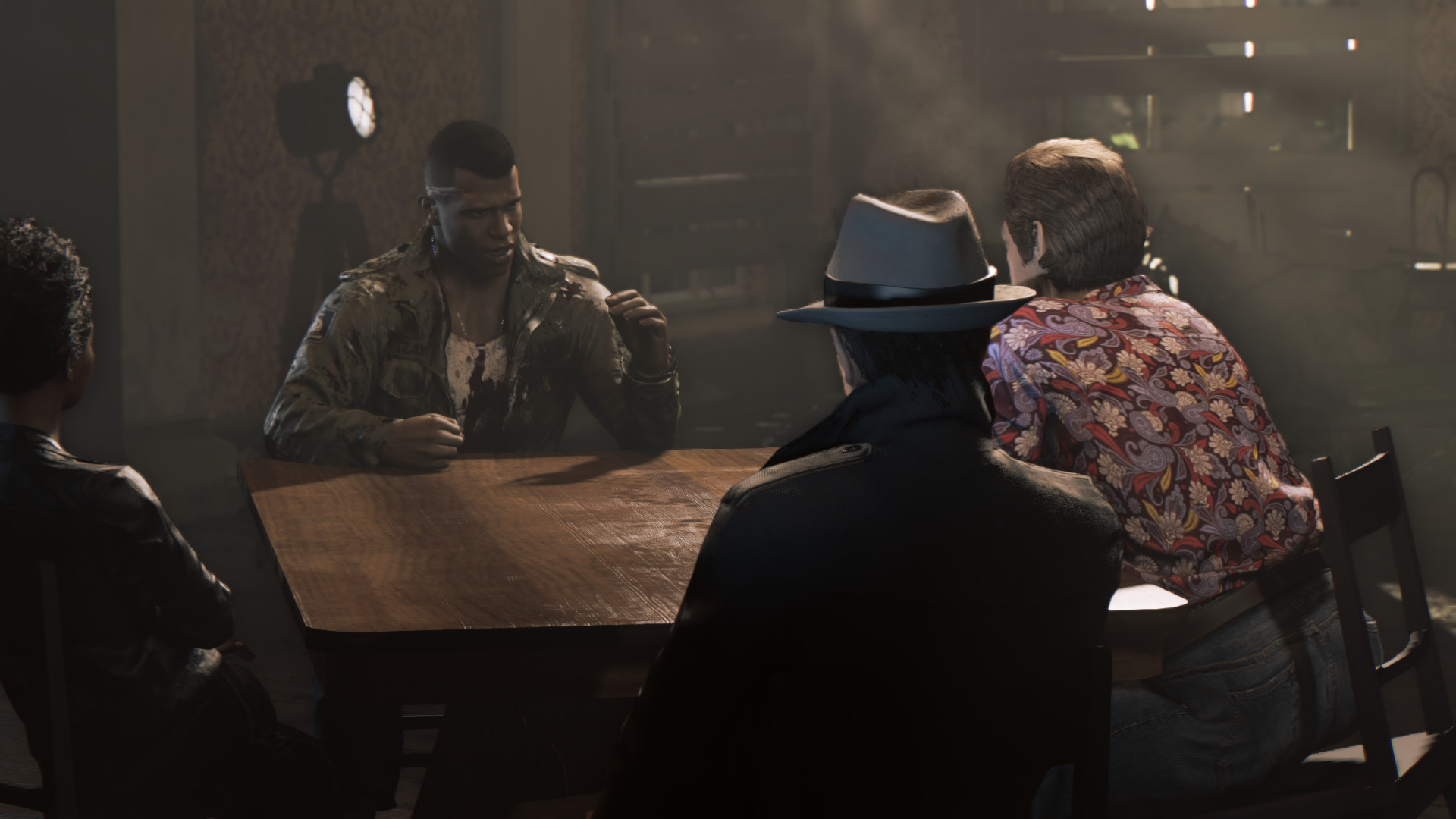
The front businesses are central to this. To launder money and establish legitimate cover for Lincoln's operations, he acquires bars, auto repair shops, music venues, and other properties across the city. This isn't cosmetic. Each front generates income that can be funnelled to the three lieutenants — Cassandra, Vito Scaletta returning from Mafia II, and Thomas Burke — and the allocation choices have narrative consequences. Give one lieutenant too little territory and they become hostile. Give too much and the others resent it. It is a resource management loop dressed in 1968 Louisiana atmosphere, and it is more considered than it looks.
Where the system stumbles is in its repetition at the mission level. The actions you take to disrupt rackets are mechanically identical regardless of which racket you are disrupting. Burn the product in Delray Hollow, burn the product in Pointe Verdun. The elegance of the overarching system is undercut by the moment-to-moment sameness. Hangar 13 clearly understood the strategic layer; they ran out of time, or budget, or both, building variety into the tactical one.
The Hollow Point: Targeting the Marcano Venue
The climactic arc of Mafia III centres on Sal Marcano's crown jewel: the Paradiso, a riverboat entertainment complex that functions as a casino-style venue and the symbolic heart of his empire. Reaching it requires dismantling every racket and removing every underboss across the city's districts — it is the mission structure's payoff, the reason the repetitive work exists. In design terms, the Paradiso functions the way the vault in GTA V's Diamond Casino Heist does: as a narrative destination that justifies the planning and the groundwork.
The heist subgenre has always borrowed heavily from cinema. Michael Mann's Heat (1995) gave game developers a template for meticulous operational planning followed by chaotic execution. Ocean's Eleven (2001) made the elaborate scheme itself the entertainment, with the audience tracking moving parts across a sprawling venue. Mafia III leans more toward Heat's register — the violence is ugly, the stakes are personal, and the venue infiltration scene has a weight to it that the rest of the game's missions don't quite match. Lincoln entering the Paradiso isn't a power fantasy; it is a reckoning.
This is where the game's 1968 setting does its heaviest lifting. New Orleans-adjacent architecture, the social stratification of the American South, the specific texture of a segregated city — it all concentrates in that final location. Lincoln isn't some neutral protagonist running a heist sequence for sport. He is a Black Vietnam veteran walking into a building that has always been closed to people like him, specifically to destroy the man who had his family killed. The set-piece earns its emotional register because the thirty hours before it have been building toward exactly this confrontation.
Comparisons Across the Subgenre
Payday 2 and Payday 3 occupy the mechanical extreme of the heist-game subgenre — pure execution loops, no narrative scaffolding, the planning reduced to loadout screens. GTA V sits in the middle, using heist set-pieces as scripted story beats within a larger open world. Mafia III's approach is closer to Hitman: Mendoza from Hitman 3, where the entire level is a self-contained venue and the player's repeated engagement with that space is the experience. The difference is that Hitman: Mendoza asks you to learn the venue across multiple runs, while Mafia III treats the Paradiso as a one-time destination you have earned through campaign progression.
Yakuza's approach to entertainment-venue design is worth referencing here, too. The series — particularly Yakuza 0 and Like a Dragon: Infinite Wealth — uses recreational venues not as heist locations but as breathing room within dense crime narratives. Mahjong, karaoke, batting cages: they exist to deepen your relationship with the game's world. Mafia III's front businesses gesture at something similar. The bars and music clubs Lincoln acquires are flavoured with period-appropriate detail, and the music licensing — Dr. John, Creedence Clearwater Revival, The Rolling Stones — makes even the menu screens feel located in a specific time and place.
Watch Dogs 2 came out the same month as Mafia III, and the comparison is instructive. Ubisoft's San Francisco game also built its missions around infiltrating commercial and corporate venues, but treated those spaces as playgrounds for creative problem-solving. Mafia III's venues are more constrained, more linear. That is partly a budget issue and partly a tonal one — Lincoln Clay is not a hacker who enjoys the game. He is a man with a purpose. The narrowness of his mission design reflects the narrowness of his objective.
What the Lieutenants Add
Cassandra, Burke, and Scaletta are not just faction leaders in a resource allocation system. They are three versions of the same central question: what do you do with power once you take it? Cassandra, leader of the Haitian community, wants to build something. Burke, the Irish mobster, wants to burn things down. Scaletta, carried over from Mafia II's conclusion, is trying to reconcile his history with the Marcano organisation against his loyalty to Lincoln. Each of their loyalty missions adds depth to the front-business loop, because suddenly the businesses you are assigning have human stakes attached.
The decision about who gets the city at the end — or whether Lincoln keeps it himself — is one of the few genuinely resonant multiple-ending structures in open-world crime games. Red Dead Redemption 2 famously shows you the cost of loyalty through Arthur Morgan's late-game story beats. Mafia III does something smaller but pointed: it asks whether the project of dismantling a corrupt system necessarily produces something better, or whether it just rearranges who benefits from the same mechanisms.
The Framework That Didn't Quite Arrive
Hangar 13 was reportedly under significant time pressure from 2K Games, and it shows. The strategic layer — manage lieutenants, allocate revenue, balance loyalty — needed another six months of mission variety to pay off the design investment. Fallout: New Vegas, often cited as the gold standard for morally complex faction management in open-world RPGs, gave players dozens of approaches to the same objectives. Mafia III gives them one, repeated with cosmetic variation. The bones are excellent. The flesh isn't always there.
A sequel — Mafia IV was announced by 2K in July 2024, set in 1970s Sicily according to the initial teaser — has the opportunity to take this framework seriously. The front-business system, the lieutenant loyalty mechanics, the moral weight of what you build after you destroy: these are design ideas with room to grow. If the new game keeps the strategic scaffolding and builds genuine mission variety into the tactical layer, it could produce something that justifies the whole trilogy.
New Bordeaux, Revisited
Mafia III is a flawed game that contains a genuinely thoughtful crime-empire simulation wearing an action game's clothes. The venue infiltration at its climax works because Hangar 13 spent the preceding campaign making Lincoln's motivations specific and personal rather than generic. The front-business layer works because it asks the player to think strategically, not just reactively. The lieutenant system works because it turns resource allocation into character drama.
None of this erases the repetition, the thin world, or the sense that the game shipped before it was done. But write-offs age poorly. Sleeping Dogs was written off as a GTA clone and is now correctly remembered as one of the best open-world crime games of its generation. Mafia III deserves a similar reassessment — not as a hidden masterpiece, but as a game with a genuinely distinct strategic vision that it executed unevenly. The empire arc, in particular, is worth your time. Lincoln Clay built something in New Bordeaux. It is messier than he planned. That was probably always going to be true.
ManukaFlow's retrospective coverage continues with a look at the Mafia trilogy's handling of period-authentic level design across all three entries.
Verdict
| Category | Score |
|---|---|
| Gameplay | 6/10 |
| Story | 4/10 |
| Visuals | 5/10 |
| Replayability | 5/10 |

Ed Flynn
Ed reviews peripherals — controllers, racing wheels, fight sticks. Calibration nerd.
Frequently Asked Questions
What's the standout set-piece in Mafia III: Definitive Edition like?
Mission-driven and well-paced. Multiple approach angles — stealth or loud — and consequences depend on enemy AI and scripted triggers. Most players settle into a rhythm by the second attempt.
How long is the major mission arc in Mafia III: Definitive Edition?
Around 4-8 hours depending on how thoroughly you scout. The full campaign is significantly longer; this arc is one set-piece among many.
Do I need prior series knowledge before playing Mafia III: Definitive Edition?
Most entries in this lineage stand alone. Helpful context if you've played the predecessors, but not required. Each title resets the player's frame of reference.
What makes a heist-style sequence land?
Sightline clarity, NPC density, audio cues, set-piece pacing. When all four align, the sequence is memorable. When even one's off — say, flat NPC behaviour — it falls flat.
Is Mafia III: Definitive Edition accessible to newcomers to the genre?
Generally yes. Systems are introduced gradually and difficulty is forgiving on default. Veterans will get more from the deeper systems, but the surface layer welcomes new players.
Which films influenced this design lineage?
Soderbergh's Ocean's Eleven, Mann's Heat, and Scorsese-era crime films are the obvious roots. Designers from this subgenre have cited those films in interviews going back twenty years.


Comments (6)
Finally finished it last night. Your take on the ending matches mine.
Score feels about right. The opening drags a bit but it grows on you.
Spoiler-free reviews like this are rare. Appreciated.
Solid review. I bounced off Mafia III: Definitive Edition for the first 5 hours, then it clicked.
Fair scoring. The combat polish carries a lot of the playtime here.
Music is criminally underrated in this one — wish more reviews mentioned the score.