
Inscryption Review
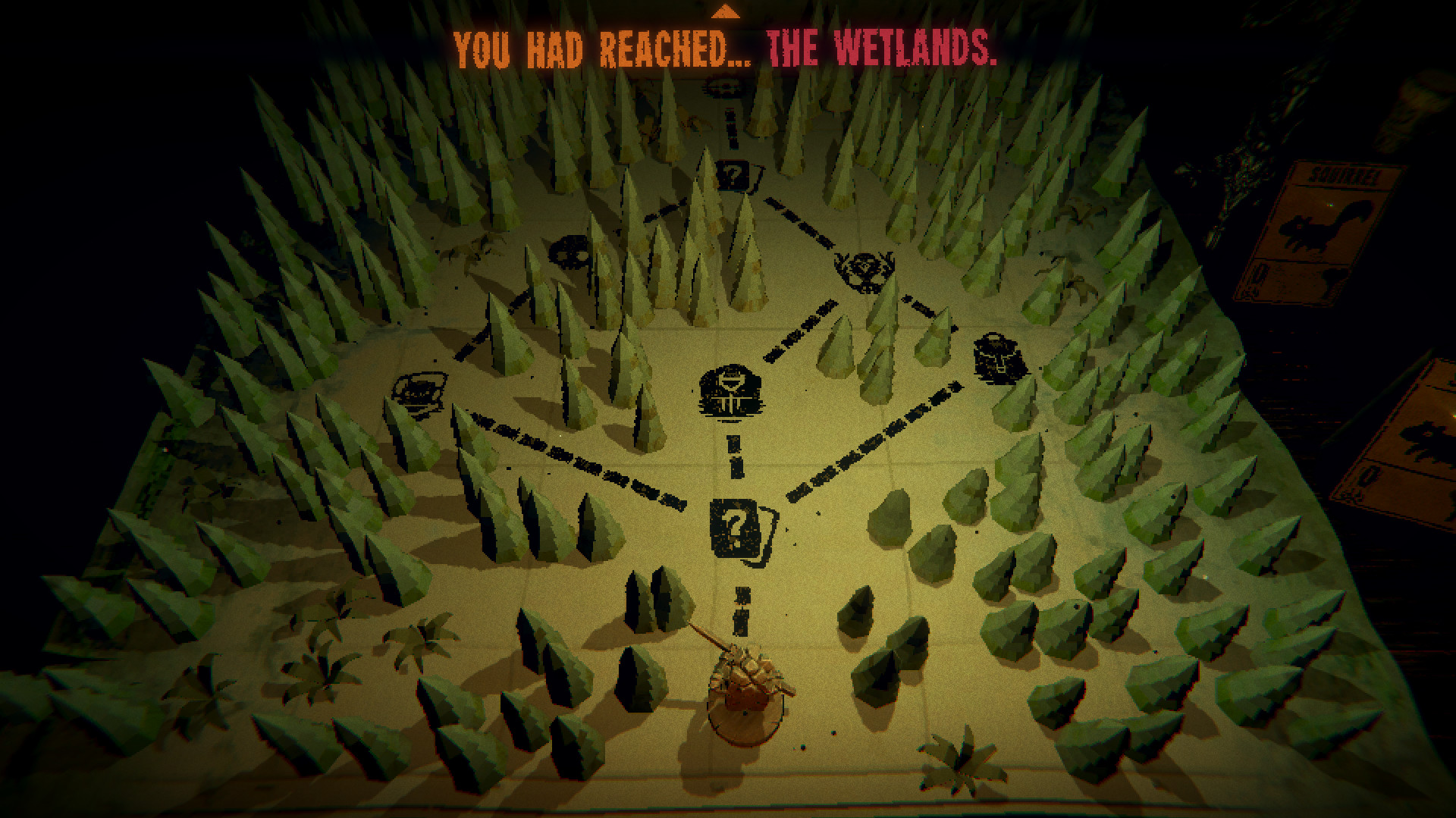
After 47 hours with Inscryption, here's where Daniel Mullins Games's latest lands on the Roguelike Deck-builder ladder.
Inscryption shipped in October 2021 from Daniel Mullins Games, published by Devolver Digital, and it has spent the years since accumulating a reputation that borders on mythology among deck-builder fans. Forty-seven hours in, I can confirm the mythology is mostly deserved — and that the parts where it isn't are worth talking about plainly.
The short version: Inscryption is three different games stapled together inside a metafictional horror wrapper, and two of those three sections are genuinely extraordinary. The third is a slog that tests your goodwill. Whether that ratio works for you will depend almost entirely on how forgiving you are when a game pulls the rug and replaces it with a slightly worse rug.
What Inscryption Actually Is
The game opens as a roguelike deck-builder in the vein of Slay the Spire — cards, a map of branching nodes, escalating encounters — but wrapped in an escape-room layer where your opponent, Leshy, sits across a candlelit table watching you play. You are literally a prisoner in a cabin. Between runs you can get up, walk around, solve environmental puzzles, and uncover secrets embedded in the physical space. It's a structural idea that Mullins had been stress-testing in smaller free games like Pony Island and The Hex, and here it reaches full expression.
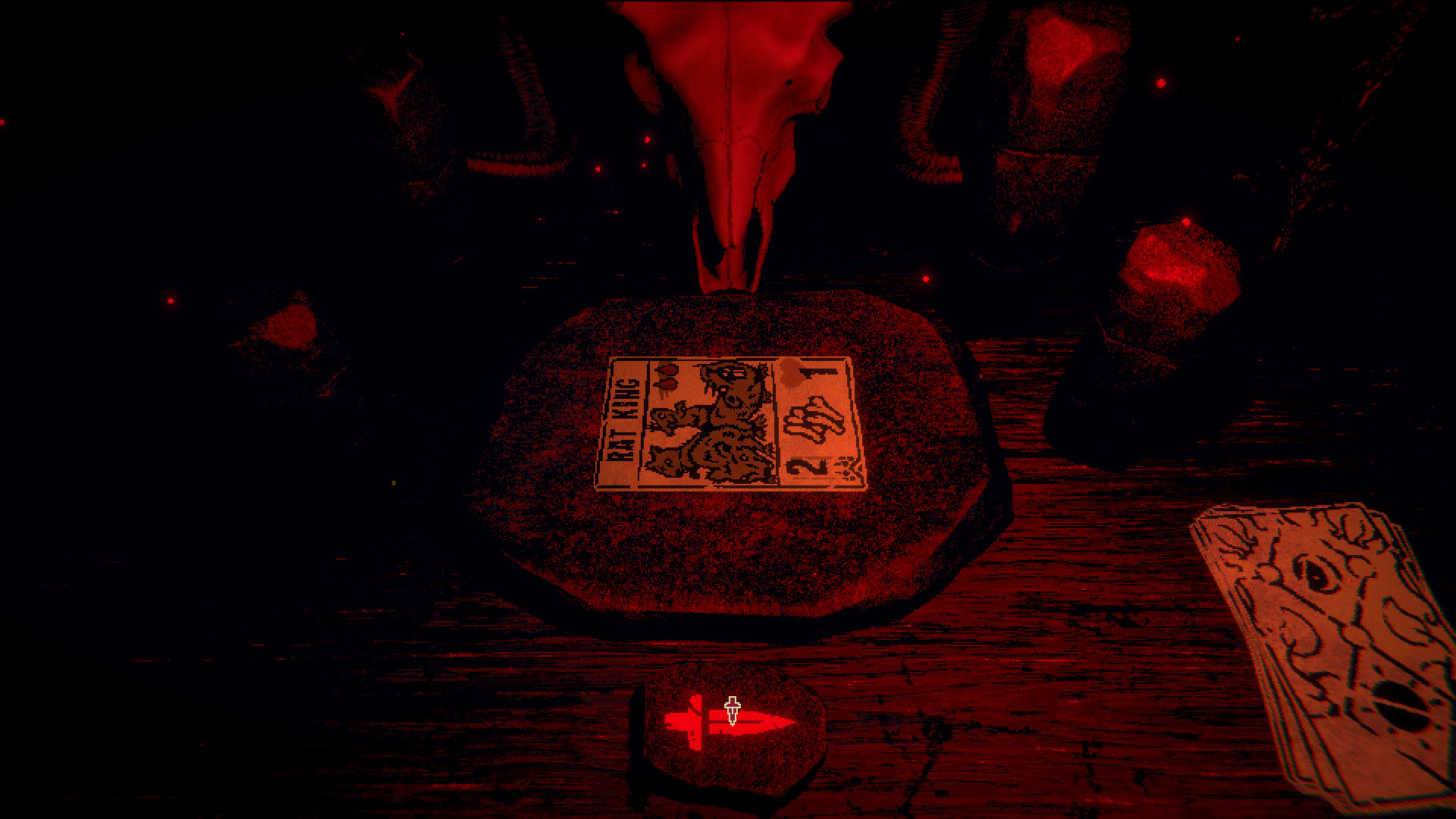
The card mechanics in Act 1 — which is roughly what gets shown in trailers — centre on a sacrifice system rather than a mana economy. Creatures cost other creatures. You blood your own wolves to summon a bear. Squirrels exist as cheap fodder. This creates a genuine tension around board state that most deck-builders flatten out once your engine is running: here, overcommitting to feed a powerful card can leave you defenceless the next turn. It's a small design decision with outsized consequences, and it makes every fight feel like a negotiation rather than a calculation.
The Cabin Holds Up Under Scrutiny
Act 1 is the strongest sustained piece of design in the game, and it's strong enough that some players — according to forum posts on Steam and the game's subreddit — have expressed genuine disappointment when it ends. The environmental puzzles embedded in the cabin are clever without being obscurantist. The clock, the caged raven, the safe combination hidden in card art: these are the kind of tactile secrets that reward curiosity rather than demanding a walkthrough. When a puzzle clicked, it felt earned.
Leshy himself is a remarkable piece of antagonist design. He reacts dynamically to your board, comments on your card choices, occasionally cheats in ways that feel like character expression rather than cheap difficulty spikes. He has specific tells when he's about to deploy a particularly nasty totem combination. Learning to read him across multiple runs adds a layer that pure mechanical deck-builders can't replicate, because there's no personality anchoring the opposition. Slay the Spire's Corrupted Heart is a threat; Leshy is a presence.
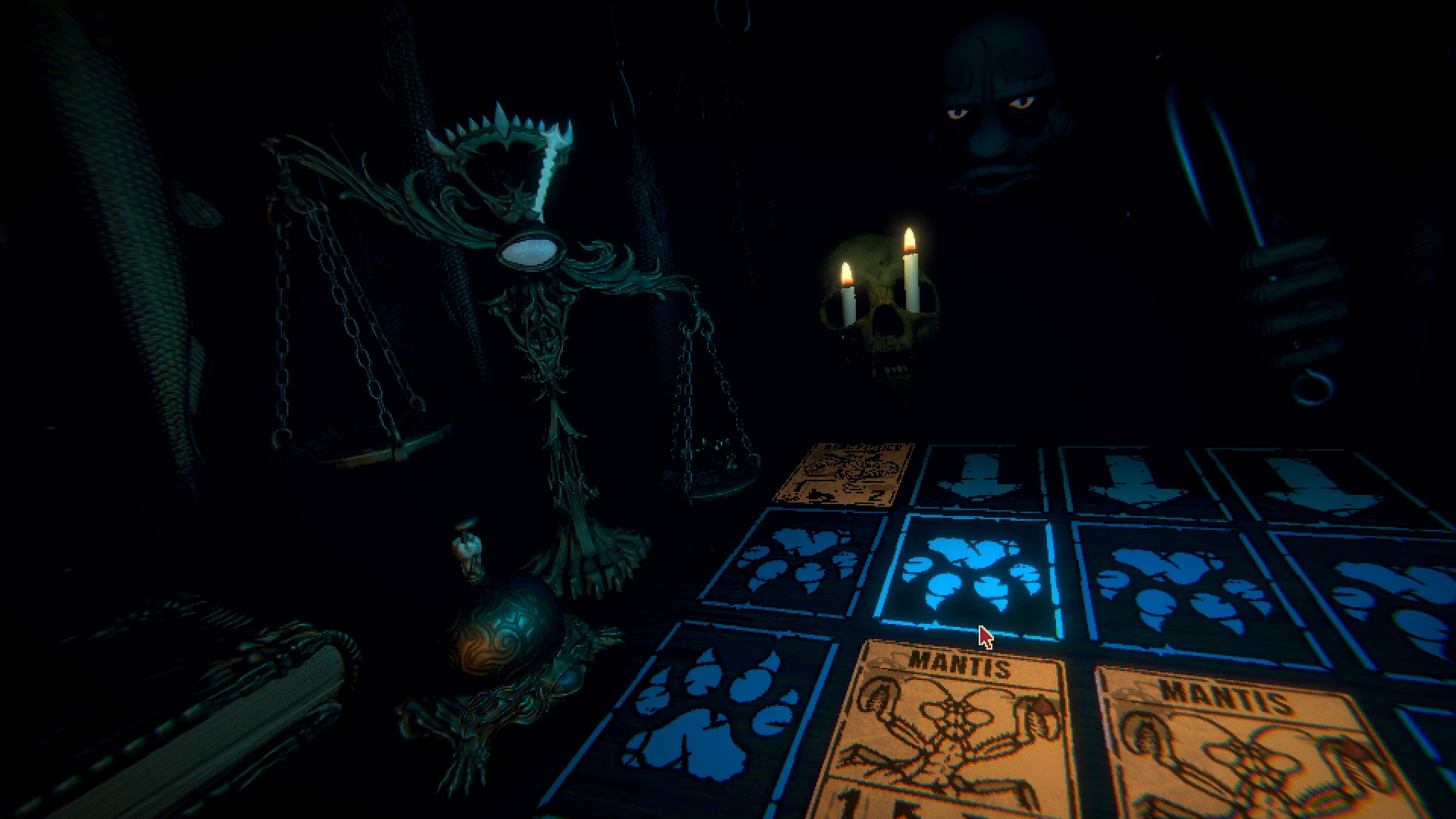
Act 2's Pixel Detour
Then the game shifts. Act 2 restructures everything into a top-down RPG format with a digital card game aesthetic — think early-era Magic: The Gathering Online crossed with a Game Boy game that someone found in a dumpster, intentionally. The sacrifice mechanic is replaced by a more conventional energy system. Three additional card factions are introduced: the Undead, the Technology, and the Nature variants, each with their own rules. It's ambitious, and it's where Inscryption's seams start to show.
The problem isn't the new factions. Some of the Technology cards — Bots with circuit-based sigil synergies — produce interesting interactions. The problem is pacing. Act 2 requires you to collect the four boss cards from four regions, and the regions are large enough that exploration tips from atmospheric into repetitive. Fights in this section feel undertuned compared to Act 1's tight economy. The escape-room tension evaporates. You're playing a competent but unremarkable digital card game in a shell that keeps reminding you of a better one you just left.
Act 3 Recovers, Mostly
Act 3 returns to a structure closer to Act 1 — a linear progression with increasingly elaborate boss encounters — and the narrative payoff it's building toward gives the mechanical repetition more weight than Act 2 managed. The metafictional elements, which I'll avoid spoiling beyond saying they involve the game's own files in a way that impressed me even when I could see the mechanism clearly, reach their sharpest expression here. Mullins is doing something Hideo Kojima has gestured at for years and rarely fully committed to.
The card interactions in Act 3 also lean harder into the broken-combo territory that defined the best moments of Act 1. There's a particular sigil pairing involving the Unkillable and Fecundity mechanics that, once discovered, makes you feel like you've found a genuine exploit — and the game is aware of this feeling and uses it. That's sophisticated design. The boss fights are the most mechanically demanding in the game, and one of them, which I'll describe only as involving a camera and a mirror, is the best single encounter I've played in a deck-builder since Slay the Spire's Time Eater.
Where It Sits in the Genre
Inscryption arrived in a deck-builder landscape that Slay the Spire (MegaCrit, 2019) had defined and that Monster Train (Shiny Shoe, 2020) and Midnight Suns (Firaxis, 2022) were pushing into new structural territory. Its contribution to that conversation isn't mechanical refinement — MegaCrit remains the cleaner, more replayable design — but conceptual expansion. Mullins asks what a deck-builder can do that only a video game can do, and he answers it with genuine invention.
For readers of this site whose interests run more toward 4X and grand strategy, Inscryption is worth flagging specifically because the resource and sacrifice mechanics in Act 1 have a closer relationship to strategic economy management than most deck-builders do. The decisions feel weighted differently than Slay the Spire's increasingly optimised damage calculations. There's something almost Dominion-like in thinking two or three turns ahead about your creature board as a resource pool — except that Dominion has never once made you feel like you might be trapped in a cabin.
The Replayability Question
Post-completion, Inscryption unlocks Kaycee's Mod — a standalone roguelike built from the Act 1 mechanics with persistent challenge conditions, new card sets, and a ladder of difficulty tiers. This is where my remaining hours came from, and it's a substantially better replayability layer than I expected. The mod acknowledges, implicitly, that Act 1 is the mechanical core worth preserving, and it treats the main game's narrative revelations as a foundation to build on rather than a reason to replay an uneven three-act structure.
Kaycee's Mod also introduces new sigil combinations that weren't available in the main campaign, which means players approaching it post-completion are genuinely exploring new mechanical territory rather than executing on knowledge they already have. Challenge conditions like Leshy's Custom Mode, which lets players stack modifiers that adjust board size, starting deck composition, and event frequency, add the kind of systemic depth that deck-builder fans who've logged 200 hours in Slay the Spire will recognise immediately.
Inscryption is not a flawless game. Act 2 is genuinely too long and the tonal whiplash from Act 1 is a real cost, not a quirky feature. But Mullins has built something that operates in a register that almost nothing else in the deck-builder genre attempts: a game that is also a horror story, a puzzle box, and a piece of commentary on the medium, all without any of those layers feeling like a gimmick bolted on for press coverage. At its best — the cabin, the camera fight, the first time you realise what the game is actually doing with its own files — it earns the reputation completely.
Verdict
| Category | Score |
|---|---|
| Gameplay | 10/10 |
| Story | 9/10 |
| Visuals | 9/10 |
| Replayability | 7/10 |

Sienna Park
Sienna covers the artsy end of indie. Believes games are art. Will argue about it for hours.
Frequently Asked Questions
How long does it take to finish Inscryption?
Main story runs around 30-40 hours depending on how thoroughly you explore. Completionists can spend 2-3× that.
Is Inscryption good for newcomers to Roguelike Deck-builder?
It depends. The systems are deep but the tutorial does a fair job. Veterans of Roguelike Deck-builder will feel at home faster.
Which platform should I play Inscryption on?
Steam Deck handles this title well — verified compatibility on most recent patches.
Was Inscryption worth the launch-day price?
If you're a fan of Daniel Mullins Games, yes. If you're new to the studio, a sale price is more comfortable.
Are there DLCs or expansions worth picking up?
The base game is complete; expansion DLC adds 10-15 hours of additional content if you want more.
What did Daniel Mullins Games get right (and what could be better)?
The systems are confident and the combat is satisfying. The story handoffs and load times are the rough spots.

Comments (7)
Finally finished it last night. Your take on the ending matches mine.
I disagree on the verdict. The story pacing is the real issue, not the combat.
Multiplayer mode adds 30+ hours of replay value. Underrated section.
Best take I've read on this one. The Roguelike Deck-builder space needs more critical depth.
Spent 60 hours with this. Worth every minute.
The pacing in the second act is exactly the issue that gets glossed over in most reviews.
Did you notice how the side missions tie back into the main arc? That was a nice touch.