
Hollow Knight Review
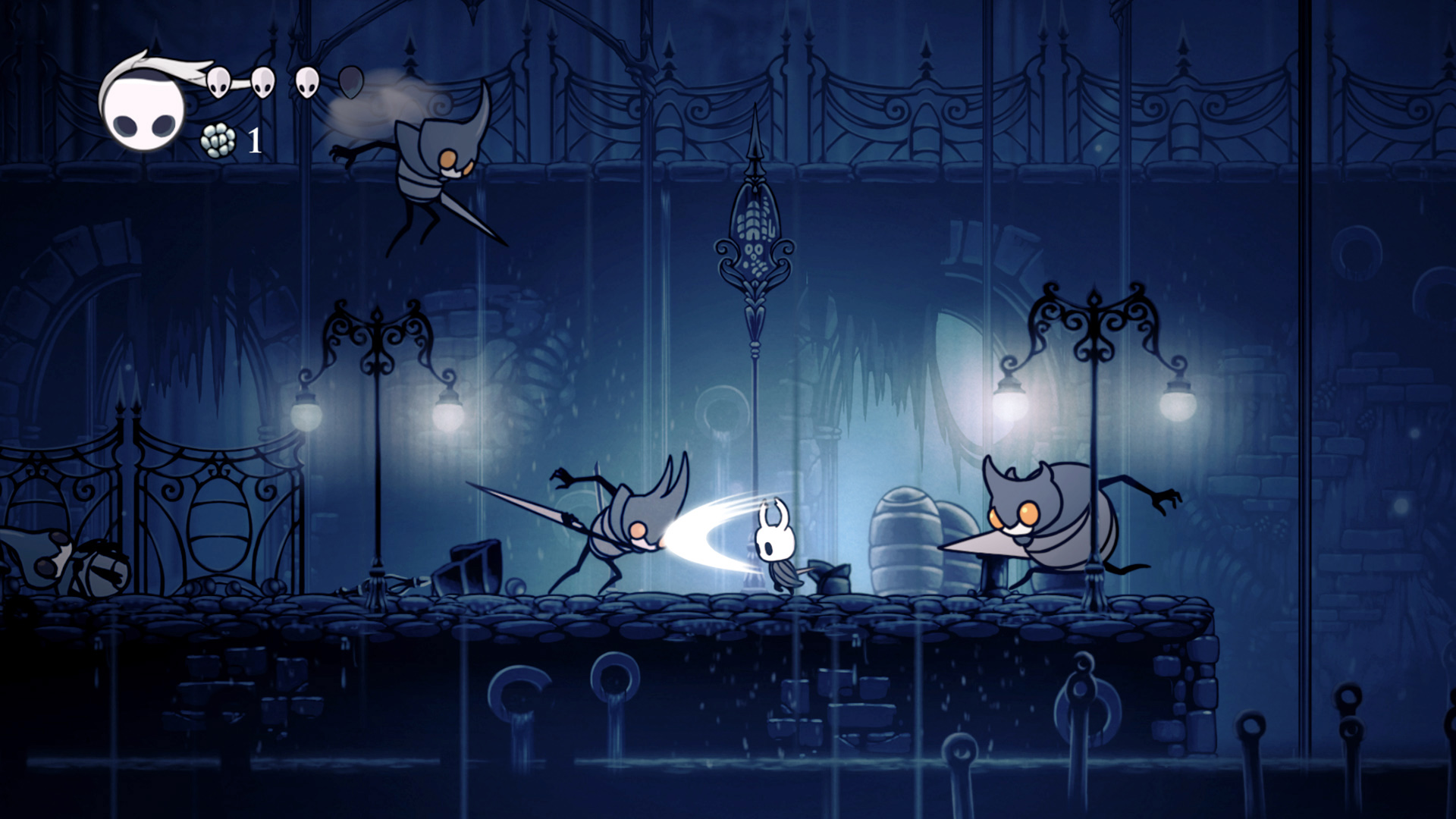
After 85 hours with Hollow Knight, here's where Team Cherry's latest lands on the Metroidvania ladder.
Hollow Knight came out in February 2017, developed by a three-person studio in Adelaide called Team Cherry. Seven years and change later, it has accumulated a reputation that most developers spend entire careers chasing. Somewhere between the 30-hour mark and the 85-hour mark — which is where this playthrough ended, with the True Ending unlocked and most of the Steel Soul mode attempted — it becomes genuinely difficult to separate what Hollow Knight actually is from what the discourse has turned it into.
So let's try. This is not a legacy piece. It is a review of a game that still sells, still gets recommended to every newcomer to the Metroidvania genre, and still shapes what developers think the genre should be. Whether it deserves all of that is a real question, and it has a real answer — mostly yes, with specific caveats.
The World Design Is the Game's Strongest Argument
Hallownest is built with a consistency that very few games manage. Every sub-region — the Forgotten Crossroads, Greenpath, the City of Tears, Deepnest — has a distinct visual logic, a distinct enemy roster, and a distinct audio texture. Christopher Larkin's score shifts register without losing coherence: the City of Tears uses piano and strings to convey a kind of waterlogged melancholy, while Kingdom's Edge is almost silent, punctuated by wind and hollow percussion. These are not cosmetic differences. They communicate information about where you are and what the game expects from you.
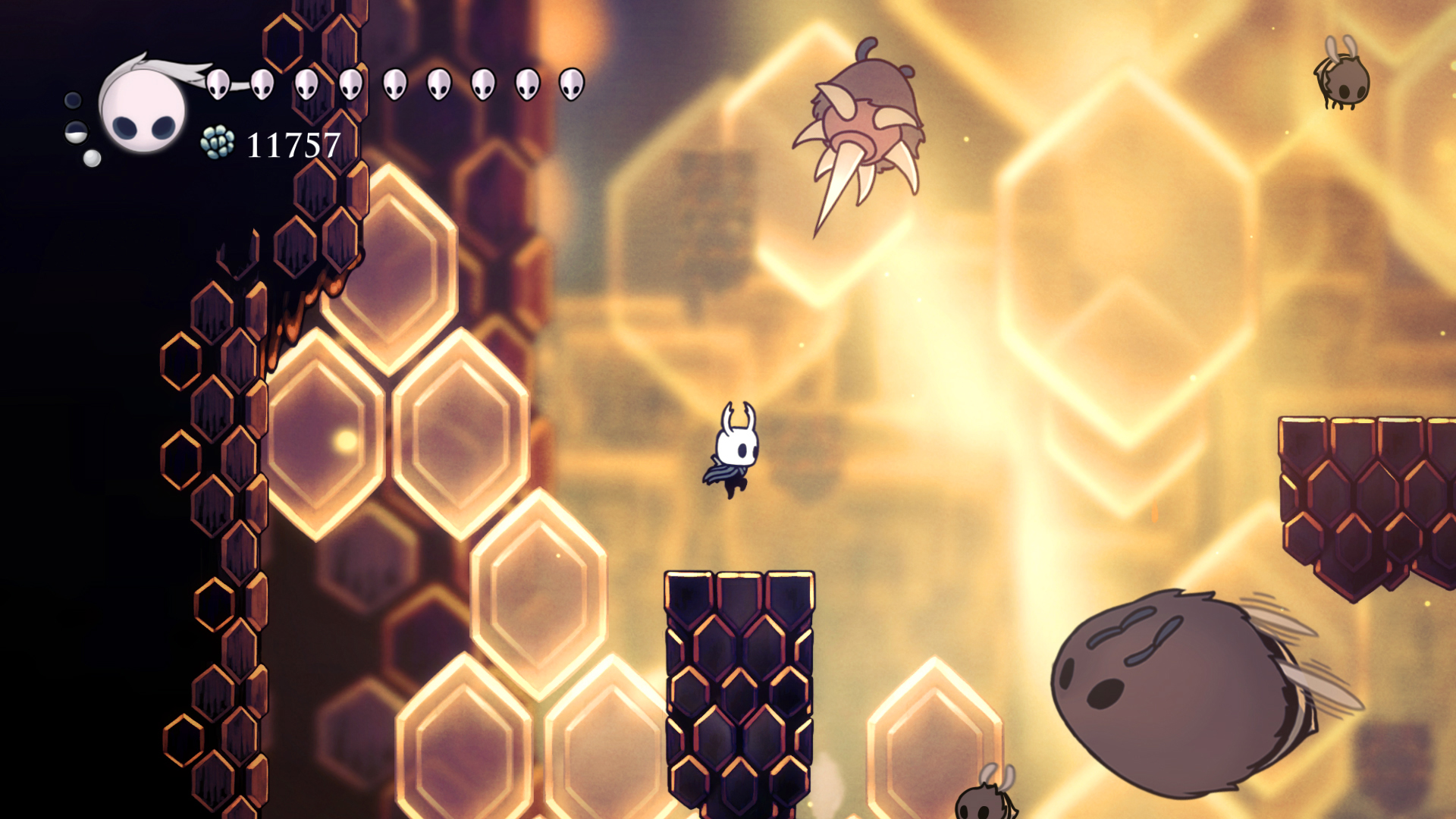
The map system is worth dwelling on. You cannot see your position on a purchased map until you find Cornifer, the cartographer, in each region and then sit at a bench. This sounds annoying and sometimes is, but it creates a specific kind of spatial learning — you are forced to build a mental model of each zone before the map confirms or corrects it. By hour 20 you stop feeling lost and start feeling oriented, which is a different and more satisfying state. Compare this to the map systems in Metroid Dread or Ori and the Will of the Wisps, where your position is always known, and you notice how much the permanent GPS flattens exploration into corridor-running.
The Pale King's backstory, the Radiance, the Infection — none of this is explained to you. It is distributed across NPC dialogue, gravestone inscriptions, item descriptions, and the expressionless body language of characters who cannot speak. Players who want lore have to want it. Players who just want to move through a beautifully designed underground kingdom can do that. Both approaches are respected.
Combat Is Good, Not Great
The nail-swinging combat is precise and readable. Enemies telegraph attacks clearly enough that death feels like a player error rather than a system failure, which is the baseline requirement. The Shade mechanic — losing your Geo (currency) and a shadow of yourself at the point of death, which you must then recover — creates genuine tension without being punishing in the way Dark Souls' bloodstain system can be. Losing your Shade to a second death hurts, but it is rarely catastrophic.
Where combat shows its limits is in the spell system. Soul, collected by striking enemies, powers both healing and offensive spells like Desolate Dive and Shade Soul. In practice, most players settle into a healing-focused Soul usage pattern early and abandon offensive spells almost entirely. The Charm system — equippable passive modifiers slotted against a limited number of notches — offers meaningful build variety on paper, but the gap between the best combat Charms (Quick Slash, Shaman Stone, Fragile Strength) and the situational ones is wide enough that experimentation often feels punished during boss encounters.
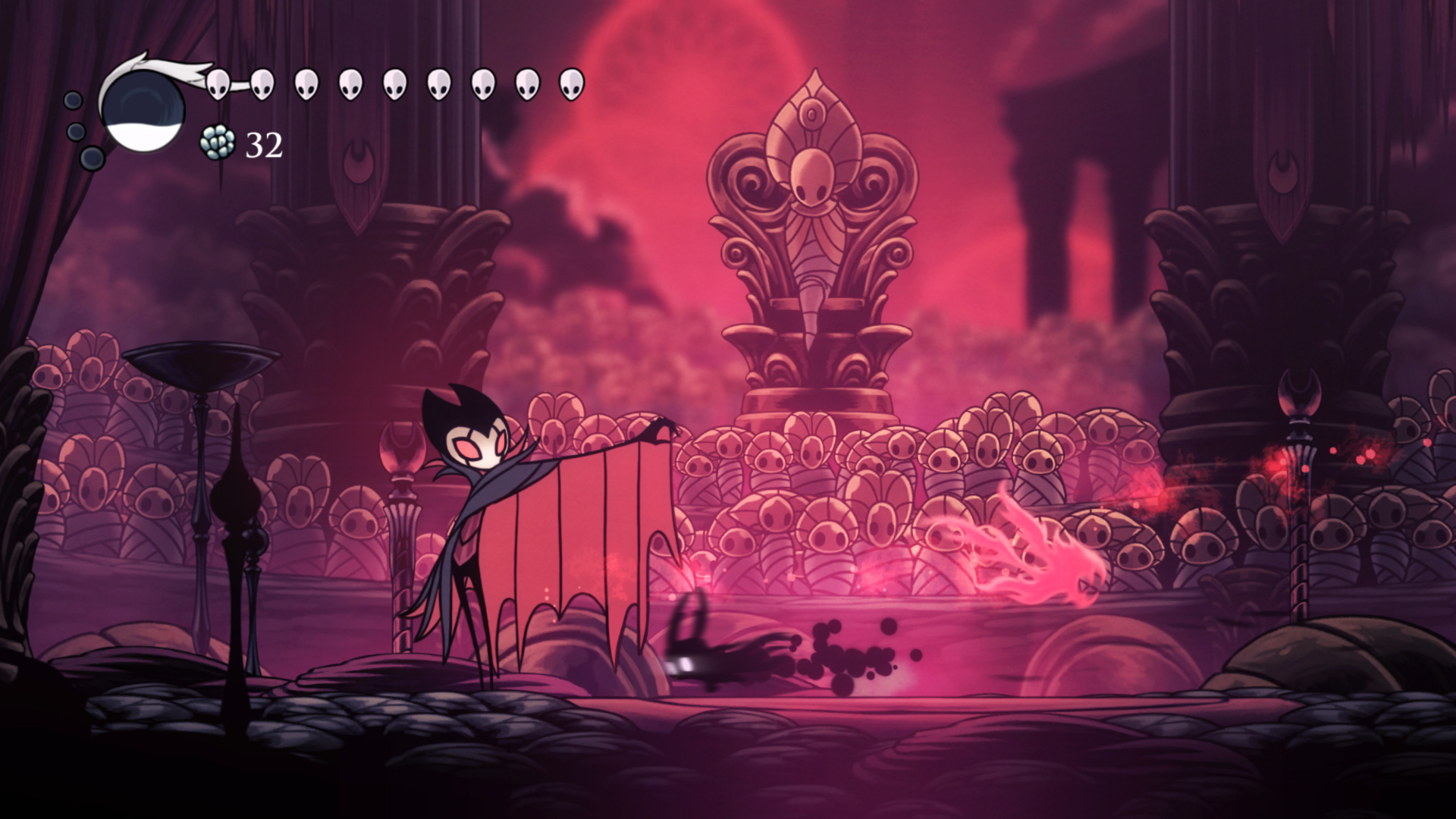
The boss design is genuinely strong in places — Hornet's first encounter is a perfect introductory test, and the Mantis Lords fight is one of the cleanest multi-phase designs in the genre. But the late-game bosses in the Pantheon of Hallownest, added in the Godmaster free DLC, tilt from challenging into the kind of demanding that requires pattern memorisation over dozens of attempts. Nightmare King Grimm and Pure Vessel are exceptional. Absolute Radiance is a difficulty spike that feels designed for a narrower audience than the rest of the game.
Pacing Problems Are Real and Worth Naming
Hollow Knight is about 25 hours long if you follow the critical path to the standard ending. It is 40 to 60 hours if you pursue the True Ending, which requires completing three additional Dreamers, unlocking the White Palace, and obtaining the Void Heart before the final encounter. The gap between those two endpoints is where the game's pacing frays. The White Palace — a platforming gauntlet set inside the Pale King's domain — is technically accomplished and visually striking, but it sits in the late game at a point where momentum has already built toward the finale. It is a skill test in a separate discipline (pure platforming, not combat) that the game has not prepared you for.
The Abyss section that follows shortly after is among the most atmospherically effective sequences in any Metroidvania. Dark, quiet, and structured around traversal rather than combat, it recontextualises the player character in a way that retroactively reshapes dozens of earlier story fragments. It is a reminder of what Team Cherry does better than almost anyone. But getting there requires passing through enough backtracking and gate-keeping that some players will not make it, and that is a design problem, not a player problem.
Where It Sits in the Genre
The Metroidvania genre is not as crowded at the top as conversation might suggest. Metroid Dread (2021) is tighter and more mechanically refined but emotionally sparse. Axiom Verge (2015) is a one-person technical achievement that lacks Hollow Knight's world-building depth. Bloodstained: Ritual of the Night (2019) has better RPG systems and worse level design. Aeterna Noctis (2021) has extraordinary platforming and almost no personality. Each of these games solves a different part of the Metroidvania equation.
Hollow Knight's specific achievement is that it solves more of the equation simultaneously than most. The movement feels good. The world is coherent and substantial. The lore rewards engagement without demanding it. The free DLC — Grimm Troupe, Lifeblood, Godmaster, Hidden Dreams — added significant content without charging for it, which is worth acknowledging plainly. As a complete package in 2024, it represents something like 30 to 50 hours of quality play before the difficulty ceiling starts filtering audiences.
On Silksong, Briefly
It is difficult to review Hollow Knight in 2024 without the shadow of Silksong making everything strange. Team Cherry's sequel was announced in February 2019 and has not been released. The original game's reputation has inflated in the interim, partly because Silksong's silence has made it a repository for expectation that keeps appreciating without a product to test it against. This does not change what Hollow Knight is. But it does mean that some of what people say about it is really about Silksong, and those are different conversations.
Team Cherry has said very little publicly since a 2022 Xbox showcase appearance. What exists is a playable demo from 2019 and roughly five years of community speculation. At some point, Silksong will arrive and will be evaluated on its own terms. Until then, Hollow Knight carries the weight.
Verdict
Hollow Knight is not quite the genre-perfecting masterpiece that the loudest part of its audience insists upon. The mid-game pacing drags, the spell system underdelivers, and the True Ending's requirements ask for a level of investment that feels unearned relative to the standard ending's emotional payoff. What it is, without qualification, is a remarkable piece of world-building matched to a movement system that remains satisfying across 85 hours. Team Cherry built something in three people that most studios with twenty cannot manage. The flaws are real. So is the achievement.
If you have played it, you already know whether it was worth it. If you have not, it costs less than a cinema ticket and is available on every platform that matters. The conversation around it has become bigger than the game, but the game is still big enough to justify most of the conversation.
Verdict
| Category | Score |
|---|---|
| Gameplay | 8/10 |
| Story | 7/10 |
| Visuals | 10/10 |
| Replayability | 9/10 |

Ed Flynn
Ed reviews peripherals — controllers, racing wheels, fight sticks. Calibration nerd.
Frequently Asked Questions
How long does it take to finish Hollow Knight?
Main story runs around 80-100 hours depending on how thoroughly you explore. Completionists can spend 2-3× that.
Is Hollow Knight good for newcomers to Metroidvania?
Yes — Hollow Knight is a great entry point. The early hours teach the systems gradually and the difficulty curve is reasonable.
Which platform should I play Hollow Knight on?
Console version is the most stable on launch. PC version benefits from the modding scene long-term.
Was Hollow Knight worth the launch-day price?
Depends on backlog. The replay value justifies the price for genre fans; casual players should wait for a 40%+ discount.
Are there DLCs or expansions worth picking up?
Skip the cosmetic DLC. The story expansion is the only one we'd recommend at full price.
What did Team Cherry get right (and what could be better)?
The systems are confident and the combat is satisfying. The story handoffs and load times are the rough spots.
Comments (7)
Bought it on sale last week — already 18 hours in. Highly recommend.
How does it compare to Team Cherry's previous work? That's the real question.
Did you notice how the side missions tie back into the main arc? That was a nice touch.
Played on Steam Deck — runs great after the proton-experimental fix.
Bookmarked for when it drops to half price. Cheers for the honest writeup.
Fair scoring. The combat polish carries a lot of the playtime here.
The pacing in the second act is exactly the issue that gets glossed over in most reviews.