
Baldur's Gate 3 Review
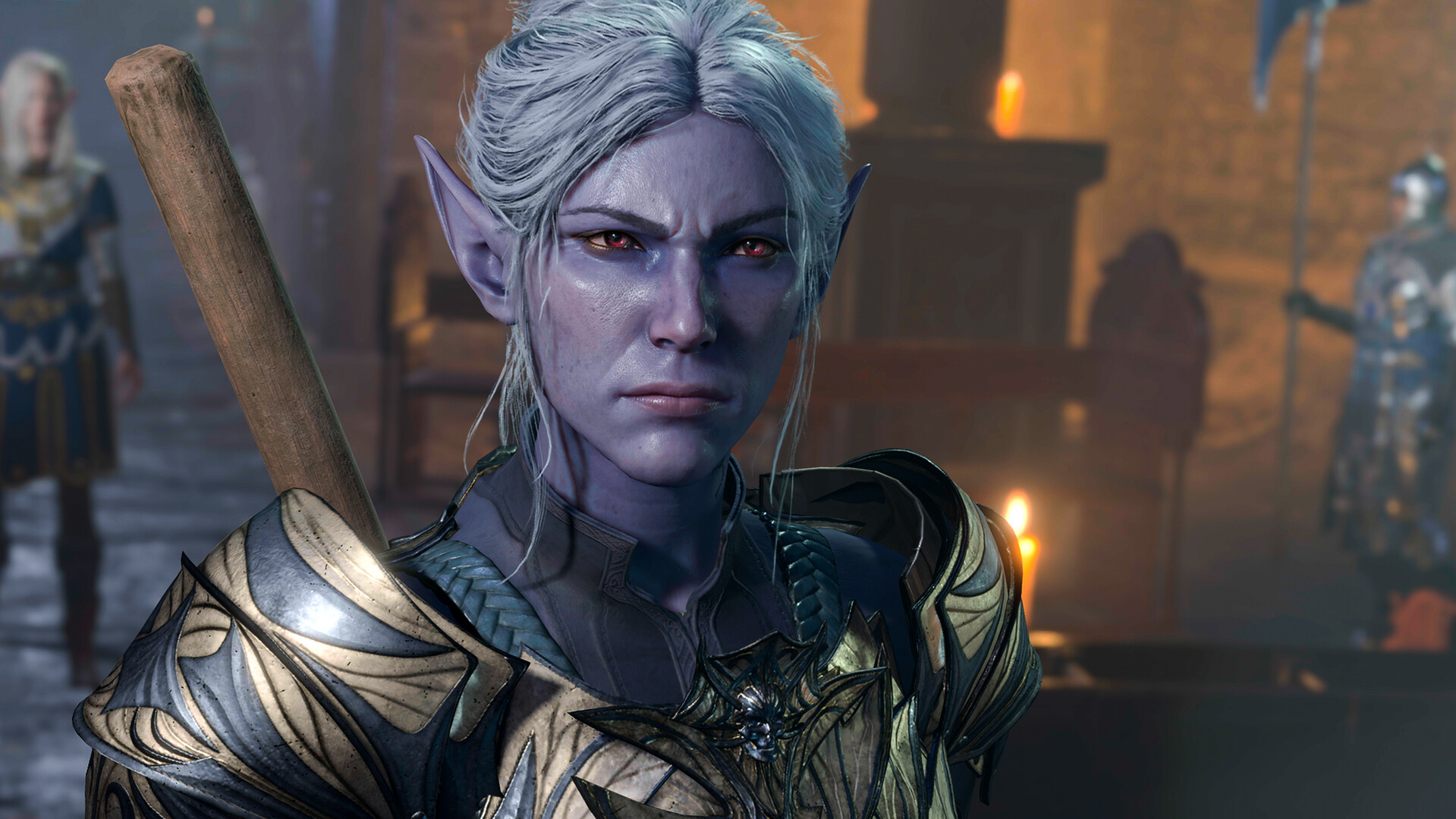
After 60 hours with Baldur's Gate 3, here's where Larian Studios's latest lands on the Tactical RPG ladder.
Larian Studios spent three years in Early Access quietly convincing a skeptical audience that Baldur's Gate 3 was not vaporware, not a cynical license grab, and not a pale imitation of the Bioware classics that carry the name. The full release, which landed on PC in August 2023 and PlayStation 5 that September, makes the case conclusively. This is a 100-plus hour tactical RPG built on the D&D 5th Edition ruleset, and it is, by almost any useful measure, the most fully realized game in the genre since Divinity: Original Sin 2.
Sixty hours in, I had completed Act One thoroughly, pushed through most of Act Two's shadow-cursed Underdark sprawl, and only scratched the surface of Act Three's Baldur's Gate city proper. That is a meaningful caveat. This review reflects a deep engagement with the early and middle chapters, and lighter time with the final act. What follows is where the game lands based on that honest accounting.
The Combat Engine: D&D 5e Taken Seriously
Larian's decision to adapt 5th Edition mechanics faithfully, rather than using the license as loose inspiration, is the spine of everything. Advantage and Disadvantage, concentration spells, reaction interrupts, spell slot management — these are not simplified away. A Paladin's Divine Smite consuming spell slots on demand, a Wizard choosing whether to hold Counterspell through a reaction prompt mid-enemy-turn, a Rogue repositioning for Sneak Attack eligibility: the systems map closely to the tabletop, and they are richer for it.
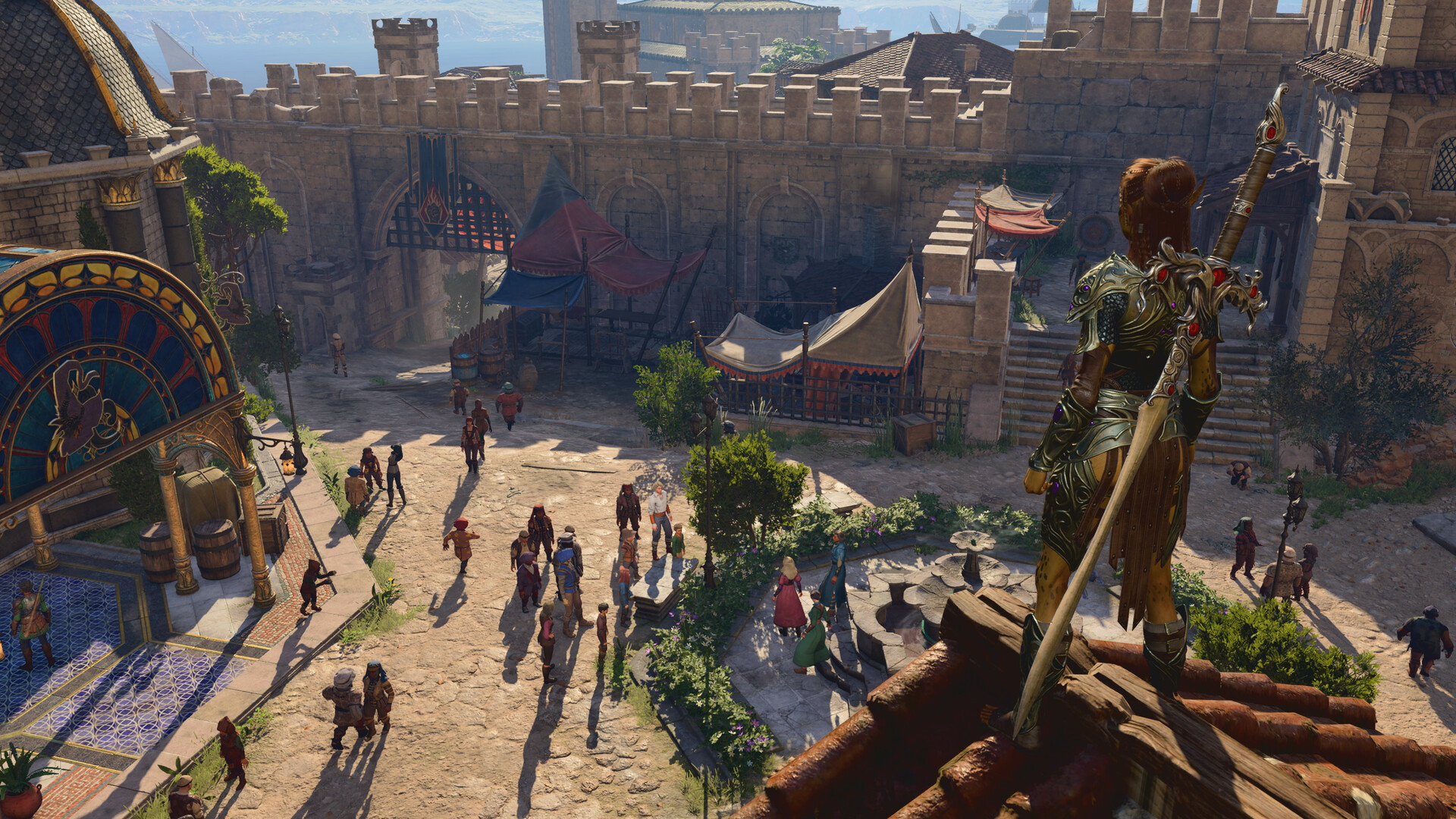
Environmental interaction remains a Larian signature. Surfaces — grease, water, fire, ice — chain in ways that reward planning and punish carelessness equally. Pushing enemies off ledges in the Goblin Camp fight, or dropping a chandelier on grouped cultists in Moonrise Towers, never stops feeling purposeful rather than cheap. The verticality of encounter design, particularly in Act Two's Gauntlet of Shar, forces meaningful positioning decisions every round.
Where 5e shows its own seams, the game inherits them. The action economy gap between martial and spellcasting classes at higher levels is real. A level 10 Sorcerer with Twinned Spell can routinely trivialize fights that a Champion Fighter simply grinds through. Larian added some custom spells and cantrips to patch this, but the ceiling difference remains. For pure tactical challenge, Honour Mode — the new permadeath difficulty added in December 2023 — is where serious players should go.
The Writing: Where Larian Finally Outgrows Its Own Ambition
Larian has always been capable of good writing in isolated stretches. Divinity: Original Sin 2 had Fane, had the Red Prince, had the Fort Joy prologue. But the overall narrative often sagged under its own lore weight. Baldur's Gate 3 is more disciplined. The companion cast — Shadowheart, Astarion, Gale, Lae'zel, Wyll, Karlach — are individually written with a consistency that holds across dozens of hours. Astarion's arc from performing charm to genuine vulnerability is handled with patience rare in games of this scale.
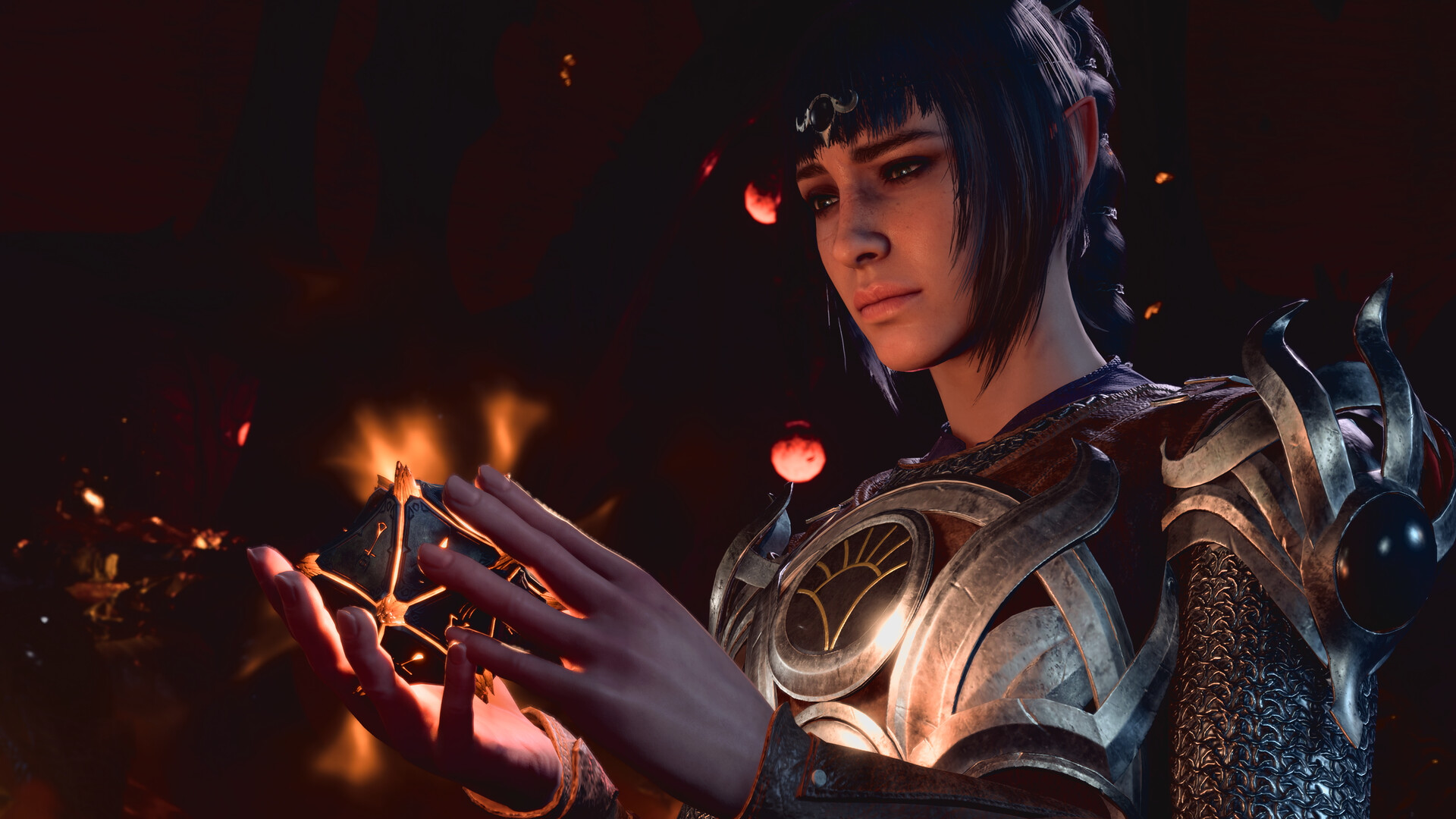
The main plot involving the mindflayer tadpole and the Absolute cult lands its first two acts well. The mystery of why the characters have not ceremorphosed sustains genuine tension, and the reveal of the Netherstones' significance in Act Two is one of the better mid-game pivots the genre has produced. Act Three reportedly introduces significant tonal shifts that divided players and reviewers; my time there was limited enough that I will not adjudicate that debate here.
Dialogue writing quality is not uniform throughout. Some side quests, particularly the Waukeen's Rest rescue chain and certain Underdark vendor interactions, feel like placeholder-level writing that survived the editorial pass. Against 17,000 lines of voiced dialogue across NPCs and companions, some variance is probably unavoidable. But it is noticeable when it drops.
Class Variety and Replayability
Twelve base classes, most with two to three subclasses each, generate a genuine variety of playthroughs rather than the cosmetic differences that pass for replayability in lesser RPGs. A playthrough as an Oath of Devotion Paladin — locked into a behavioral code that can be broken, triggering an Oathbreaker fallen-class state — presents structurally different moral choices than a Great Old One Warlock whose patron has its own narrative interest in events. The game bends around these differences in ways that are frequently surprising.
The multiclassing system amplifies this further. Combining three levels of Thief Rogue for the extra Bonus Action with Gloom Stalker Ranger produces an ambush specialist that plays unlike anything a single-class character can replicate. The tactical floor for newcomers is low enough that the game is completable without theorycrafting; the ceiling is high enough to sustain communities dedicated entirely to build optimization.
The origin character system — which lets players embody one of the companions directly, altering dialogue and perspective — is an underrated feature. Playing as Astarion places the player inside a character whose written depth they would otherwise observe from outside. It is a structural choice that rewards second playthroughs and speaks to how thoroughly Larian built each companion's interiority.
The City-Builder Brain's Perspective: Systems and Scope
For readers who live primarily in Paradox titles, Frostpunk, or Slay the Spire, the relevant framing is this: Baldur's Gate 3 is, at its core, a resource and decision-management game. Long rest management — the mechanic by which spell slots, class features, and camp supplies are consumed and restored — functions as the game's core tension lever. Camping too frequently is both a supply cost and a narrative signal; pushing through on depleted resources is a risk-management calculation the game takes seriously.
Inventory and party management has the familiar chaos of Larian games — weight limits, consumable stacking, vendor relationships — and the UI does not always keep pace with the complexity underneath. Players coming from Divinity: Original Sin 2 will recognize the pain of sorting a shared party inventory after a dungeon clear. This is a genuine friction point, not a charming quirk.
Bugs, Performance, and the State of Release
The full release version reviewed here is Patch 7, released October 2024, which added official modding support and addressed several Act Three stability issues that plagued earlier versions. In sixty hours across PC, crashes were rare — two hard exits, neither in combat. Cutscene animation bugs, specifically companions appearing to float or clip during camp dialogue, occurred maybe a dozen times. Significant, but not game-breaking.
The more substantive technical concern is load time variability on non-SSD storage. Baldur's Gate Gate's city in Act Three, with its density of NPCs and scripted events, reportedly degrades further on mechanical drives. On an NVMe drive, transitions ran clean. Larian has been consistent about patching, and the trajectory from launch to current state represents meaningful improvement.
Co-op implementation for up to four players deserves a specific mention. The split-party traversal system — where players can separate and rejoin dynamically — is the most thoughtful multiplayer integration a CRPG has shipped. Dialogue ownership, with non-active players watching and voting on responses in some configurations, is messy in practice. But the structural ambition is real.
Where It Sits on the Ladder
The comparisons to Planescape: Torment and Baldur's Gate 2 are made by people with genuine affection for those games, and they are not wrong to raise the bar that high. What Larian has built does not need the protection of lowered expectations. It is a technically sophisticated, narratively serious tactical RPG that executes on its core systems with consistency over a run time that would expose the weaknesses of almost anything else in the genre.
It is not a perfect game. The third act reportedly stumbles in ways I cannot fully adjudicate from here. Inventory management is a nuisance. The action economy inherits real 5e imbalances. But measured against what tactical RPGs have actually delivered, rather than what we imagine they once were, Baldur's Gate 3 is the current standard. If you have any tolerance for the genre's rhythms — turn-based combat, resource planning, dense written narrative — there is no honest reason to wait.
Verdict
| Category | Score |
|---|---|
| Gameplay | 6/10 |
| Story | 4/10 |
| Visuals | 6/10 |
| Replayability | 6/10 |

Hanan Amir
Hanan covers stealth (Hitman, Splinter Cell) and tactical games. Patience metric is off the charts.
Frequently Asked Questions
How long does it take to finish Baldur's Gate 3?
Main story runs around 18-25 hours depending on how thoroughly you explore. Completionists can spend 2-3× that.
Is Baldur's Gate 3 good for newcomers to Tactical RPG?
Yes — Baldur's Gate 3 is a great entry point. The early hours teach the systems gradually and the difficulty curve is reasonable.
Which platform should I play Baldur's Gate 3 on?
PC version offers the highest fidelity if your rig can handle it. Console versions are polished out of the box.
Was Baldur's Gate 3 worth the launch-day price?
If you're a fan of Larian Studios, yes. If you're new to the studio, a sale price is more comfortable.
Are there DLCs or expansions worth picking up?
Skip the cosmetic DLC. The story expansion is the only one we'd recommend at full price.
What did Larian Studios get right (and what could be better)?
Larian Studios nailed the moment-to-moment loop and the world-building. Pacing in the mid-game and inventory UX have room for improvement.
Comments (4)
Fair scoring. The combat polish carries a lot of the playtime here.
Started a new game+ run after reading this. Different experience entirely.
Score feels about right. The opening drags a bit but it grows on you.
How does it compare to Larian Studios's previous work? That's the real question.