
Elden Ring Review
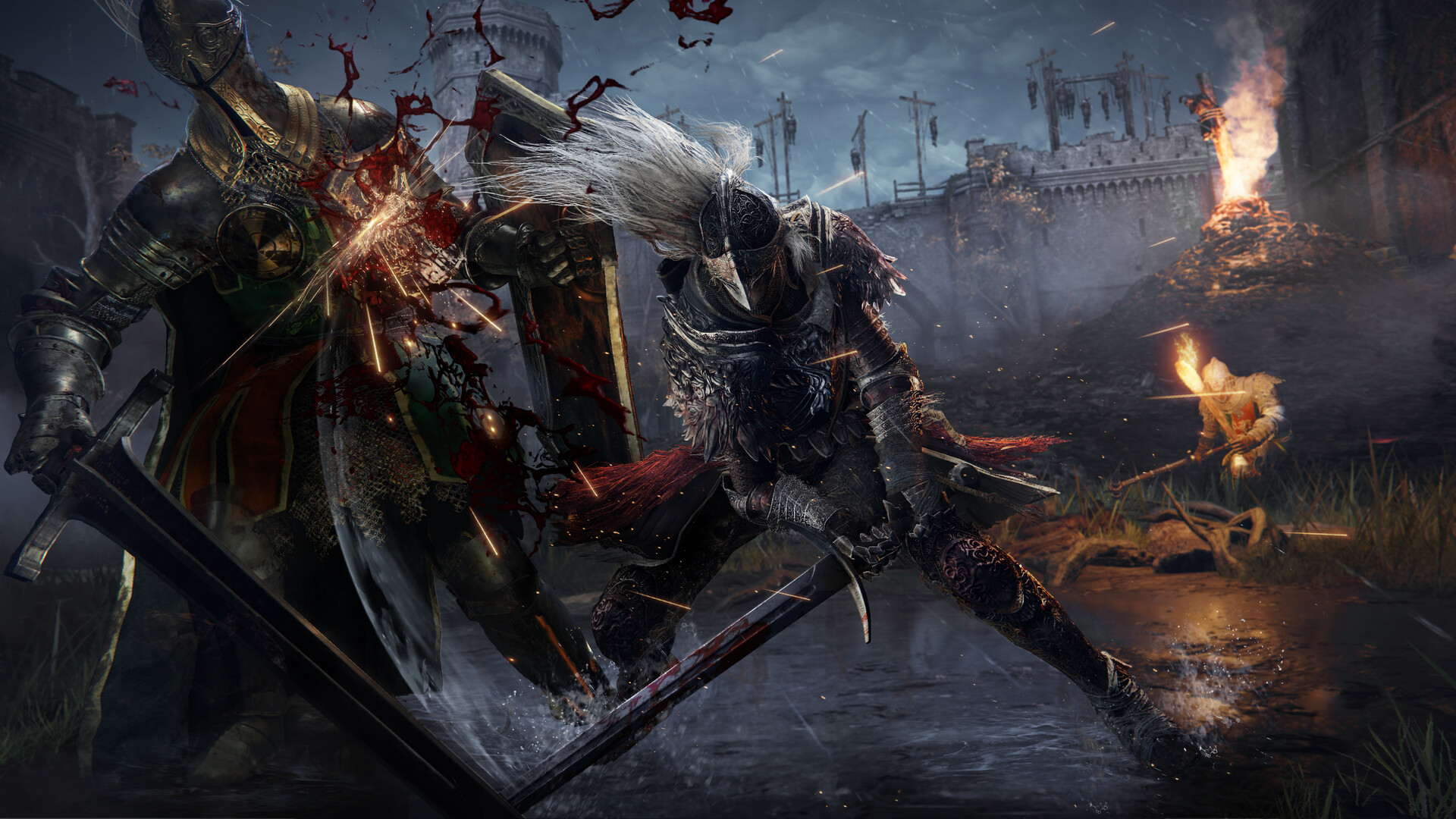
After 85 hours with Elden Ring, here's where FromSoftware's latest lands on the Open-World ARPG ladder.
Elden Ring launched in February 2022 to a kind of critical consensus that rarely happens anymore. FromSoftware and Bandai Namco's open-world action RPG hit a 96 on Metacritic, sold over 20 million copies within its first year, and prompted the usual flood of 'games have changed forever' discourse. After 85 hours — covering the main quest, most of the optional legacy dungeons, and enough time in the Lands Between to feel genuinely lost on multiple occasions — the question worth answering isn't whether Elden Ring is good. It is. The question is what kind of good, and whether the open-world format actually serves FromSoftware's design instincts or quietly undermines them.
The short answer is: both, depending on which hour you're in. Elden Ring is a game of genuine peaks and valleys, sometimes within the same region. At its best, it's the most awe-inspiring thing FromSoftware has built. At its most padded, it's a reminder that open worlds have a gravity problem — they pull everything toward bloat.
The World Design Is the Real Achievement
Whatever else you want to say about Elden Ring, the Lands Between is a staggering piece of environmental design. Limgrave, the opening region, functions as a near-perfect tutorial in disguise — a relatively gentle hillside landscape that quietly teaches exploration logic through reward spacing and visual cues rather than pop-up prompts. The way Stormveil Castle emerges on the horizon from almost anywhere in the zone isn't just atmospheric; it's directional. FromSoftware is pointing you without telling you where to go.
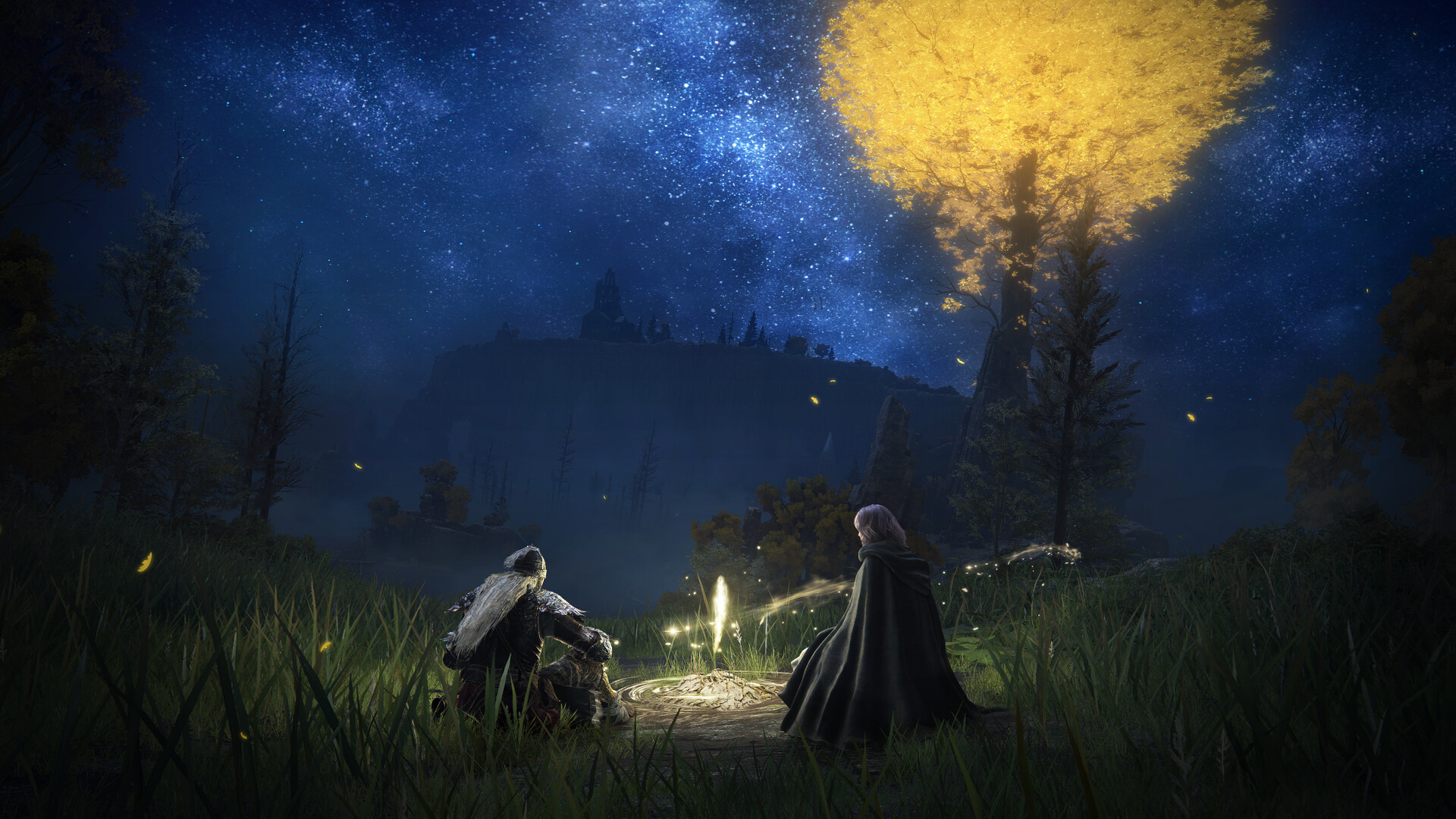
The underground areas deserve special mention. The Ainsel River and Nokron, Eternal City sit beneath the main map like a second game hidden inside the first, with their own geography, enemy sets, and lore threads. Stumbling into Nokron after defeating Radahn — the sequence of events that opens the path — feels earned in a way that few open-world discoveries do. There's no map marker for it. You find it because you kept looking.
Farum Azula, the crumbling dragon city suspended in a storm, is arguably the most visually inventive location FromSoftware has produced, edging out even Anor Londo from Dark Souls or the Painted World of Ariamis. The platform-to-platform traversal through disintegrating architecture, with Maliketh at the end of it, represents the studio at full creative momentum. These aren't just backdrops. They're arguments.
Combat: Familiar Grammar, New Vocabulary
The core combat loop will be immediately familiar to anyone who has spent time with Dark Souls 3 or Sekiro. Stamina management, posture staggering, and the rhythmic back-and-forth of learning boss attack windows are all present. What Elden Ring adds is the Ash of War system, which lets players attach special skills to most weapons — a spear that launches a cavalry charge, a blade that fires a spectral slash projectile, a shield bash that staggers heavies. This creates a level of build customisation closer to something like Path of Exile than anything FromSoftware had previously attempted.
Spirit Ashes, the summonable AI companions, are the more divisive addition. Purists resent them; players new to the sub-genre credit them with making the game accessible without feeling like a cheat. The reality is they're tuned carefully enough to assist without trivialising. The Mimic Tear, which copies your character build exactly, is an exception — it was correctly nerfed in a patch shortly after launch because pre-nerf it could nearly solo bosses. That one overcorrection aside, the system holds up.
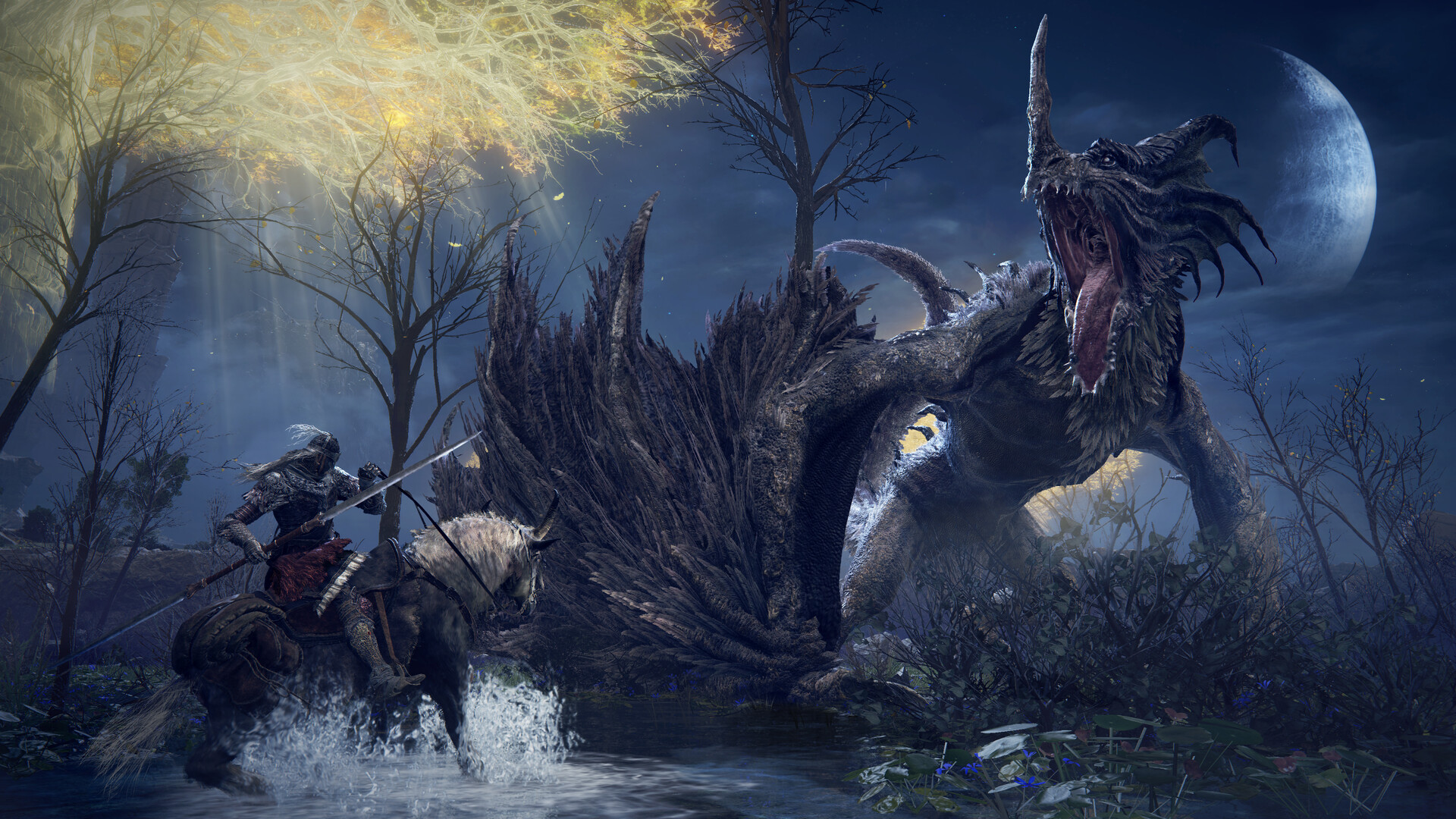
Horseback combat via Torrent is more functional than exceptional. Mounted fights against field bosses like the Tree Sentinel or Flying Dragon Agheel work well — the scale suits it. In tighter spaces or against faster enemies, the controls feel slightly at odds with themselves, a compromise the game never fully resolves.
The Open World Problem
Here's where 85 hours gives you an honest picture that a 30-hour playthrough might not. The Lands Between starts showing seams around the 40-hour mark. Altus Plateau and the areas surrounding the Mountaintops of the Giants contain a significant number of minor dungeons — Tombsward Catacombs, Cliffbottom Catacombs, Unsightly Catacombs — that reuse enemy sets and boss encounters with diminishing returns. By the fourth Erdtree Burial Watchdog fight, the encounter has stopped teaching anything new about the game.
This is the structural tension at Elden Ring's center. FromSoftware's previous games were curated, compressed experiences where almost every room justified its existence. The open-world format demands volume that the studio hadn't previously needed to produce, and the padding is visible. Elden Ring has roughly 12 genuinely exceptional boss encounters — Margit, Godrick, Rennala, Radahn, Maliketh, Malenia, the Elden Beast among them — surrounded by a larger number of reskinned or recycled encounters that exist to populate the map rather than challenge or surprise.
The comparison point here is something like Hades by Supergiant Games, a much shorter and structurally different game, but one where essentially zero content feels like filler. Every room, every enemy encounter, every dialogue exchange is load-bearing. Elden Ring, by choosing scale, accepts a different contract with the player — and not everyone will find the terms favorable by the back third.
Narrative and Lore: Read the Item Descriptions
The story of Elden Ring, co-developed with author George R.R. Martin, is not something you watch — it's something you excavate. Martin reportedly developed the world's deep history, with Hidetaka Miyazaki and the writing team building forward from that foundation. The result is a mythology with genuine internal logic: the Erdtree, the Elden Ring, the Outer Gods, the demigods and their Shards. It coheres, but only if you read weapon descriptions, talk to every NPC twice, and cross-reference locations.
Ranni the Witch's questline is the best example of FromSoftware's storytelling method working at full capacity. Spanning multiple regions, involving at least six named characters, and culminating in an alternate ending, it rewards players who treat the world as a text to be read rather than a track to be run. Miss the questline entirely — easy to do, given zero hand-holding — and you'll complete the game without knowing what its most interesting character was actually doing.
The NPC quest design remains the studio's most persistent structural flaw. Without external resources, completing questlines for characters like Nepheli Loux or Patches depends on visiting specific locations in a specific order with no in-game indication that sequence matters. Several questlines break permanently if you complete legacy dungeons in the 'wrong' order. This isn't deliberate challenge — it's design friction that the community has learned to paper over with wikis.
Technical Performance and the Shadow of the Erdtree
At launch, PC performance was genuinely poor — stuttering, frame pacing issues, and shader compilation hitches that FromSoftware and Bandai Namco were slow to acknowledge and slower to patch. On PS5, the experience was considerably more stable. By mid-2022, patches had brought the PC version closer to acceptable, though it never matched the console release for smoothness.
The Shadow of the Erdtree DLC, released in June 2024, is worth addressing even in a base-game review because it substantially recontextualises what FromSoftware can do within the format. The expansion's map design — the Realm of Shadow — is more densely curated than the base game's later regions, with fewer filler dungeons and a boss roster that includes Messmer the Impaler and Romina, Saint of the Bud, among the finest encounters the studio has produced. It suggests the studio absorbed the feedback.
Where It Sits on the Ladder
Open-world action RPGs are a crowded genre with a short list of genuine benchmarks. The Witcher 3 remains the standard for narrative density and quest design. Dark Souls 3 — FromSoftware's own prior work — still edges Elden Ring for encounter consistency. Breath of the Wild, the other obvious reference point from 2017, is more mechanically coherent as a pure exploration toy, even if it's far less interested in combat depth.
Elden Ring sits above all of them in terms of world-building ambition and high-end boss design. It sits below its own best moments in its middle and late regions, where the open-world contract starts to cost more than it gives. For players who like systematic exploration — the kind of methodical, map-completion mentality that drives 4X and grand strategy audiences — the volume of content is a feature, not a bug. For players who value curation over scale, the back 30 hours will test patience.
Eighty-five hours in, what stays with you isn't the hours-long stretches of adequate content — it's Malenia regenerating health on every hit while you finally, finally get her second phase to half health. It's the moment Nokron opens up beneath your feet. It's Ranni's ending playing out and the realisation that you understood maybe 60% of what just happened, and that the remaining 40% is worth going back for. FromSoftware built something genuinely large and genuinely uneven, and the unevenness doesn't cancel the largeness. It just means you should go in with accurate expectations rather than the weight of 96 Metacritic points on your back.
Verdict
| Category | Score |
|---|---|
| Gameplay | 6/10 |
| Story | 8/10 |
| Visuals | 8/10 |
| Replayability | 7/10 |

Cal Burke
Cal champions the 'walking sim' genre. Has the longest entry on What Remains of Edith Finch on the site.
Frequently Asked Questions
How long does it take to finish Elden Ring?
Main story runs around 12-15 hours depending on how thoroughly you explore. Completionists can spend 2-3× that.
Is Elden Ring good for newcomers to Open-World ARPG?
It depends. The systems are deep but the tutorial does a fair job. Veterans of Open-World ARPG will feel at home faster.
Which platform should I play Elden Ring on?
PC version offers the highest fidelity if your rig can handle it. Console versions are polished out of the box.
Was Elden Ring worth the launch-day price?
Depends on backlog. The replay value justifies the price for genre fans; casual players should wait for a 40%+ discount.
Are there DLCs or expansions worth picking up?
Wait for the Game of the Year edition — it bundles everything at a fair discount.
What did FromSoftware get right (and what could be better)?
The systems are confident and the combat is satisfying. The story handoffs and load times are the rough spots.
Comments (4)
Did you notice how the side missions tie back into the main arc? That was a nice touch.
Spent 60 hours with this. Worth every minute.
Wish more outlets pushed back on the difficulty spike around hour 10.
Bookmarked for when it drops to half price. Cheers for the honest writeup.