
Cyberpunk 2077: Phantom Liberty Review
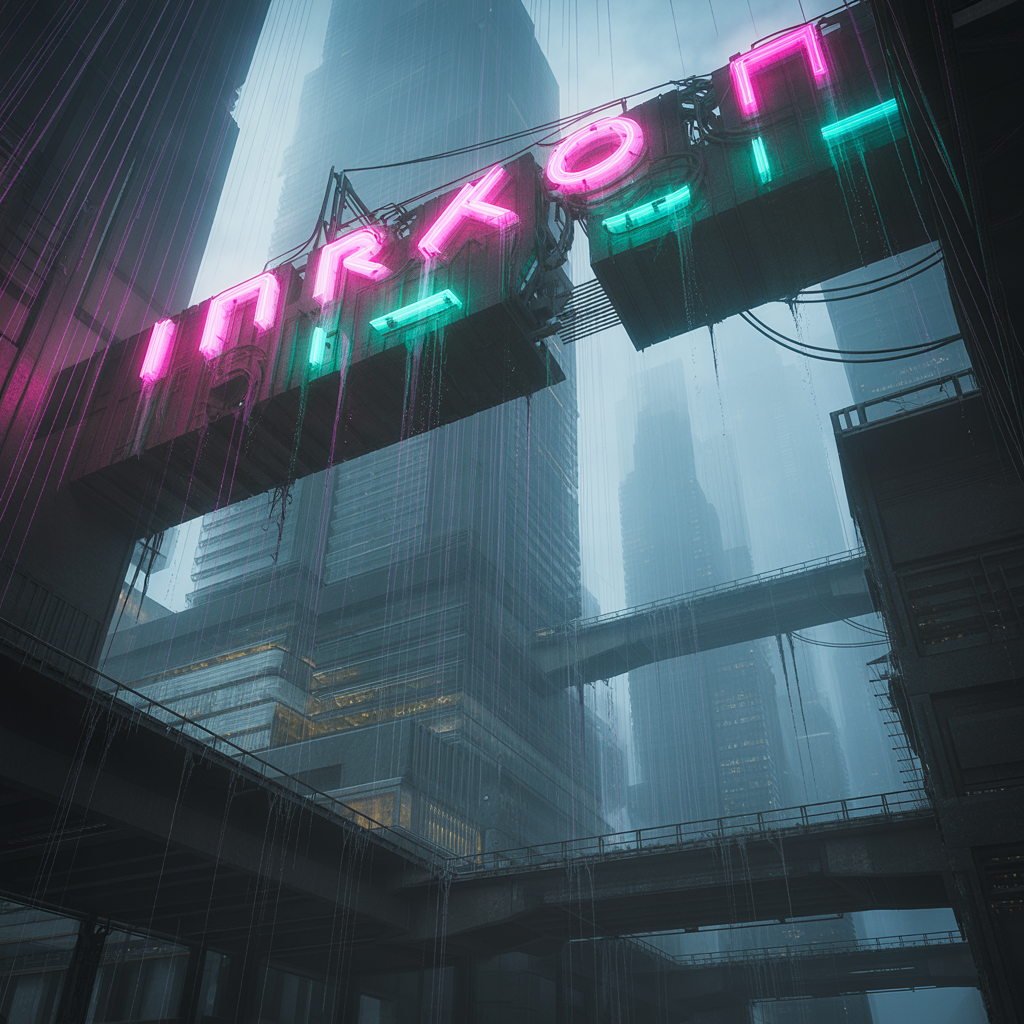
After 120 hours with Cyberpunk 2077: Phantom Liberty, here's where CD Projekt Red's latest lands on the Open-World RPG (DLC) ladder.
Cyberpunk 2077 shipped in December 2020 as one of the most anticipated games of its generation and promptly became one of its most public failures. CD Projekt Red spent the next three years patching, rebalancing, and quietly rebuilding the thing from the floor up. By the time Phantom Liberty arrived in September 2023, the base game had transformed into something genuinely worth playing. The expansion, then, had a strange job to do: justify itself as a premium add-on to a product that many players had only recently agreed to like again.
After 120 hours split between a fresh playthrough and dedicated expansion runs, the answer is that Phantom Liberty justifies itself, and then some. It does not fix every remaining crack in Cyberpunk 2077's foundation, but it adds a layer of spy-thriller writing and reworked mechanical systems that make the full package feel closer to the game the 2020 trailers were selling. Whether that's enough depends on how much goodwill you have left, and how much you care about a very specific kind of tightly written open-world storytelling.
Dogtown Is the Best Zone in the Game
The expansion's new district, Dogtown, is a walled-off enclave inside Night City controlled by a paramilitary faction called Barghest. Structurally it's compact — smaller than Pacifica, probably a third the size of Watson — but it's the most densely authored area CD Projekt Red has built. Every alley has graffiti that tracks Barghest's internal politics. The market stalls sell specific contraband with lore attached. Buildings have interiors that feel lived-in rather than dressed for a photo op.
This density pays off during the main quest. Phantom Liberty plays out as a Cold War espionage story, with V extracted into Dogtown to recover a downed presidential shuttle and protect FIA operative Solomon Reed, played by Idris Elba with noticeable investment. Reed is the expansion's best new character — cautious, morally bruised, and written with enough contradictions that his loyalty to institutions he clearly doubts actually lands. Elba's performance helps, but the script does real work too.
The original game's story struggled to make Night City itself feel like a participant rather than a backdrop. Phantom Liberty corrects that inside Dogtown specifically. The zone's siege economy — ration shortages, Barghest checkpoints, black-market airdrops — shapes quest design rather than just decorating it. A mission involving a forged identity requires you to physically blend into a Barghest patrol route. Another has you exploit an airdrop event as cover. The environment becomes a system rather than scenery.
The Reworked Skill Tree Changes Everything
Patch 2.0, which launched alongside Phantom Liberty but was free to all Cyberpunk 2077 owners, overhauled the skill and perk systems entirely. The old trees were bloated and full of passive percentage bumps that rarely changed how you played. The new system is built around active, discrete abilities. Reflexes now unlocks air dashes and bullet-deflect windows. Technical Ability gives you reworked cyberware slots with hard capacity limits that force trade-offs. Intelligence grants RAM recovery mechanics that make netrunning feel like genuine resource management rather than a win button.
These changes matter more for the expansion than for the base game because Phantom Liberty's combat encounters are tuned around them. Enemy AI in Dogtown uses cover more aggressively, and a handful of boss encounters require switching build emphasis mid-fight rather than leaning on a single dominant approach. A confrontation roughly two-thirds through the main quest — no spoilers on the participants — fails repeatedly on higher difficulties if you try to net-run your way through it. You have to adapt. That's not a complaint.
The cyberware capacity system in particular gives the game something it lacked: meaningful resource allocation decisions. In the base game pre-2.0, you could essentially stack every upgrade you wanted. Now you have a hard Cyberware Capacity score that limits total implant load, which means deciding whether you want Sandevistan reflexes or Kerenzikov bullet-time, not both. It's a mechanical vocabulary borrowed loosely from build-crafting games, and it makes character creation feel like it has stakes.
Where the Writing Earns Its Keep
Phantom Liberty has six main-quest endings across two primary branches, and they're not cosmetically different — they play out across different final acts with different characters present and different resolutions to Reed's arc. The branch decision arrives late enough that most players will hit it without having deliberately prepared, which creates the kind of moment CD Projekt Red has been chasing since The Witcher 3's Bloody Baron questline: a choice that reads as consequential because the context has already made you care.
Songbird, the other major new character — a netrunner whose situation puts the entire plot in motion — is written with a complexity that the game's marketing somewhat obscured. Revealing too much spoils the turn, but the script treats her as someone with her own survival calculus rather than a passive object of protection. Her dynamic with Reed provides most of the expansion's best dialogue, and a sequence in the final third that puts V in the middle of their unresolved conflict is the best writing in the game, full stop.
Side content inside Dogtown ranges from excellent to functional. A quest involving a NUSA informant network is genuinely tense and plays with trust mechanics in interesting ways. The Hansen questline — Barghest's leader — is shorter than it deserves to be given how much setup the world gives him. A few gig-style contracts are straight combat encounters with thin framing. The ratio of quality to filler is better than the base game's open world, though the base game's best side quests — the Panam arc, the River Ward questline — still set a bar Phantom Liberty's secondary content doesn't always clear.
Technical State and Lingering Issues
On PC with a mid-to-high spec rig, Phantom Liberty ran cleanly across the full playthrough. One crash in 120 hours, no quest-breaking bugs encountered. Dogtown's visual design — brutalist Soviet-era architecture layered with Barghest signage and neon — performs better than the most demanding parts of Night City proper, which suggests CD Projekt Red learned something about optimization during the rebuild. The REDengine 4 still struggles with extremely dense outdoor crowds, but Dogtown's enclosed design largely sidesteps that.
The driving remains the game's most stubborn weak point. Night City's road layout was clearly designed with visual spectacle as the priority, and Phantom Liberty adds a zone with even tighter corridors and more frequent checkpoint interruptions. Vehicle combat, introduced in the 2.0 patch, works in the handful of missions that use it deliberately but feels grafted on during open-world traversal. It's not broken; it's just not interesting. Given that you spend a meaningful percentage of playtime in cars, that matters.
How It Sits Against the Rest of the Genre
Comparing Phantom Liberty to other landmark RPG expansions is useful context. The Witcher 3's Blood and Wine added roughly 20-25 hours and an entirely new region with its own political throughline. Elden Ring's Shadow of the Erdtree added comparable playtime with a more demanding skill ceiling. Phantom Liberty's main quest runs around 15-18 hours depending on thoroughness, with another 10-15 in side content. At 30 USD, that's a reasonable value equation, but it's not Blood and Wine's scope.
What Phantom Liberty does better than most expansions is act as a proof of concept. It demonstrates that Cyberpunk 2077's systems, rebuilt and focused into a tighter space, can produce the experience the original game promised. Dogtown is the argument for what the full game might have been. Whether CD Projekt Red can build that argument out to a full sequel — reportedly in early development under the codename Project Orion — is a question this expansion doesn't answer but at least makes plausible.
Verdict
Phantom Liberty is the best version of an argument CD Projekt Red has been making for three years: that Cyberpunk 2077 was always worth saving. The spy-thriller framing is tight, Reed and Songbird are the most fully realised characters the studio has written since Yennefer and Triss, and the 2.0 mechanical overhaul gives the combat and build systems genuine depth. The expansion doesn't erase the base game's structural problems — the open world outside Dogtown still stretches thin in places, and the driving never becomes something to look forward to — but within its own boundaries it delivers the focused, consequence-driven RPG experience that the 2020 launch failed to. If you bounced off the original release and never went back, Phantom Liberty plus the 2.0 patch is the version that deserved your time then.
Verdict
| Category | Score |
|---|---|
| Gameplay | 6/10 |
| Story | 9/10 |
| Visuals | 7/10 |
| Replayability | 8/10 |

Hanan Amir
Hanan covers stealth (Hitman, Splinter Cell) and tactical games. Patience metric is off the charts.
Frequently Asked Questions
How long does it take to finish Cyberpunk 2077: Phantom Liberty?
Main story runs around 18-25 hours depending on how thoroughly you explore. Completionists can spend 2-3× that.
Is Cyberpunk 2077: Phantom Liberty good for newcomers to Open-World RPG (DLC)?
For total newcomers, expect a 5-8 hour ramp-up. Once you internalize the loop, it clicks.
Which platform should I play Cyberpunk 2077: Phantom Liberty on?
Console version is the most stable on launch. PC version benefits from the modding scene long-term.
Was Cyberpunk 2077: Phantom Liberty worth the launch-day price?
If you're a fan of CD Projekt Red, yes. If you're new to the studio, a sale price is more comfortable.
Are there DLCs or expansions worth picking up?
The base game is complete; expansion DLC adds 10-15 hours of additional content if you want more.
What did CD Projekt Red get right (and what could be better)?
The systems are confident and the combat is satisfying. The story handoffs and load times are the rough spots.
Comments (6)
Started a new game+ run after reading this. Different experience entirely.
Spoiler-free reviews like this are rare. Appreciated.
Wish more outlets pushed back on the difficulty spike around hour 10.
Fair scoring. The combat polish carries a lot of the playtime here.
Solid review. I bounced off Cyberpunk 2077: Phantom Liberty for the first 5 hours, then it clicked.
I disagree on the verdict. The story pacing is the real issue, not the combat.