

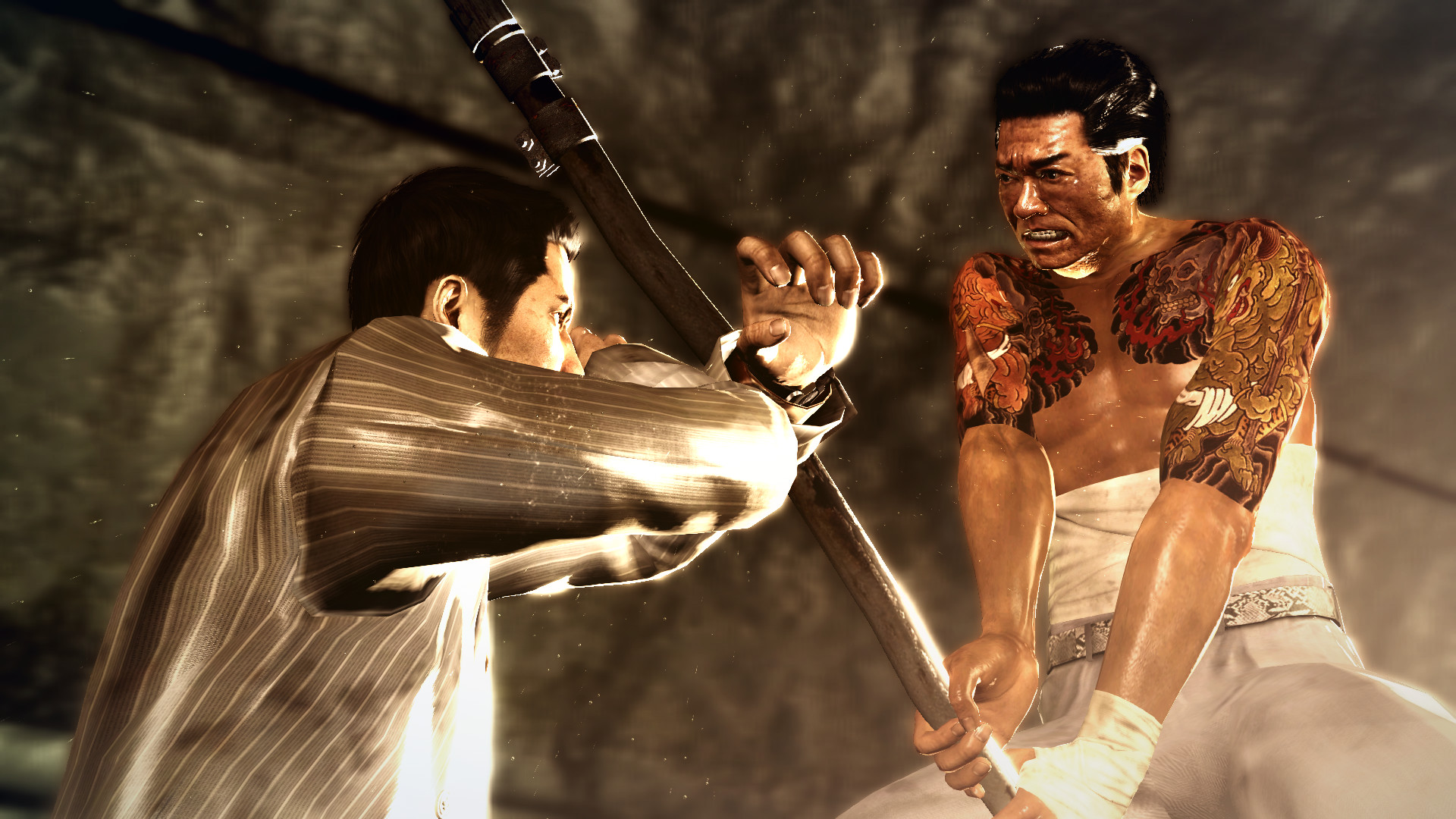
Yakuza 0 does not hold your hand. It drops you into late-1980s Kamurocho, lets you crack skulls for twenty minutes, and then quietly unlocks a mahjong parlour, a Koi-Koi table, and a cabaret club management sim — each with rules dense enough to fill a separate game. Most Western players either ignore these mini-games entirely or bounce off them after two minutes of confusion. That's a shame, because several of them are genuinely great, and two of them are mechanically central to the fiction RGG Studio is telling about money, status, and masculine performance in bubble-era Japan.
Think of Yakuza 0's side-activity layer the way you'd think of the heist-planning board in GTA V's Diamond Casino Heist sequence — a set of interlocking systems that reward players who bother to learn them, but that the game never quite gets around to explaining. The difference is that Yakuza 0's systems are rooted in actual traditional Japanese card and tile games. Understanding the rules doesn't just unlock entertainment value; it adds texture to the world. Here's the starter pack.
Mahjong: the tile game that rewards patience over speed
Japanese Mahjong (Riichi Mahjong) is a four-player tile game where each player draws and discards tiles to complete a 14-tile winning hand. The basic structure: you need four sets (called mentsu) and one pair. Sets can be three-of-a-kind (a triplet, called a kōtsu) or three consecutive tiles of the same suit (a sequence, called a shuntsu). When your hand is one tile away from completion, you declare Riichi — locking your hand and signalling to opponents that you're close. The first player to complete a valid hand wins the round.
Yakuza 0 uses the standard Riichi ruleset but adds a CPU assist option that highlights discards. Use it without shame. The assist doesn't tell you what the optimal discard is — it just marks tiles that are theoretically safe, meaning they're unlikely to complete an opponent's hand. Learning to read the discard pile (the river) is the actual skill layer. Tiles your opponents have thrown away cannot complete their hands in most configurations, so tracking them tells you which tiles are live. It takes ten or fifteen rounds before pattern recognition starts to click. Stick with it.
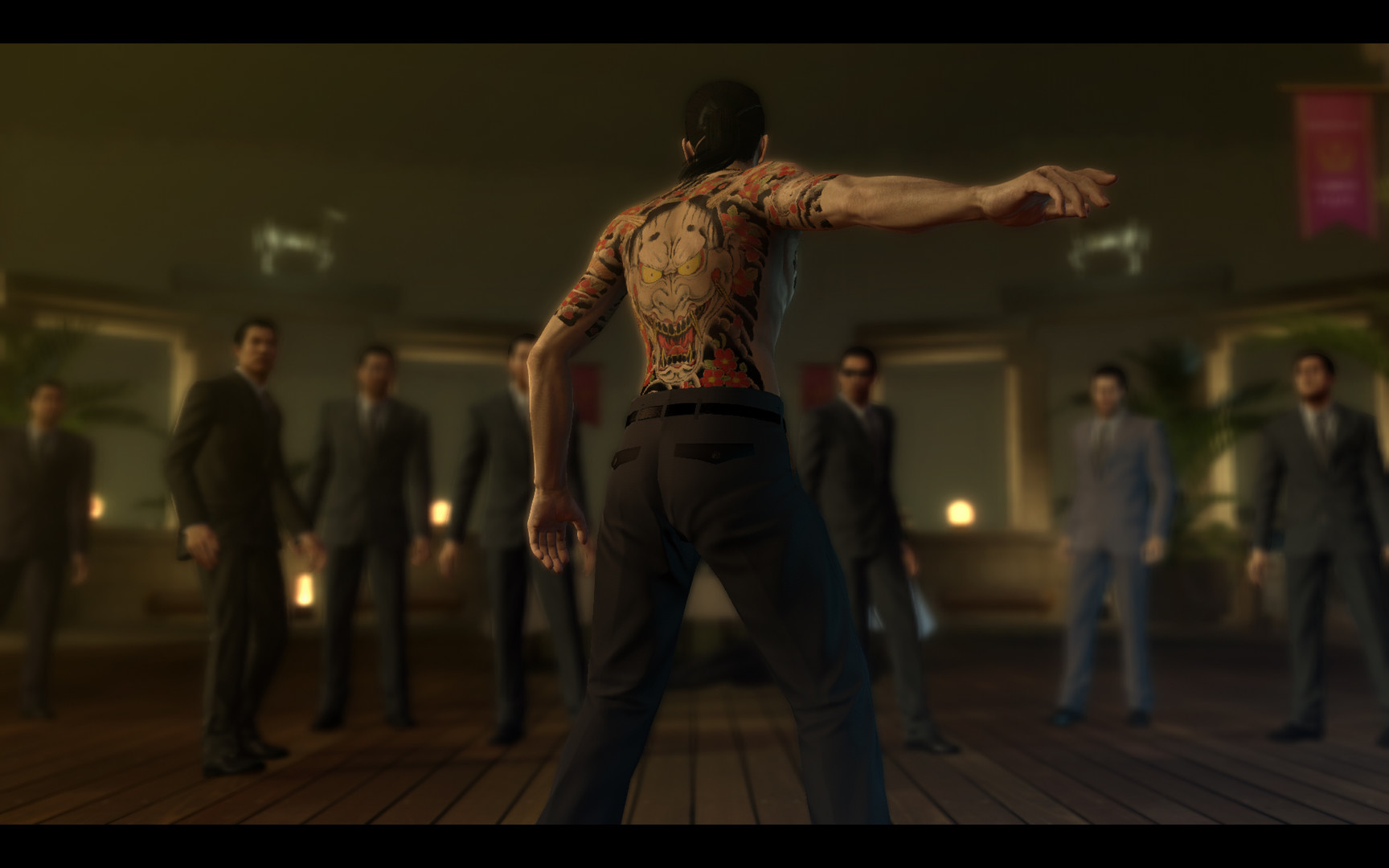
The narrative stakes are worth noting. Mahjong parlours in Kamurocho carry the weight of places where serious men settle serious disputes. RGG Studio leans into that atmosphere visually — dim lighting, cigarette smoke implied by the colour grading. It's the same design instinct that drives the card-room scene in Rounders or the poker arc in The venue Royale: the venue signals that the rules matter and that losing has consequences. In Yakuza 0 the consequences are measured in in-game yen, but the aesthetic weight is there regardless.
Koi-Koi: a two-player card game with a risk-vs-reward hook at its core
Koi-Koi is played with a Hanafuda deck — 48 cards divided into twelve suits of four cards each, each suit representing a month and a plant. Players match cards in hand to cards on the field, capturing pairs and building specific combinations (called yaku) that score points. Common yaku include Hanami-zake (combining the cherry blossom and sake cup cards) and Tsukimi-zake (moon and sake cup). Each has a point value. At the end of a round, whoever holds the higher-value yaku collection wins.
The decision that gives Koi-Koi its name and its central tension: when you complete a yaku, you can either end the round and take your points, or call 'Koi-Koi' — continuing play to try to build a higher-value hand. If you call Koi-Koi and your opponent completes a yaku before you, they score double points. It's a clean, elegant risk-vs-reward mechanism built directly into the rules. Yakuza 0 explains almost none of this. The in-game tutorial covers matching mechanics but glosses over the doubling rule, which is the whole point.
For practical play, the key early yaku to target is Tane (five animal cards) and Tan (five red poetry ribbon cards) — both achievable within three or four turns in a good draw. Resist the urge to call Koi-Koi until you have two yaku already secured. Aggressive Koi-Koi calls early in a session burn points fast. Watch what your opponent is capturing. If they're pulling plant cards from multiple suits, they may be building towards Goko (five Bright cards, the highest-value yaku at 15 points), and ending the round quickly becomes the correct read.
The Cabaret Club: a management sim dressed in neon
The Cabaret Club Czar side-story is the one that surprises people most, because it's not really a parlour game at all — it's closer to a lite management sim that would sit comfortably in a Kairosoft catalogue. As Kiryu (or Majima, depending on chapter), you manage a hostess club in the Sotenbori or Kamurocho entertainment district. You hire hostesses, level them up through training and gift-giving, and then seat them with specific client types based on personality compatibility charts.
The mechanical layer is about matching client preference profiles to hostess stat distributions. Clients have a primary desire category — some want intellectual conversation, some want flashy charisma, some want a softer, empathetic presence. Your hostesses have stats across these axes that grow through training sequences. Seating a Glamorous-type client with a hostess whose Elegance stat is maxed out generates a significantly higher satisfaction score than a mismatched pairing, regardless of the hostess's overall level. It's the same kind of role-assignment optimisation loop you'd find in a deck-builder like Monster Train — understanding the system is more valuable than grinding it.
The Cabaret Club Czar arc also has competitive missions — the Rival Battles — where you go head-to-head against rival club managers to out-earn them over a fixed time window. These are the tensest sequences in the side-content, more heist-set-piece in structure than relaxed mini-game. You're managing satisfaction scores in real time, calling hostesses to tables, intercepting client complaints. It's chaotic in a deliberately designed way. Completing the full arc earns the Platinum Hostess lineup and a substantial chunk of in-game yen, making it one of the highest-return side-stories in the game.
Shogi, Darts, and Pool: the lower-stakes supporting cast
Yakuza 0 also includes Shogi (Japanese chess), pool, and darts — three activities that are less mechanically exotic than mahjong or Koi-Koi but still worth a mention. Shogi is deep enough that the in-game AI will punish early mistakes sharply; the game's beginner mode is genuinely beginner-appropriate, but the advanced opponents in the substory chain will require looking up basic Shogi opening theory. It's the one mini-game where the skill gap between 'tried it once' and 'competent' is steepest.
Darts and pool are mechanical palate cleansers by comparison — timing-based execution challenges with clear feedback. Pool uses a line-and-power system you'll recognise if you've spent any time with the billiards table in Red Dead Redemption 2, though RDR2's physics model is considerably more elaborate. Yakuza 0's pool is simpler and faster, which fits the pacing of a game that already asks a lot of player attention across its other systems. Both are worth playing for the substory completions they unlock, not for the mechanics themselves.
How to actually get started without losing your mind
The practical advice: start with Koi-Koi. It has the shortest game length (rounds resolve in two to four minutes), the most transparent scoring, and the clearest moment-to-moment decision point with the Koi-Koi call. You'll understand the risk-vs-reward loop within five rounds. Then move to mahjong, which has a longer learning curve but is more satisfying once the tile patterns start to feel legible. Save the Cabaret Club arc for when you want a longer-form activity — it has enough content to fill a full session on its own.
There are good external references available. The subreddit r/yakuzagames has a stickied mahjong primer that covers hand-building logic without assuming prior knowledge. For Koi-Koi, the Hanafuda Heaven website has visual breakdowns of every yaku with point values listed clearly. Neither resource is official, but both are accurate and faster to parse than the in-game encyclopaedia.
One last thought on why this matters beyond completion percentage: Yakuza 0 is a game about two men trying to hold onto dignity in a system designed to strip it away. The mini-games are not decorative. Sitting across a mahjong table from a man who wants to humiliate you, reading his discards, and winning cleanly — that has a specific flavour that fits the story being told. RGG Studio put these games in the same world as Kiryu and Majima because the games carry the same weight as everything else. Learning them properly is, in a small way, part of reading the text.
Comments (6)
Spent 60 hours with this. Worth every minute.
Solid analysis. Did you try the mod community after the 1.2 patch?
Played on Steam Deck — runs great after the proton-experimental fix.
Bought it on sale last week — already 18 hours in. Highly recommend.
Score feels about right. The opening drags a bit but it grows on you.
How does it compare to the developer's previous work? That's the real question.