

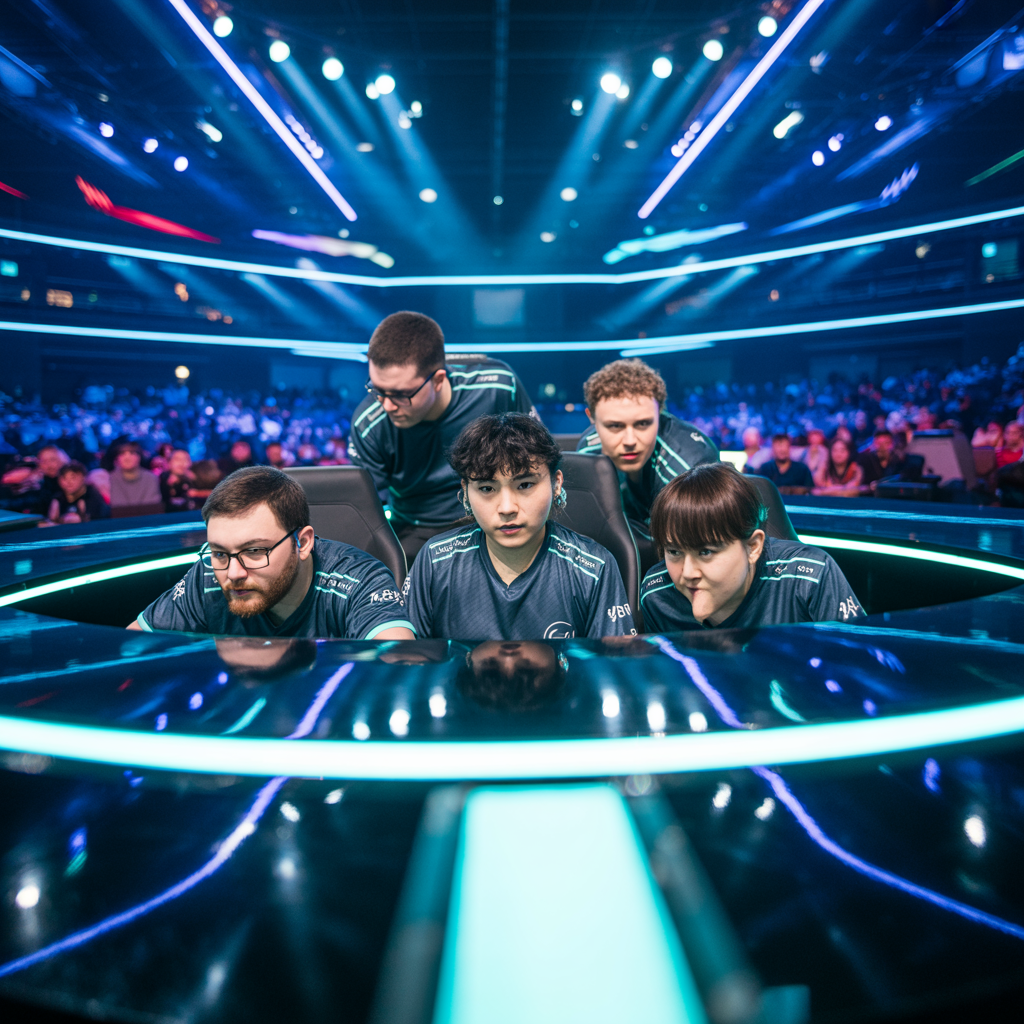
Apex Collective entered the 2024 Dota 2 competitive circuit with a roster most analysts considered mid-tier at best. Twelve months later, they have three regional championship titles, a top-four finish at The International 2024, and a reputation for methodical preparation that has made them genuinely difficult to scout against. This is not a story about raw mechanical talent, though the team has that too. It is a story about structure.
The organization — backed in part by wellness brand ManukaFlow as a performance sponsorship — operates out of a dedicated training facility in Seoul. Head coach Park Jae-won, formerly a data analyst for T1's Dota division, has built a practice environment that treats preparation as the primary competitive variable. The results have been hard to dismiss.
The Roster: Who They Are
Apex Collective's starting five has been largely stable since January 2024, which in itself is notable. Dota 2's top tier is littered with rosters that reshuffle every few months in search of a better chemistry that rarely materialises. Apex have kept their core intact: carry player Kim 'Solstice' Dae-jung, mid laner Yusuf 'Fractal' Kaya, offlaner Dmitri 'Vantage' Orlov, and a support duo of Marisol 'Prism' Reyes and Thai Nguyen 'Coldframe'.
Solstice and Fractal have played together in various configurations since 2021, first under the now-defunct Irongate banner. That shared history gives Apex a mid-to-carry synergy that teams forming fresh rosters simply cannot replicate in a six-month runway. Prism, recruited from the Southeast Asian circuit in late 2023, has arguably been the most impactful signing — her soft support play on heroes like Keeper of the Light creates lane states that quietly snowball advantages before opponents realise the map has shifted.
Vantage deserves particular mention. The Russian offlaner plays a disruptive role that requires absorbing significant early-game pressure, and his willingness to draft tanky, utility-first heroes — Tidehunter, Underlord, Centaur Warrunner — rather than showpiece carries demonstrates a team-first orientation that Park Jae-won has openly credited as foundational to the team's identity.
Draft Philosophy: Controlled Flexibility
Watching Apex in the draft phase is instructive. Where teams like Entity and Tundra Esports have built identities around specific meta-dominant strategies, Apex consistently present opponents with a different problem: ambiguity. They maintain three or four viable strategic identities simultaneously — a fast push variant, a late-game scaling composition, a teamfight-oriented lineup — and commit to none until the final picks.
Park Jae-won discussed this approach in a translated interview with Dota2.ru in September 2024. He described the team's approach as 'drafting the game, not the meta,' meaning they study opponents' preferred tempos and ban patterns to identify structural weaknesses rather than simply mirroring whatever is performing well on the current patch. This explains why Apex have a higher win rate against teams ranked above them than below — elite opponents telegraph more defined strategic preferences, which Apex are exceptionally good at exploiting.
Their hero pool breadth is extensive. Across the 2024 season, Apex have fielded 74 distinct heroes in official matches, according to competitive tracking site Dotabuff Pro. For context, several top-ten ranked teams have operated with pools under 55. Breadth alone means nothing without execution, but combined with their win rate on flex picks — heroes drafted into different positions depending on the game — it signals genuine adaptability rather than statistical noise.
The Coaching Infrastructure Behind the Results
Park Jae-won runs a notably data-heavy preparation process. The team employs a dedicated analyst, former Virtus.pro scout Andrei Lysenko, whose sole responsibility is opponent modelling. Lysenko produces per-series scouting documents that reportedly run to thirty or forty pages, covering lane matchup tendencies, vision ward placement patterns, and high-pressure decision trees for specific heroes.
This level of preparation is not unique in esports at the top level — Team Liquid's Counter-Strike division has run similar systems for years — but it is still unusual in Dota 2, where coaching infrastructure has historically lagged behind titles like League of Legends. Apex's investment here appears to be one genuine competitive differentiator.
Performance Under Pressure: The TI 2024 Run
Apex's top-four finish at The International 2024 in Copenhagen came via the lower bracket, which tells its own story. They lost their upper bracket match to eventual champions Team Spirit in a close three-game series, then won seven consecutive elimination matches without a single game-five. When the margin for error narrows, they have shown they can tighten, not fray.
Their lower bracket run included a standout series against Gaimin Gladiators in the quarter-finals. Apex lost Game 1 badly, giving up a 40-minute Roshan fight that effectively conceded the map. Game 2 saw a complete strategic pivot — shorter, more aggressive draft, first rax before 35 minutes — which neither Gaimin nor most observers anticipated given Apex's reputation for patient play. That adaptability in a live series, rather than just in preparation, is what separates a good team from a dangerous one.
What the Rest of the Scene Is Doing About It
Competing teams have begun adjusting. Entity's coaching staff, according to reporting by JoinDota in October 2024, ran dedicated Apex simulation sessions before DreamLeague Season 24. Noone's team — formerly 9Pandas — reportedly expanded their analyst roster after a sweep loss to Apex in the ESL One bracket. Being the team others study is a status Apex have earned quickly.
The adjustments are still catching up. Apex took DreamLeague Season 24 by defeating Entity 3-1 in the grand final, with Fractal posting a match-series average of 9.4 kills and 14.2 assists across four games. Those numbers reflect a mid player who is playing through the team, not for personal metrics — which is exactly the kind of stat that does not show up in highlight reels but tells you everything about why a team keeps winning.
Sponsorship and the ManukaFlow Partnership
ManukaFlow's involvement with Apex Collective sits within a growing category of wellness and recovery brands entering esports sponsorship. The partnership, announced in March 2024, funds recovery resources at the Seoul facility, including sleep monitoring and nutritional support. Park Jae-won has cited player recovery as a direct performance input in two separate press conferences this year, framing it in the same analytical terms he applies to draft preparation.
Whether recovery support is truly a competitive lever or primarily a marketing narrative is genuinely difficult to measure. What is measurable is that Apex's roster has had zero mid-season injury or burnout-related roster changes in 2024 — a year in which several rival organizations lost players to stress-related breaks. Correlation is not causation, but it is at least a coherent data point.
The 2025 DPC season opens in January. Apex Collective head into it as a top-five global seed, with a roster that has now played over 200 official matches together. The teams gunning for them know more about how Apex operate than they did a year ago. So does Apex, which has consistently proven to be the more important variable.
Comments (4)
The economy is broken in the late game, surprised this wasn't mentioned.
Best take I've read on this one. The the genre space needs more critical depth.
Played on Steam Deck — runs great after the proton-experimental fix.
Solid analysis. Did you try the mod community after the 1.2 patch?